 ee4b7305a2
This PR adds all the guides from [Visual
Guides](https://bytebytego.com/guides/) section on bytebytego to the
repository with proper links.

- [x] Markdown files for guides and categories are placed inside
`data/guides` and `data/categories`
- [x] Guide links in readme are auto-generated using
`scripts/readme.ts`. Everytime you run the script `npm run
update-readme`, it reads the categories and guides from the above
mentioned folders, generate production links for guides and categories
and populate the table of content in the readme. This ensures that any
future guides and categories will automatically get added to the readme.
- [x] Sorting inside the readme matches the actual category and guides
sorting on production
1.3 KiB
title, description, image, createdAt, draft, categories, tags
| title | description | image | createdAt | draft | categories | tags | |||
|---|---|---|---|---|---|---|---|---|---|
| Big Data Pipeline Cheatsheet for AWS, Azure, and Google Cloud | Big data pipeline cheatsheet for AWS, Azure, and Google Cloud. | https://assets.bytebytego.com/diagrams/0086-big-data-pipeline-cheatsheet-for-aws-azure-and-gcp.png | 2024-03-14 | false |
|
|
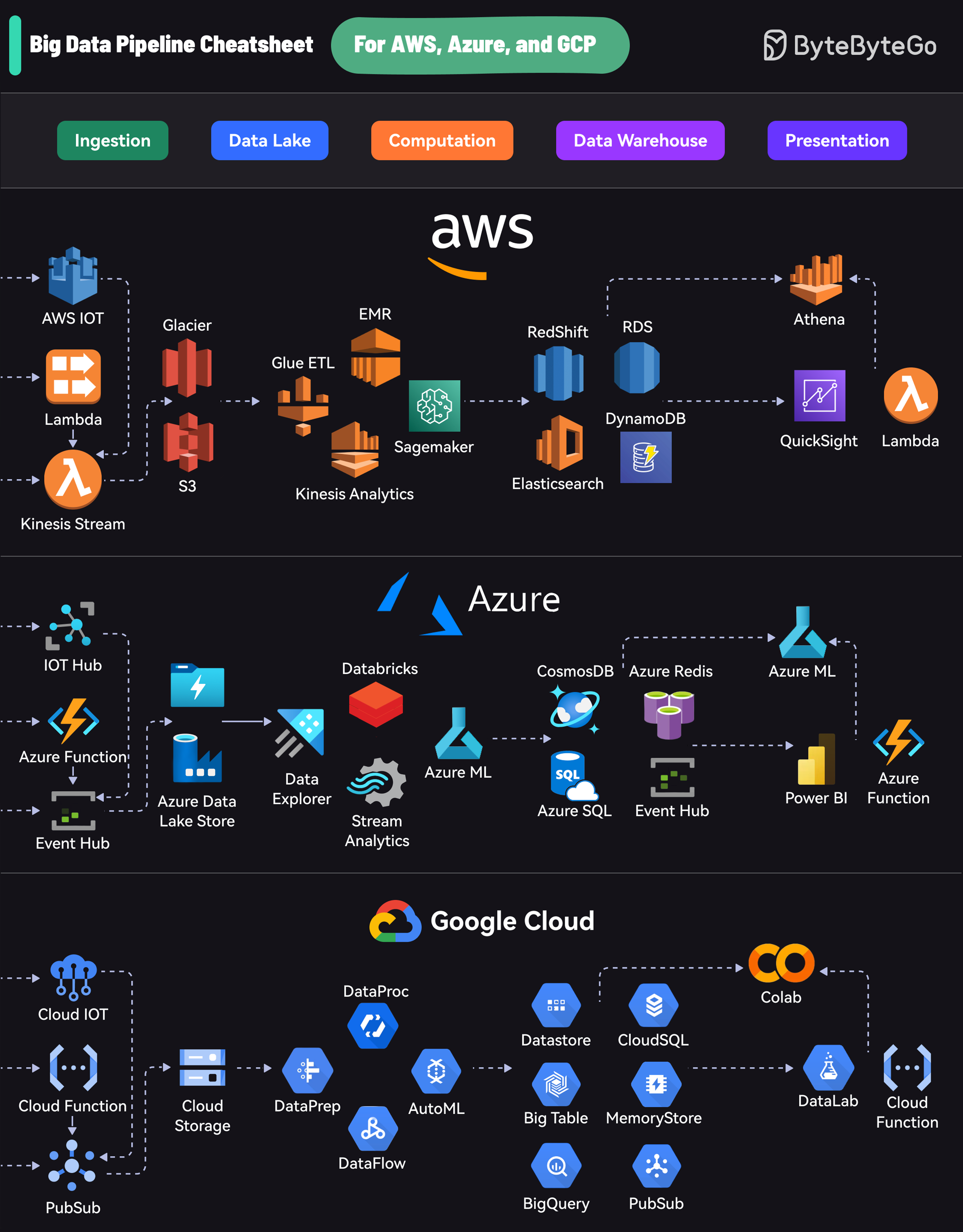
Each platform offers a comprehensive suite of services that cover the entire lifecycle:
-
Ingestion: Collecting data from various sources
-
Data Lake: Storing raw data
-
Computation: Processing and analyzing data
-
Data Warehouse: Storing structured data
-
Presentation: Visualizing and reporting insights
AWS uses services like Kinesis for data streaming, S3 for storage, EMR for processing, RedShift for warehousing, and QuickSight for visualization.
Azure’s pipeline includes Event Hubs for ingestion, Data Lake Store for storage, Databricks for processing, Cosmos DB for warehousing, and Power BI for presentation.
GCP offers PubSub for data streaming, Cloud Storage for data lakes, DataProc and DataFlow for processing, BigQuery for warehousing, and Data Studio for visualization.