mirror of
https://github.com/ByteByteGoHq/system-design-101.git
synced 2026-04-01 16:57:23 -04:00
 ee4b7305a2
This PR adds all the guides from [Visual
Guides](https://bytebytego.com/guides/) section on bytebytego to the
repository with proper links.

- [x] Markdown files for guides and categories are placed inside
`data/guides` and `data/categories`
- [x] Guide links in readme are auto-generated using
`scripts/readme.ts`. Everytime you run the script `npm run
update-readme`, it reads the categories and guides from the above
mentioned folders, generate production links for guides and categories
and populate the table of content in the readme. This ensures that any
future guides and categories will automatically get added to the readme.
- [x] Sorting inside the readme matches the actual category and guides
sorting on production
55 lines
1.4 KiB
Markdown
55 lines
1.4 KiB
Markdown
---
|
|
title: "8 Common System Design Problems and Solutions"
|
|
description: "Explore 8 common system design problems and their effective solutions."
|
|
image: "https://assets.bytebytego.com/diagrams/0010-common-system-design-problems-and-solutions.png"
|
|
createdAt: "2024-03-07"
|
|
draft: false
|
|
categories:
|
|
- software-architecture
|
|
tags:
|
|
- System Design
|
|
- Scalability
|
|
---
|
|
|
|
|
|
|
|
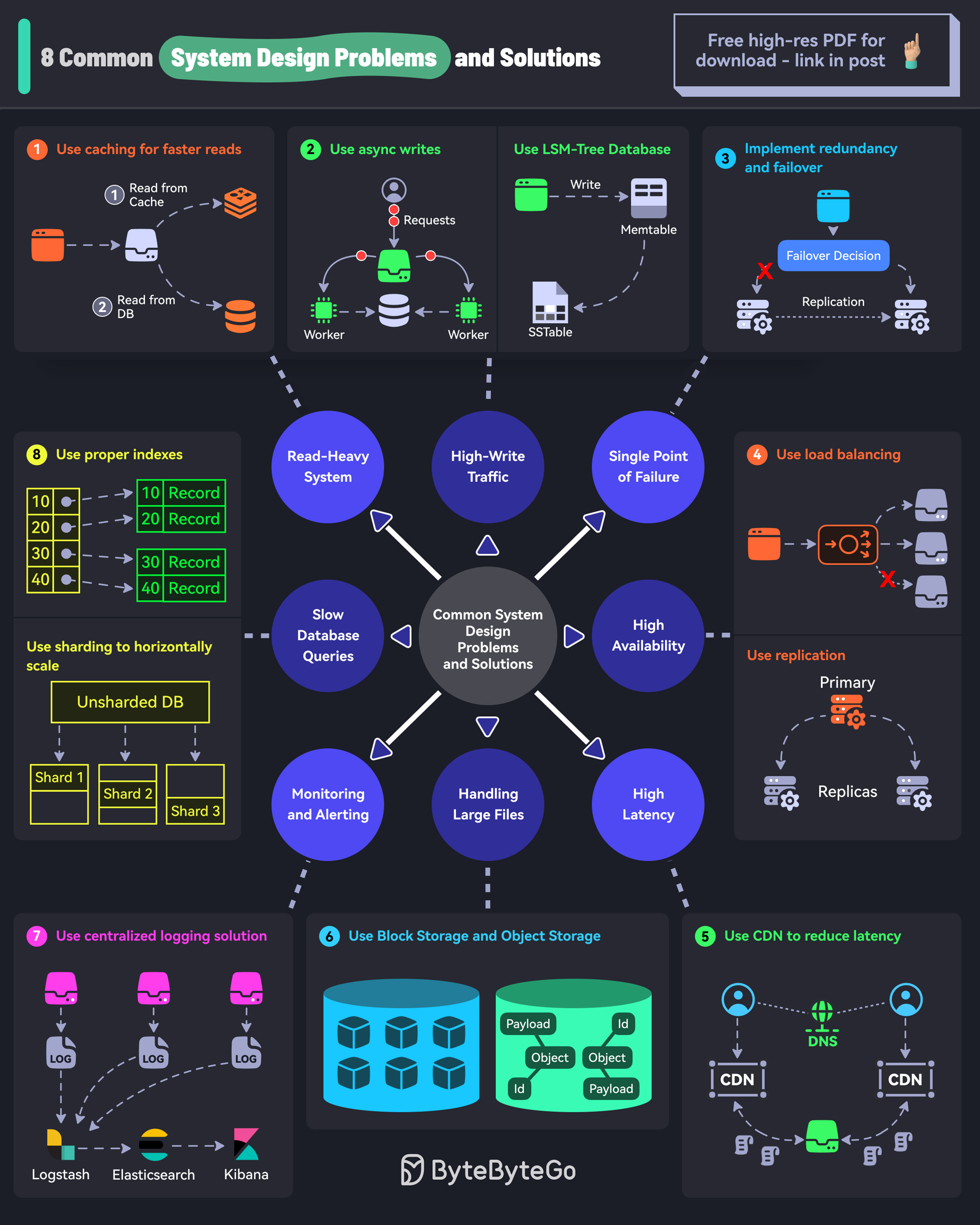
Do you know those 8 common problems in large-scale production systems and their solutions? Time to test your skills!!
|
|
|
|
## 1. Read-Heavy System
|
|
|
|
Use caching to make the reads faster.
|
|
|
|
## 2. High-Write Traffic
|
|
|
|
* Use async workers to process the writes
|
|
|
|
* Use databases powered by LSM-Trees
|
|
|
|
## 3. Single Point of Failure
|
|
|
|
Implement redundancy and failover mechanisms for critical components like databases.
|
|
|
|
## 4. High Availability
|
|
|
|
* Use load balancing to ensure that requests go to healthy server instances.
|
|
|
|
* Use database replication to improve durability and availability.
|
|
|
|
## 5. High Latency
|
|
|
|
Use a content delivery network to reduce latency.
|
|
|
|
## 6. Handling Large Files
|
|
|
|
Use block storage and object storage to handle large files and complex data.
|
|
|
|
## 7. Monitoring and Alerting
|
|
|
|
Use a centralized logging system using something like the ELK stack.
|
|
|
|
## 8. Slower Database Queries
|
|
|
|
* Use proper indexes to optimize queries.
|
|
|
|
* Use sharding to scale the database horizontally.
|