mirror of
https://github.com/ByteByteGoHq/system-design-101.git
synced 2026-04-24 09:47:24 -04:00
 ee4b7305a2
This PR adds all the guides from [Visual
Guides](https://bytebytego.com/guides/) section on bytebytego to the
repository with proper links.

- [x] Markdown files for guides and categories are placed inside
`data/guides` and `data/categories`
- [x] Guide links in readme are auto-generated using
`scripts/readme.ts`. Everytime you run the script `npm run
update-readme`, it reads the categories and guides from the above
mentioned folders, generate production links for guides and categories
and populate the table of content in the readme. This ensures that any
future guides and categories will automatically get added to the readme.
- [x] Sorting inside the readme matches the actual category and guides
sorting on production
1.2 KiB
1.2 KiB
title, description, image, createdAt, draft, categories, tags
| title | description | image | createdAt | draft | categories | tags | |||
|---|---|---|---|---|---|---|---|---|---|
| The Fantastic Four of System Design | Explore the core principles of system design: scalability, availability... | https://assets.bytebytego.com/diagrams/0357-who-are-the-fantastic-four-of-system-design.png | 2024-02-05 | false |
|
|
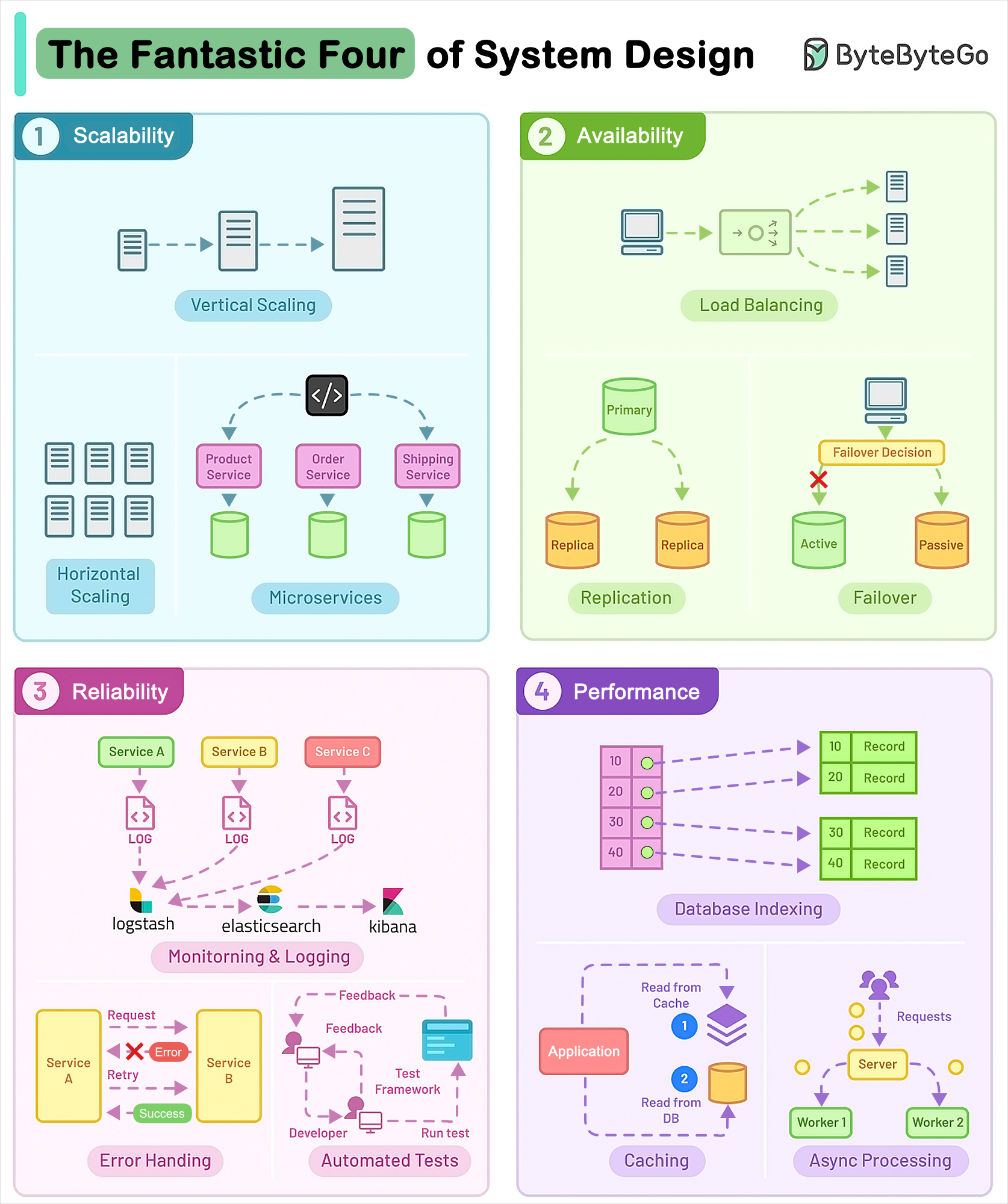
Scalability, Availability, Reliability, and Performance. They are the most critical components to crafting successful software systems.
Let’s look at each of them with implementation techniques:
-
Scalability
Scalability ensures that your application can handle more load without compromising performance.
-
Availability
Availability makes sure that your application is always ready to serve the users and downtime is minimal.
-
Reliability
Reliability is about building software that consistently delivers correct results.
-
Performance
Performance is the ability of a system to carry out its tasks at an expected rate under peak load using available resources.