mirror of
https://github.com/ByteByteGoHq/system-design-101.git
synced 2026-04-08 03:07:24 -04:00
 ee4b7305a2
This PR adds all the guides from [Visual
Guides](https://bytebytego.com/guides/) section on bytebytego to the
repository with proper links.

- [x] Markdown files for guides and categories are placed inside
`data/guides` and `data/categories`
- [x] Guide links in readme are auto-generated using
`scripts/readme.ts`. Everytime you run the script `npm run
update-readme`, it reads the categories and guides from the above
mentioned folders, generate production links for guides and categories
and populate the table of content in the readme. This ensures that any
future guides and categories will automatically get added to the readme.
- [x] Sorting inside the readme matches the actual category and guides
sorting on production
37 lines
1.5 KiB
Markdown
37 lines
1.5 KiB
Markdown
---
|
||
title: "What is Web 3.0? Why doesn't it have ads?"
|
||
description: "Explore Web 3.0: ownership, decentralization, and ad-free potential."
|
||
image: "https://assets.bytebytego.com/diagrams/0416-what-is-web-3.png"
|
||
createdAt: "2024-02-27"
|
||
draft: false
|
||
categories:
|
||
- payment-and-fintech
|
||
tags:
|
||
- "Web3"
|
||
- "Decentralization"
|
||
---
|
||
|
||
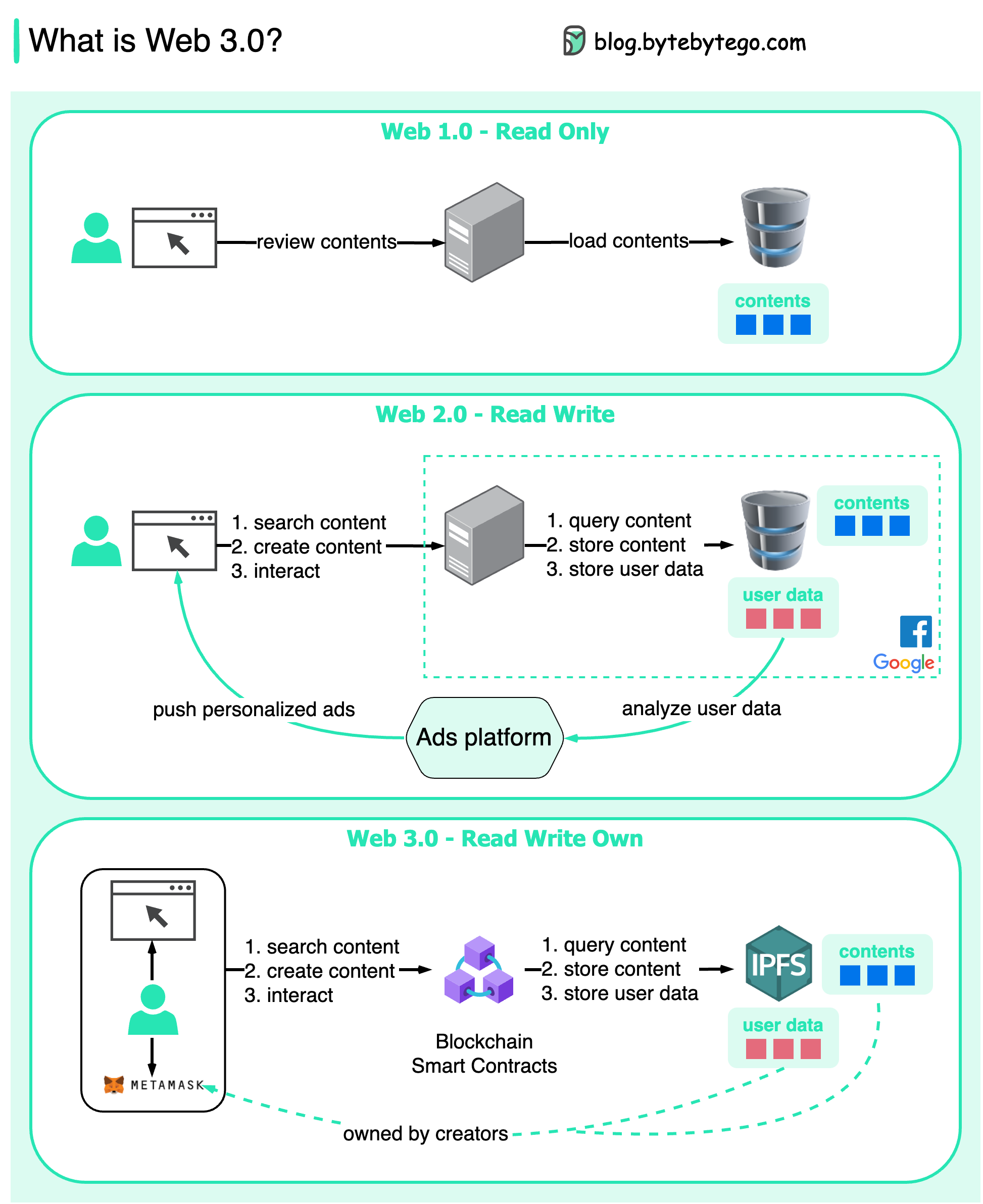
The diagram above shows Web 1.0/Web 2.0/Web 3.0 from a bird's-eye view.
|
||
|
||
|
||
|
||
* Web 1.0 - Read Only
|
||
|
||
Between 1991 and 2004, the internet was like a **catalog of static pages**. We can browse the content by jumping from one hyperlink to another. It doesn’t provide any interactions with the content.
|
||
|
||
* Web 2.0 - Read Write
|
||
|
||
From 2004 to now, the internet has evolved to have search engines, social media apps, and recommendation algorithms backed apps.
|
||
|
||
Because the apps digitalize human behaviors and persist user data when users interact with these apps, big companies leverage user data for advertisements, which becomes **one of the main business models** in Web 2.0.
|
||
|
||
That’s why people say the apps know you better than your friends, family, or even yourself.
|
||
|
||
* Web 3.0 - Read Write Own
|
||
|
||
The idea has been discussed a lot recently due to the development of blockchain and decentralized apps. The creators’ content is stored on IPFS (InterPlanetary File System) and **owned by the users**.
|
||
|
||
If apps want to access the data, they need to get **authorization** from the users and **pay** for it.
|
||
|
||
In Web 3.0, the ownership change may lead to some major innovations.
|