mirror of
https://github.com/ByteByteGoHq/system-design-101.git
synced 2026-04-11 20:37:24 -04:00
 ee4b7305a2
This PR adds all the guides from [Visual
Guides](https://bytebytego.com/guides/) section on bytebytego to the
repository with proper links.

- [x] Markdown files for guides and categories are placed inside
`data/guides` and `data/categories`
- [x] Guide links in readme are auto-generated using
`scripts/readme.ts`. Everytime you run the script `npm run
update-readme`, it reads the categories and guides from the above
mentioned folders, generate production links for guides and categories
and populate the table of content in the readme. This ensures that any
future guides and categories will automatically get added to the readme.
- [x] Sorting inside the readme matches the actual category and guides
sorting on production
51 lines
1.8 KiB
Markdown
51 lines
1.8 KiB
Markdown
---
|
|
title: "Top 9 Architectural Patterns for Data and Communication Flow"
|
|
description: "Explore 9 key architectural patterns for efficient data and communication."
|
|
image: "https://assets.bytebytego.com/diagrams/0387-top-9-system-integrations.png"
|
|
createdAt: "2024-01-31"
|
|
draft: false
|
|
categories:
|
|
- cloud-distributed-systems
|
|
tags:
|
|
- "Architecture"
|
|
- "Data Flow"
|
|
---
|
|
|
|
|
|
|
|
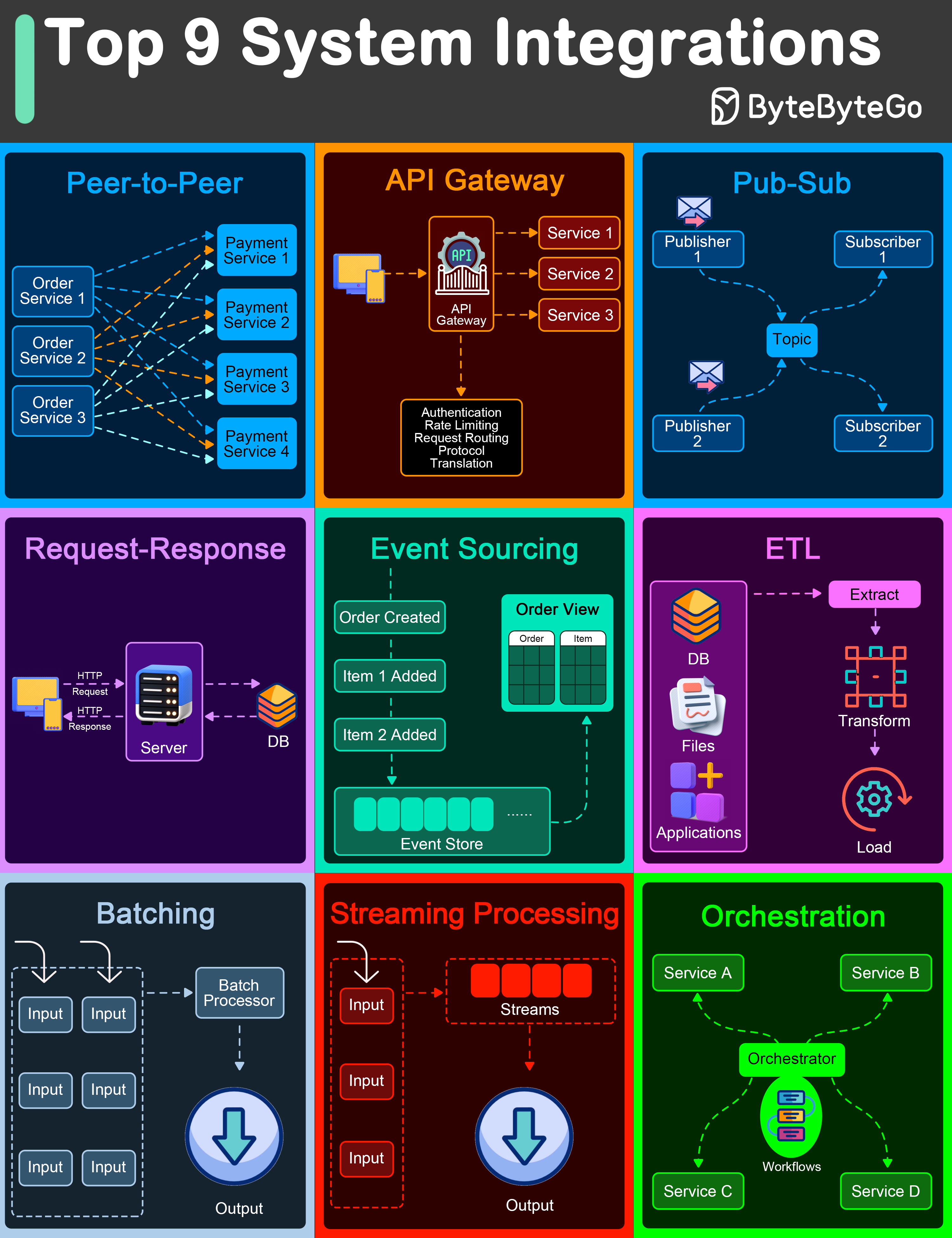
* **Peer-to-Peer**
|
|
|
|
The Peer-to-Peer pattern involves direct communication between two components without the need for a central coordinator.
|
|
|
|
* **API Gateway**
|
|
|
|
An API Gateway acts as a single entry point for all client requests to the backend services of an application.
|
|
|
|
* **Pub-Sub**
|
|
|
|
The Pub-Sub pattern decouples the producers of messages (publishers) from the consumers of messages (subscribers) through a message broker.
|
|
|
|
* **Request-Response**
|
|
|
|
This is one of the most fundamental integration patterns, where a client sends a request to a server and waits for a response.
|
|
|
|
* **Event Sourcing**
|
|
|
|
Event Sourcing involves storing the state changes of an application as a sequence of events.
|
|
|
|
* **ETL**
|
|
|
|
ETL is a data integration pattern used to gather data from multiple sources, transform it into a structured format, and load it into a destination database.
|
|
|
|
* **Batching**
|
|
|
|
Batching involves accumulating data over a period or until a certain threshold is met before processing it as a single group.
|
|
|
|
* **Streaming Processing**
|
|
|
|
Streaming Processing allows for the continuous ingestion, processing, and analysis of data streams in real-time.
|
|
|
|
* **Orchestration**
|
|
|
|
Orchestration involves a central coordinator (an orchestrator) managing the interactions between distributed components or services to achieve a workflow or business process.
|