mirror of
https://github.com/ByteByteGoHq/system-design-101.git
synced 2026-04-02 17:07:24 -04:00
 ee4b7305a2
This PR adds all the guides from [Visual
Guides](https://bytebytego.com/guides/) section on bytebytego to the
repository with proper links.

- [x] Markdown files for guides and categories are placed inside
`data/guides` and `data/categories`
- [x] Guide links in readme are auto-generated using
`scripts/readme.ts`. Everytime you run the script `npm run
update-readme`, it reads the categories and guides from the above
mentioned folders, generate production links for guides and categories
and populate the table of content in the readme. This ensures that any
future guides and categories will automatically get added to the readme.
- [x] Sorting inside the readme matches the actual category and guides
sorting on production
38 lines
1.8 KiB
Markdown
38 lines
1.8 KiB
Markdown
---
|
|
title: "Read Replica Pattern"
|
|
description: "Explore the read replica pattern for database design and optimization."
|
|
image: "https://assets.bytebytego.com/diagrams/0312-read-replica-pattern.png"
|
|
createdAt: "2024-01-28"
|
|
draft: false
|
|
categories:
|
|
- database-and-storage
|
|
tags:
|
|
- "Database Replication"
|
|
- "Read Scalability"
|
|
---
|
|
|
|
|
|
|
|
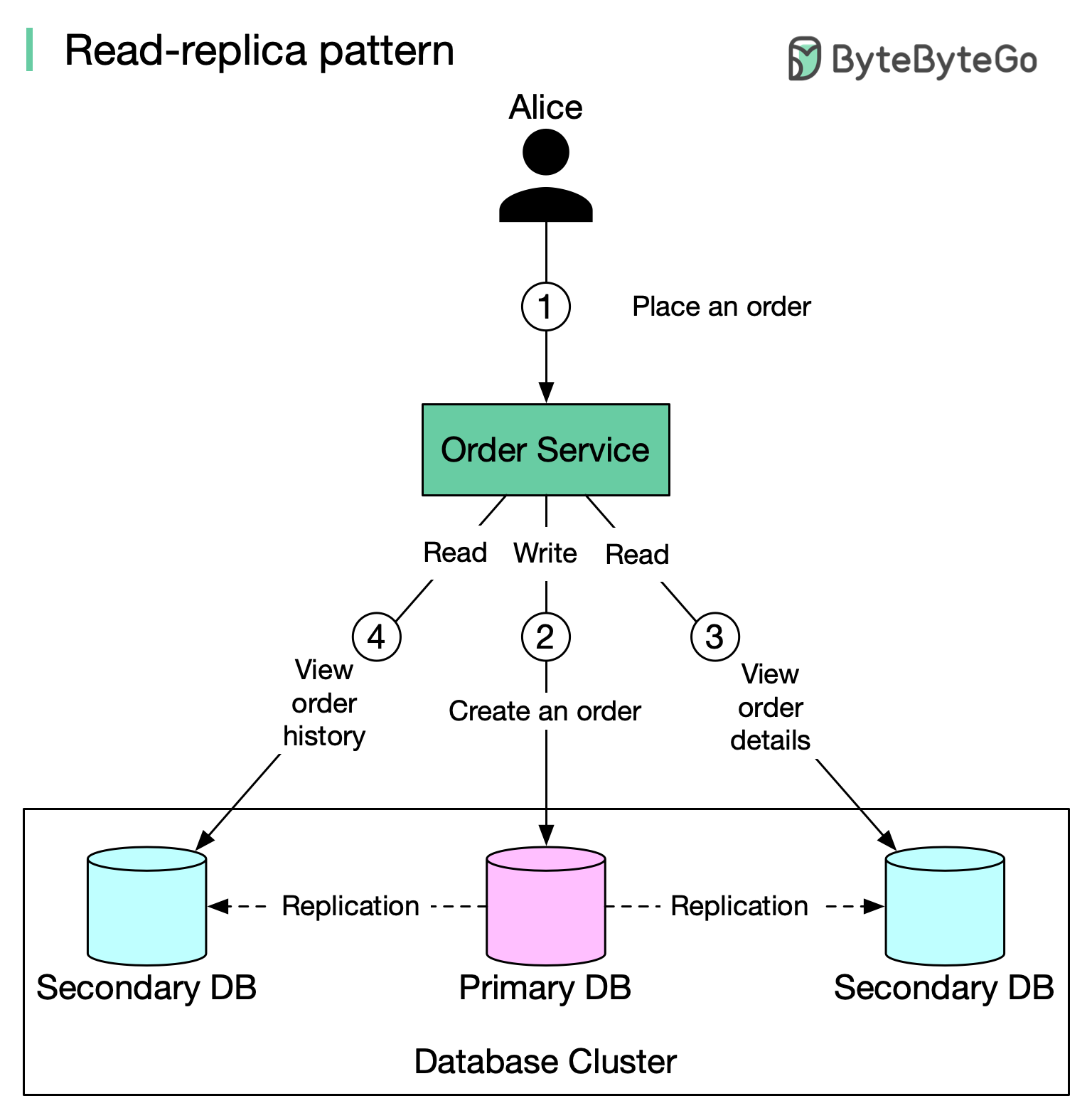
In this post, we talk about a simple yet commonly used database design pattern (setup): **Read replica pattern**.
|
|
|
|
In this setup, all data-modifying commands like insert, delete, or update are sent to the primary DB and reads are sent to read replicas.
|
|
|
|
The diagram above illustrates the setup:
|
|
|
|
1. When Alice places an order on amazon.com, the request is sent to Order Service.
|
|
2. Order Service creates a record about the order in the primary DB (write). Data is replicated to two replicas.
|
|
3. Alice views the order details. Data is served from a replica (read).
|
|
4. Alice views the recent order history. Data is served from a replica (read).
|
|
|
|
There is one major problem in this setup: **replication lag**.
|
|
|
|
Under certain circumstances (network delay, server overload, etc.), data in replicas might be seconds or even minutes behind. In this case, if Alice immediately checks the order status (query is served by the replica) after the order is placed, she might not see the order at all. This leaves Alice confused. In this case, we need “read-after-write” consistency.
|
|
|
|
## Possible solutions to mitigate this problem:
|
|
|
|
* Latency sensitive reads are sent to the primary database.
|
|
|
|
* Reads that immediately follow writes are routed to the primary database.
|
|
|
|
* A relational DB generally provides a way to check if a replica is caught up with the primary. If data is up to date, query the replica. Otherwise fail the read request or read from the primary.
|