mirror of
https://github.com/ByteByteGoHq/system-design-101.git
synced 2026-04-13 05:17:25 -04:00
 ee4b7305a2
This PR adds all the guides from [Visual
Guides](https://bytebytego.com/guides/) section on bytebytego to the
repository with proper links.

- [x] Markdown files for guides and categories are placed inside
`data/guides` and `data/categories`
- [x] Guide links in readme are auto-generated using
`scripts/readme.ts`. Everytime you run the script `npm run
update-readme`, it reads the categories and guides from the above
mentioned folders, generate production links for guides and categories
and populate the table of content in the readme. This ensures that any
future guides and categories will automatically get added to the readme.
- [x] Sorting inside the readme matches the actual category and guides
sorting on production
51 lines
1.5 KiB
Markdown
51 lines
1.5 KiB
Markdown
---
|
|
title: "Low Latency Stock Exchange"
|
|
description: "Explore the architecture of a low-latency stock exchange system."
|
|
image: "https://assets.bytebytego.com/diagrams/0265-low-latency-stock-exchange.jpg"
|
|
createdAt: "2024-02-26"
|
|
draft: false
|
|
categories:
|
|
- caching-performance
|
|
tags:
|
|
- "Low Latency"
|
|
- "Stock Exchange"
|
|
---
|
|
|
|
|
|
|
|
How does a modern stock exchange achieve **microsecond latency**? The principal is:
|
|
|
|
**Do less on the critical path**
|
|
|
|
* Fewer tasks on the critical path
|
|
|
|
* Less time on each task
|
|
|
|
* Fewer network hops
|
|
|
|
* Less disk usage
|
|
|
|
For the stock exchange, the critical path is:
|
|
|
|
* **start**: an order comes into the order manager
|
|
|
|
* mandatory risk checks
|
|
|
|
* the order gets matched and the execution is sent back
|
|
|
|
* **end**: the execution comes out of the order manager
|
|
|
|
Other non-critical tasks should be removed from the critical path.
|
|
|
|
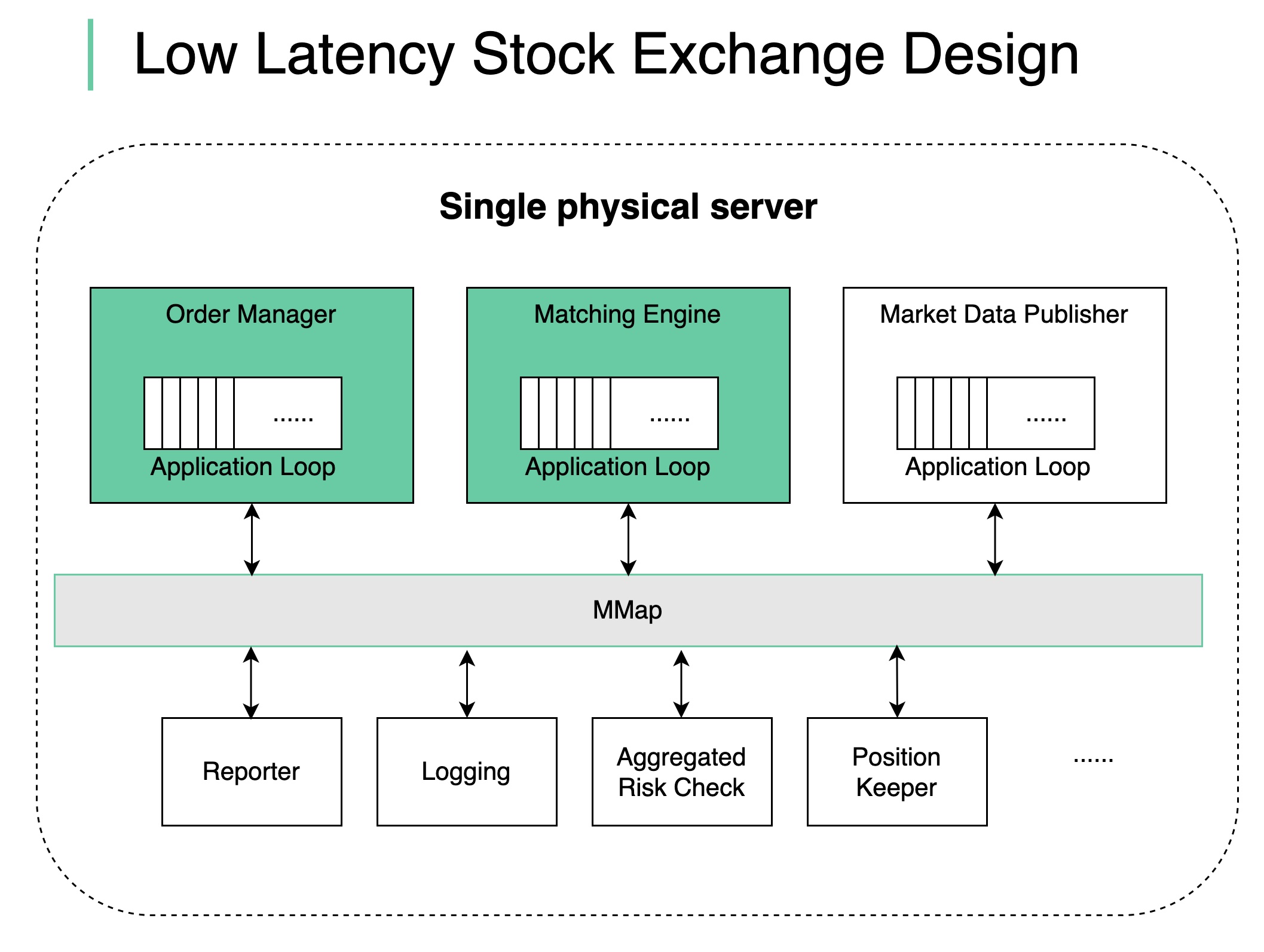
We put together a design as shown in the diagram:
|
|
|
|
* deploy all the components in a single giant server (no containers)
|
|
|
|
* use shared memory as an event bus to communicate among the components, no hard disk
|
|
|
|
* key components like Order Manager and Matching Engine are single-threaded on the critical path, and each pinned to a CPU so that there is **no context switch** and **no locks**
|
|
|
|
* the single-threaded application loop executes tasks one by one in sequence
|
|
|
|
* other components listen on the event bus and react accordingly
|