mirror of
https://github.com/ByteByteGoHq/system-design-101.git
synced 2026-04-02 17:07:24 -04:00
 ee4b7305a2
This PR adds all the guides from [Visual
Guides](https://bytebytego.com/guides/) section on bytebytego to the
repository with proper links.

- [x] Markdown files for guides and categories are placed inside
`data/guides` and `data/categories`
- [x] Guide links in readme are auto-generated using
`scripts/readme.ts`. Everytime you run the script `npm run
update-readme`, it reads the categories and guides from the above
mentioned folders, generate production links for guides and categories
and populate the table of content in the readme. This ensures that any
future guides and categories will automatically get added to the readme.
- [x] Sorting inside the readme matches the actual category and guides
sorting on production
37 lines
1.3 KiB
Markdown
37 lines
1.3 KiB
Markdown
---
|
|
title: How Netflix Really Uses Java
|
|
description: Explore Netflix's extensive use of Java in its microservices architecture.
|
|
image: 'https://assets.bytebytego.com/diagrams/0102-how-netflix-really-uses-java.png'
|
|
createdAt: '2024-03-04'
|
|
draft: false
|
|
categories:
|
|
- real-world-case-studies
|
|
tags:
|
|
- Java
|
|
- Microservices
|
|
---
|
|
|
|
|
|
|
|
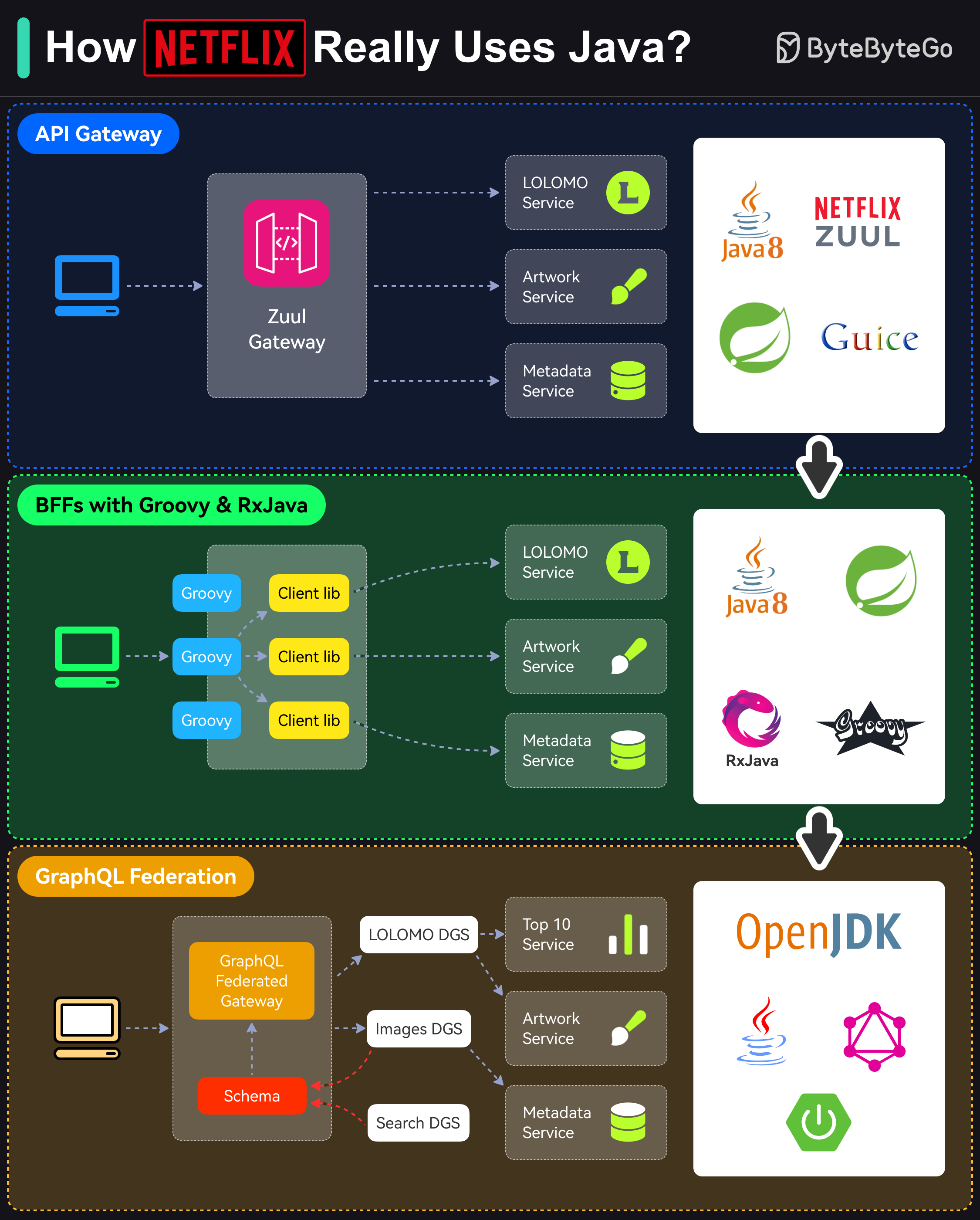
Netflix is predominantly a Java shop.
|
|
|
|
Every backend application (including internal apps, streaming, and movie production apps) at Netflix is a Java application.
|
|
|
|
However, the Java stack is not static and has gone through multiple iterations over the years.
|
|
|
|
Here are the details of those iterations:
|
|
|
|
* **API Gateway**
|
|
|
|
Netflix follows a microservices architecture. Every piece of functionality and data is owned by a microservice built using Java (initially version 8)
|
|
|
|
* **BFFs with Groovy & RxJava**
|
|
|
|
Using a single gateway for multiple clients was a problem for Netflix because each client (such as TV, mobile apps, or web browser) had subtle differences.
|
|
|
|
To handle this, Netflix used the Backend-for-Frontend (BFF) pattern. Zuul was moved to the role of a proxy
|
|
|
|
* **GraphQL Federation**
|
|
|
|
The Groovy and RxJava approach required more work from the UI developers in creating the Groovy scripts. Also, reactive programming is generally hard.
|