mirror of
https://github.com/ByteByteGoHq/system-design-101.git
synced 2026-04-02 00:57:24 -04:00
 ee4b7305a2
This PR adds all the guides from [Visual
Guides](https://bytebytego.com/guides/) section on bytebytego to the
repository with proper links.

- [x] Markdown files for guides and categories are placed inside
`data/guides` and `data/categories`
- [x] Guide links in readme are auto-generated using
`scripts/readme.ts`. Everytime you run the script `npm run
update-readme`, it reads the categories and guides from the above
mentioned folders, generate production links for guides and categories
and populate the table of content in the readme. This ensures that any
future guides and categories will automatically get added to the readme.
- [x] Sorting inside the readme matches the actual category and guides
sorting on production
1.1 KiB
1.1 KiB
title, description, image, createdAt, draft, categories, tags
| title | description | image | createdAt | draft | categories | tags | |||
|---|---|---|---|---|---|---|---|---|---|
| How does SSH work? | Explore the inner workings of SSH, a secure network protocol. | https://assets.bytebytego.com/diagrams/0224-how-does-ssh-work.png | 2024-03-05 | false |
|
|
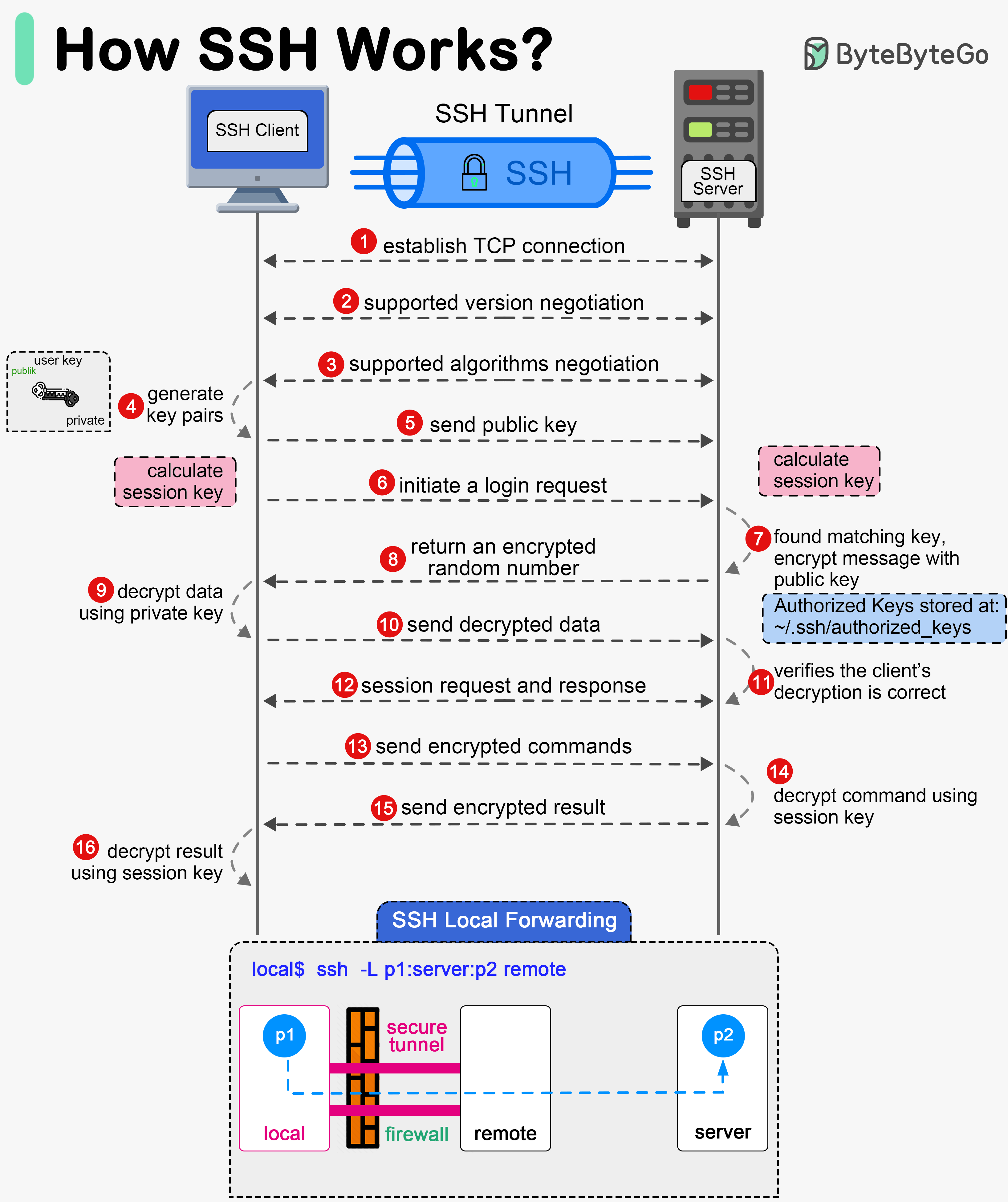
SSH (Secure Shell) is a network protocol used to securely connect to remote machines over an unsecured network. It encrypts the connection and provides various mechanisms for authentication and data transfer.
SSH has two versions: SSH-1 and SSH-2. SSH-2 was standardized by the IETF.
It has three main layers: Transport Layer, Authentication Layer, and Connection Layer.
Transport Layer
The Transport Layer provides encryption, integrity, and data protection to ensure secure communication between the client and server.
Authentication Layer
The Authentication Layer verifies the identity of the client to ensure that only authorized users can access the server.
Connection Layer
The Connection Layer multiplexes the encrypted and authenticated communication into multiple logical channels.