mirror of
https://github.com/ByteByteGoHq/system-design-101.git
synced 2026-04-01 16:57:23 -04:00
 ee4b7305a2
This PR adds all the guides from [Visual
Guides](https://bytebytego.com/guides/) section on bytebytego to the
repository with proper links.

- [x] Markdown files for guides and categories are placed inside
`data/guides` and `data/categories`
- [x] Guide links in readme are auto-generated using
`scripts/readme.ts`. Everytime you run the script `npm run
update-readme`, it reads the categories and guides from the above
mentioned folders, generate production links for guides and categories
and populate the table of content in the readme. This ensures that any
future guides and categories will automatically get added to the readme.
- [x] Sorting inside the readme matches the actual category and guides
sorting on production
47 lines
2.3 KiB
Markdown
47 lines
2.3 KiB
Markdown
---
|
|
title: "E-commerce Workflow"
|
|
description: "Explore the behind-the-scenes of e-commerce: procurement to delivery."
|
|
image: "https://assets.bytebytego.com/diagrams/0179-e-commerce-works.png"
|
|
createdAt: "2024-02-24"
|
|
draft: false
|
|
categories:
|
|
- "payment-and-fintech"
|
|
tags:
|
|
- "E-commerce"
|
|
- "Supply Chain"
|
|
---
|
|
|
|
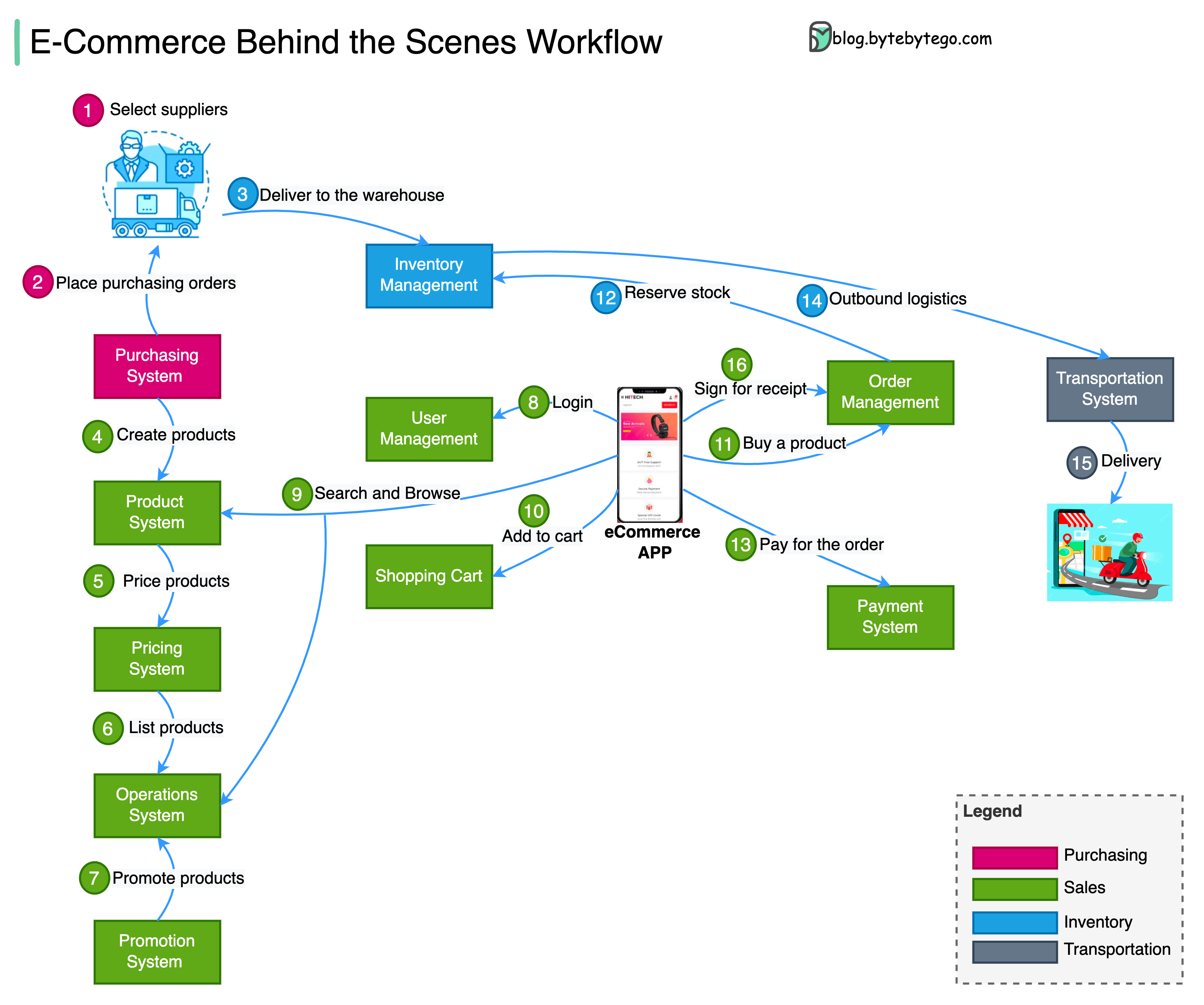
What happens behind the scenes when we shop online?
|
|
|
|
Disclaimer: I have limited knowledge of the eCommerce system. The diagram above is based on my research. Please suggest better names for the components or let me know if you spot an error.
|
|
|
|
|
|
|
|
The diagram above shows the 4 key business areas in a typical e-commerce company: procurement, inventory, eComm platform, and transportation.
|
|
|
|
## Procurement
|
|
|
|
* Step 1 - The procurement department selects suppliers and manages contracts with them.
|
|
|
|
* Step 2 - The procurement department places orders with suppliers, manages the return of goods, and settles invoices with suppliers.
|
|
|
|
## Inventory
|
|
|
|
* Step 3 - The products or goods from suppliers are delivered to a storage facility. All products/goods are managed by inventory management systems.
|
|
|
|
## EComm platform
|
|
|
|
* Steps 4-7 - The “eComm platform - Product Management” system creates the product info managed by the product system. The pricing system prices the products. Then the products are ready to be listed for sale. The promotion system defines big sale activities, coupons, etc.
|
|
|
|
* Step 8-11 - Consumers can now purchase products on the e-commerce APP. First, users register or log in to the APP. Next, users browse the product list and details, adding products to the shopping cart. They then place purchasing orders.
|
|
|
|
* Steps 12,13 - The order management system reserves stock in the inventory management system. Then the users pay for the product.
|
|
|
|
## Transportation
|
|
|
|
* Steps 14,15 - The inventory system sends the outbound order to the transportation system, which manages the physical delivery of the goods.
|
|
|
|
* Step 16 - Sign for item delivery (optional)
|
|
|
|
Quick question: If a user buys many products, their big order might be divided into several small orders based on warehouse locations, product types, etc. Where would you place the “order splitting” system in the process outlined below?
|