 ee4b7305a2
This PR adds all the guides from [Visual
Guides](https://bytebytego.com/guides/) section on bytebytego to the
repository with proper links.

- [x] Markdown files for guides and categories are placed inside
`data/guides` and `data/categories`
- [x] Guide links in readme are auto-generated using
`scripts/readme.ts`. Everytime you run the script `npm run
update-readme`, it reads the categories and guides from the above
mentioned folders, generate production links for guides and categories
and populate the table of content in the readme. This ensures that any
future guides and categories will automatically get added to the readme.
- [x] Sorting inside the readme matches the actual category and guides
sorting on production
1.6 KiB
title, description, image, createdAt, draft, categories, tags
| title | description | image | createdAt | draft | categories | tags | |||
|---|---|---|---|---|---|---|---|---|---|
| Data Pipelines Overview | Learn about the essential phases of data pipelines. | https://assets.bytebytego.com/diagrams/0157-data-pipeline-overview.png | 2024-03-14 | false |
|
|
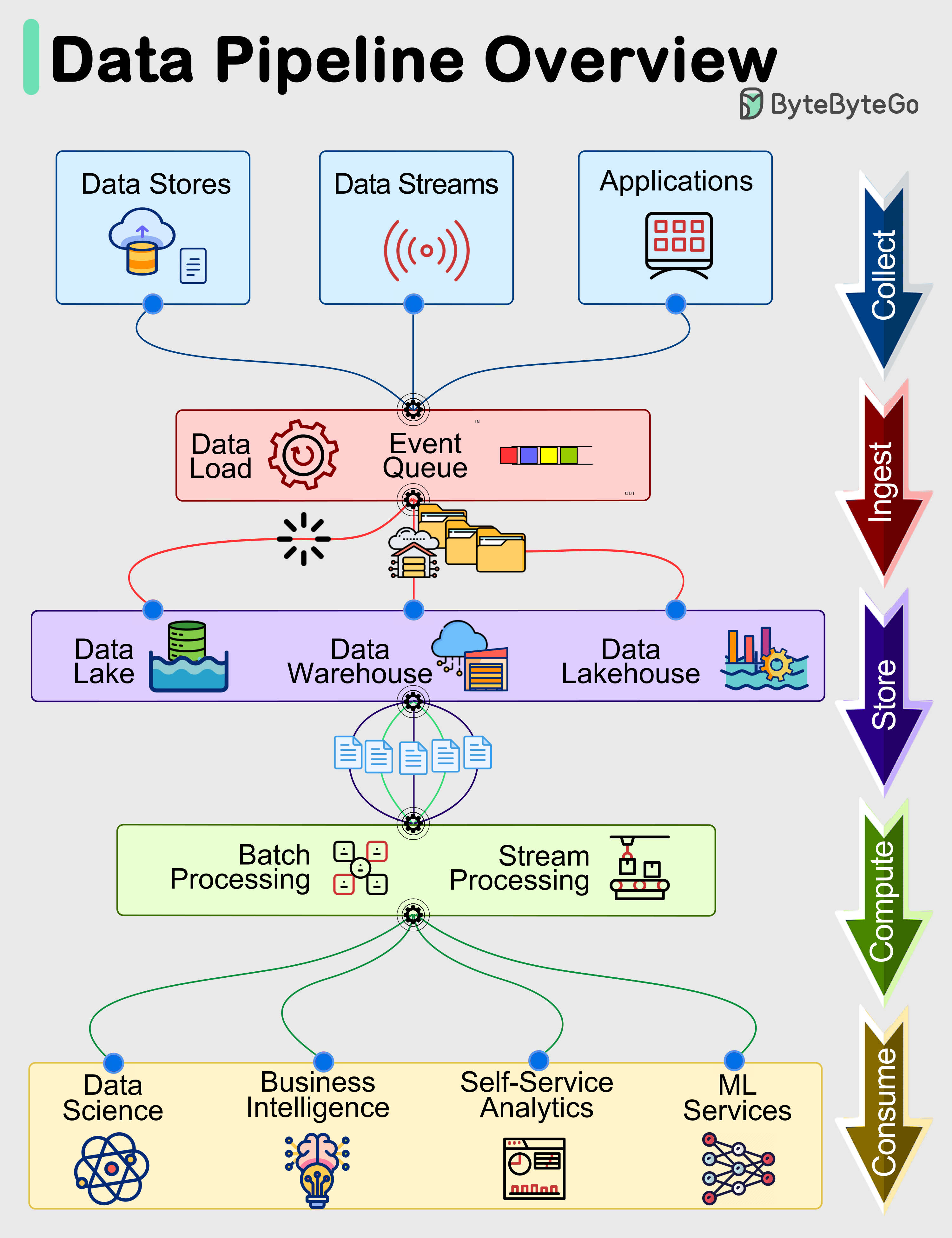
Data pipelines are a fundamental component of managing and processing data efficiently within modern systems. These pipelines typically encompass 5 predominant phases: Collect, Ingest, Store, Compute, and Consume.
Collect:
Data is acquired from data stores, data streams, and applications, sourced remotely from devices, applications, or business systems.
Ingest:
During the ingestion process, data is loaded into systems and organized within event queues.
Store:
Post ingestion, organized data is stored in data warehouses, data lakes, and data lakehouses, along with various systems like databases, ensuring post-ingestion storage.
Compute:
Data undergoes aggregation, cleansing, and manipulation to conform to company standards, including tasks such as format conversion, data compression, and partitioning. This phase employs both batch and stream processing techniques.
Consume:
Processed data is made available for consumption through analytics and visualization tools, operational data stores, decision engines, user-facing applications, dashboards, data science, machine learning services, business intelligence, and self-service analytics.
The efficiency and effectiveness of each phase contribute to the overall success of data-driven operations within an organization.