 ee4b7305a2
This PR adds all the guides from [Visual
Guides](https://bytebytego.com/guides/) section on bytebytego to the
repository with proper links.

- [x] Markdown files for guides and categories are placed inside
`data/guides` and `data/categories`
- [x] Guide links in readme are auto-generated using
`scripts/readme.ts`. Everytime you run the script `npm run
update-readme`, it reads the categories and guides from the above
mentioned folders, generate production links for guides and categories
and populate the table of content in the readme. This ensures that any
future guides and categories will automatically get added to the readme.
- [x] Sorting inside the readme matches the actual category and guides
sorting on production
1.5 KiB
title, description, image, createdAt, draft, categories, tags
| title | description | image | createdAt | draft | categories | tags | |||
|---|---|---|---|---|---|---|---|---|---|
| Cookies vs Sessions vs JWT vs PASETO | Explore cookies, sessions, JWT, and PASETO for modern authentication. | https://assets.bytebytego.com/diagrams/0155-cookies-vs-sessions-vs-jwt-vs-paseto.png | 2024-03-04 | false |
|
|
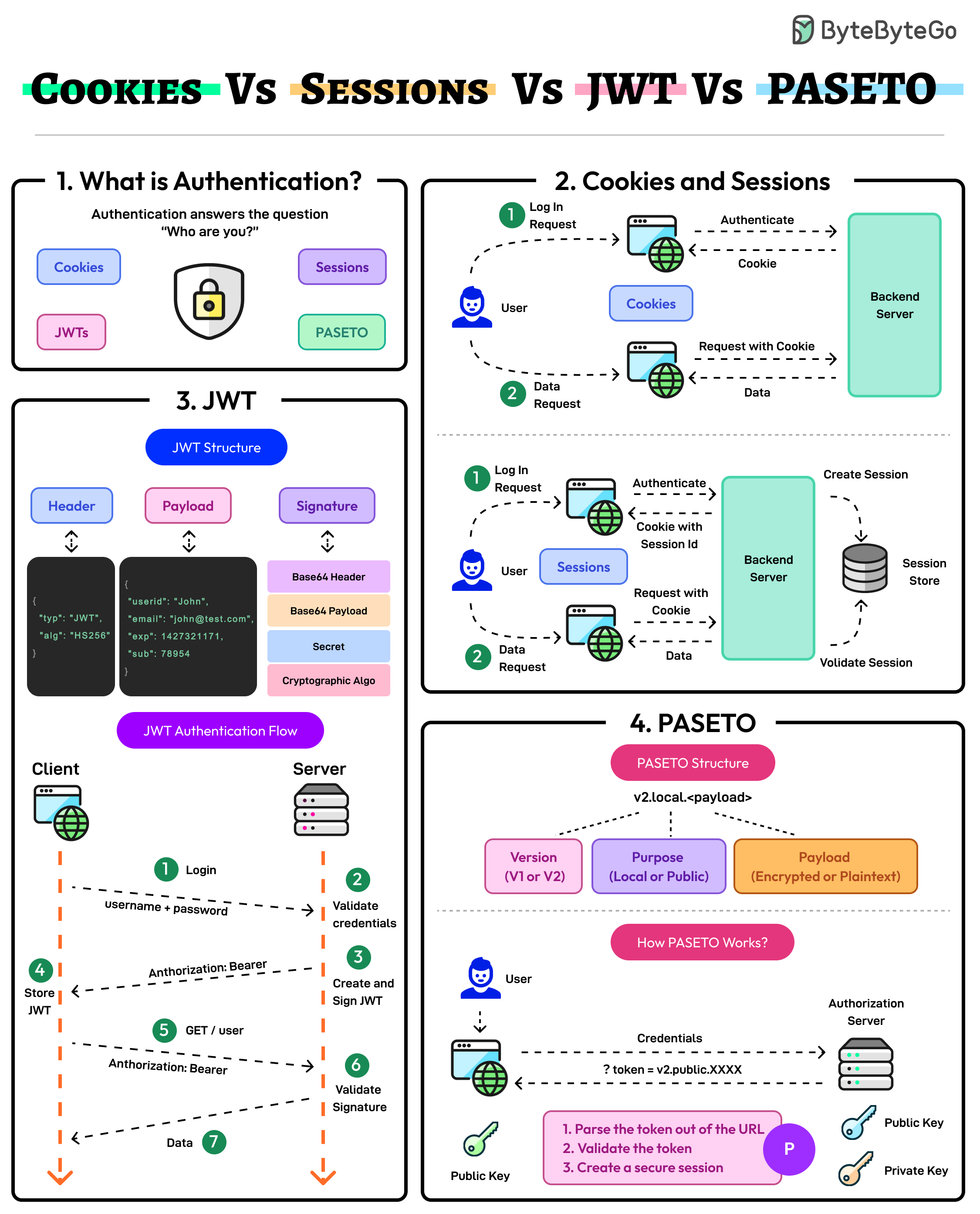
Authentication ensures that only authorized users gain access to an application’s resources. It answers the question of the user’s identity i.e. “Who are you?”
The modern authentication landscape has multiple approaches: Cookies, Sessions, JWTs, and PASETO. Here’s what they mean:
Cookies and Sessions
Cookies and sessions are authentication mechanisms where session data is stored on the server and referenced via a client-side cookie.
Sessions are ideal for applications requiring strict server-side control over user data. On the downside, sessions may face scalability challenges in distributed systems.
JWT
JSON Web Token (JWT) is a stateless, self-contained authentication method that stores all user data within the token.
JWTs are highly scalable but require careful handling to mitigate the chances of token theft and manage token expiration.
PASETO
Platform-Agnostic Security Tokens or PASETO improve upon JWT by enforcing stronger cryptographic defaults and eliminating algorithmic vulnerabilities.
PASETO simplifies token implementation by avoiding the risks associated with misconfiguration.