 ee4b7305a2
This PR adds all the guides from [Visual
Guides](https://bytebytego.com/guides/) section on bytebytego to the
repository with proper links.

- [x] Markdown files for guides and categories are placed inside
`data/guides` and `data/categories`
- [x] Guide links in readme are auto-generated using
`scripts/readme.ts`. Everytime you run the script `npm run
update-readme`, it reads the categories and guides from the above
mentioned folders, generate production links for guides and categories
and populate the table of content in the readme. This ensures that any
future guides and categories will automatically get added to the readme.
- [x] Sorting inside the readme matches the actual category and guides
sorting on production
2.0 KiB
title, description, image, createdAt, draft, categories, tags
| title | description | image | createdAt | draft | categories | tags | |||
|---|---|---|---|---|---|---|---|---|---|
| Cloud Native Anti-Patterns | Avoid common pitfalls in cloud-native development for robust applications. | https://assets.bytebytego.com/diagrams/0070-cloud-native-anti-patterns.png | 2024-02-25 | false |
|
|
By being aware of these anti-patterns and following cloud-native best practices, you can design, build, and operate more robust, scalable, and cost-efficient cloud-native applications.
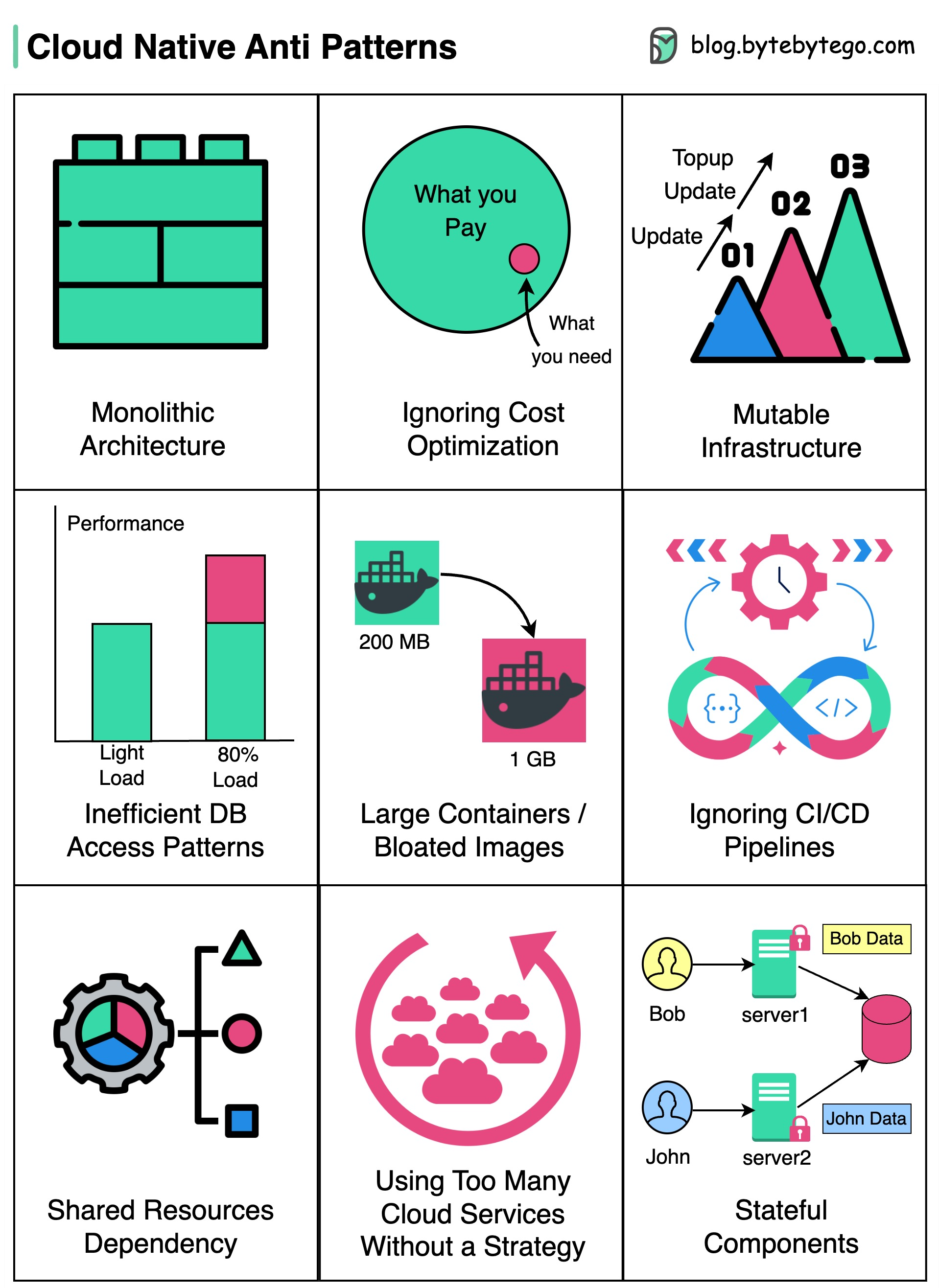
Monolithic Architecture
One large, tightly coupled application running on the cloud, hindering scalability and agility.
Ignoring Cost Optimization
Cloud services can be expensive, and not optimizing costs can result in budget overruns.
Mutable Infrastructure
-
Infrastructure components are to be treated as disposable and are never modified in place.
-
Failing to embrace this approach can lead to configuration drift, increased maintenance, and decreased reliability.
Inefficient DB Access Patterns
Use of overly complex queries or lacking database indexing, can lead to performance degradation and database bottlenecks.
Large Containers or Bloated Images
Creating large containers or using bloated images can increase deployment times, consume more resources, and slow down application scaling.
Ignoring CI/CD Pipelines
Deployments become manual and error-prone, impeding the speed and frequency of software releases.
Shared Resources Dependency
Applications relying on shared resources like databases can create contention and bottlenecks, affecting overall performance.
Using Too Many Cloud Services Without a Strategy
While cloud providers offer a vast array of services, using too many of them without a clear strategy can create complexity and make it harder to manage the application.
Stateful Components
Relying on persistent state in applications can introduce complexity, hinder scalability, and limit fault tolerance.