 ee4b7305a2
This PR adds all the guides from [Visual
Guides](https://bytebytego.com/guides/) section on bytebytego to the
repository with proper links.

- [x] Markdown files for guides and categories are placed inside
`data/guides` and `data/categories`
- [x] Guide links in readme are auto-generated using
`scripts/readme.ts`. Everytime you run the script `npm run
update-readme`, it reads the categories and guides from the above
mentioned folders, generate production links for guides and categories
and populate the table of content in the readme. This ensures that any
future guides and categories will automatically get added to the readme.
- [x] Sorting inside the readme matches the actual category and guides
sorting on production
1.5 KiB
title, description, image, createdAt, draft, categories, tags
| title | description | image | createdAt | draft | categories | tags | |||
|---|---|---|---|---|---|---|---|---|---|
| Cloud Monitoring Cheat Sheet | A handy guide to cloud monitoring across major providers and tools. | https://assets.bytebytego.com/diagrams/0095-cloud-monitoring-cheat-sheet.png | 2024-02-24 | false |
|
|
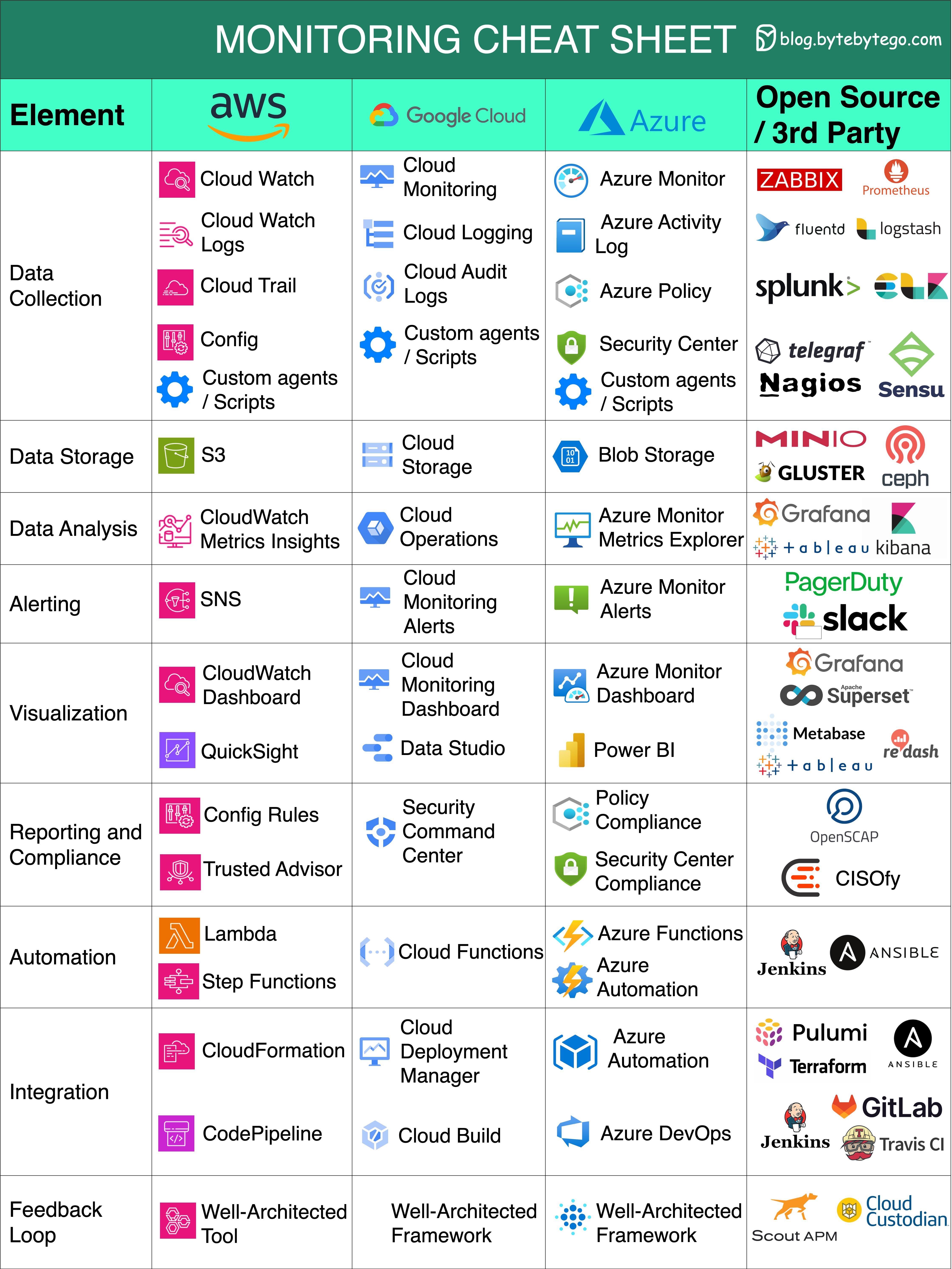
A nice cheat sheet of different monitoring infrastructure in cloud services.
This cheat sheet offers a concise yet comprehensive comparison of key monitoring elements across the three major cloud providers and open-source / 3rd party tools.
Let's delve into the essential monitoring aspects covered:
-
Data Collection: Gather information from diverse sources to enhance decision-making.
-
Data Storage: Safely store and manage data for future analysis and reference.
-
Data Analysis: Extract valuable insights from data to drive informed actions.
-
Alerting: Receive real-time notifications about critical events or anomalies.
-
Visualization: Present data in a visually comprehensible format for better understanding.
-
Reporting and Compliance: Generate reports and ensure adherence to regulatory standards.
-
Automation: Streamline processes and tasks through automated workflows.
-
Integration: Seamlessly connect and exchange data between different systems or tools.
-
Feedback Loops: Continuously refine strategies based on feedback and performance analysis.