mirror of
https://github.com/ByteByteGoHq/system-design-101.git
synced 2026-04-01 16:57:23 -04:00
 ee4b7305a2
This PR adds all the guides from [Visual
Guides](https://bytebytego.com/guides/) section on bytebytego to the
repository with proper links.

- [x] Markdown files for guides and categories are placed inside
`data/guides` and `data/categories`
- [x] Guide links in readme are auto-generated using
`scripts/readme.ts`. Everytime you run the script `npm run
update-readme`, it reads the categories and guides from the above
mentioned folders, generate production links for guides and categories
and populate the table of content in the readme. This ensures that any
future guides and categories will automatically get added to the readme.
- [x] Sorting inside the readme matches the actual category and guides
sorting on production
1.1 KiB
1.1 KiB
title, description, image, createdAt, draft, categories, tags
| title | description | image | createdAt | draft | categories | tags | |||
|---|---|---|---|---|---|---|---|---|---|
| B-Tree vs. LSM-Tree | Explore the differences between B-Tree and LSM-Tree data structures. | https://assets.bytebytego.com/diagrams/0091-btree-lsm.png | 2024-02-16 | false |
|
|
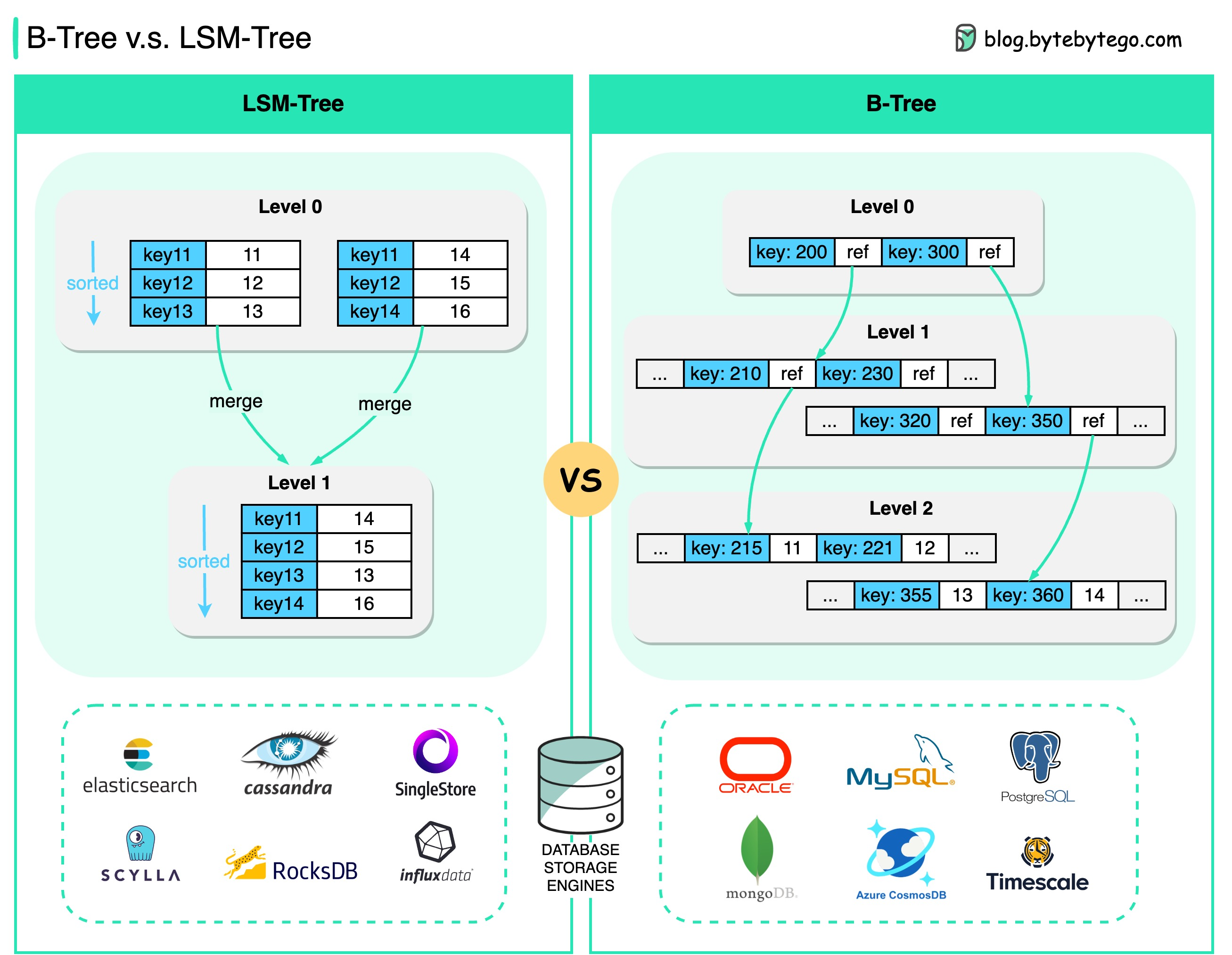
B-Tree
B-Tree is the most widely used indexing data structure in almost all relational databases.
The basic unit of information storage in B-Tree is usually called a “page”. Looking up a key traces down the range of keys until the actual value is found.
LSM-Tree
LSM-Tree (Log-Structured Merge Tree) is widely used by many NoSQL databases, such as Cassandra, LevelDB, and RocksDB.
LSM-trees maintain key-value pairs and are persisted to disk using a Sorted Strings Table (SSTable), in which the keys are sorted.
Level 0 segments are periodically merged into Level 1 segments. This process is called compaction.
The biggest difference is probably this:
-
B-Tree enables faster reads
-
LSM-Tree enables fast writes