mirror of
https://github.com/ByteByteGoHq/system-design-101.git
synced 2026-04-01 16:57:23 -04:00
 ee4b7305a2
This PR adds all the guides from [Visual
Guides](https://bytebytego.com/guides/) section on bytebytego to the
repository with proper links.

- [x] Markdown files for guides and categories are placed inside
`data/guides` and `data/categories`
- [x] Guide links in readme are auto-generated using
`scripts/readme.ts`. Everytime you run the script `npm run
update-readme`, it reads the categories and guides from the above
mentioned folders, generate production links for guides and categories
and populate the table of content in the readme. This ensures that any
future guides and categories will automatically get added to the readme.
- [x] Sorting inside the readme matches the actual category and guides
sorting on production
1.5 KiB
1.5 KiB
title, description, image, createdAt, draft, categories, tags
| title | description | image | createdAt | draft | categories | tags | |||
|---|---|---|---|---|---|---|---|---|---|
| API vs SDK | Understand the key differences between APIs and SDKs in software development. | https://assets.bytebytego.com/diagrams/0071-api-vs-sdk.png | 2024-02-22 | false |
|
|
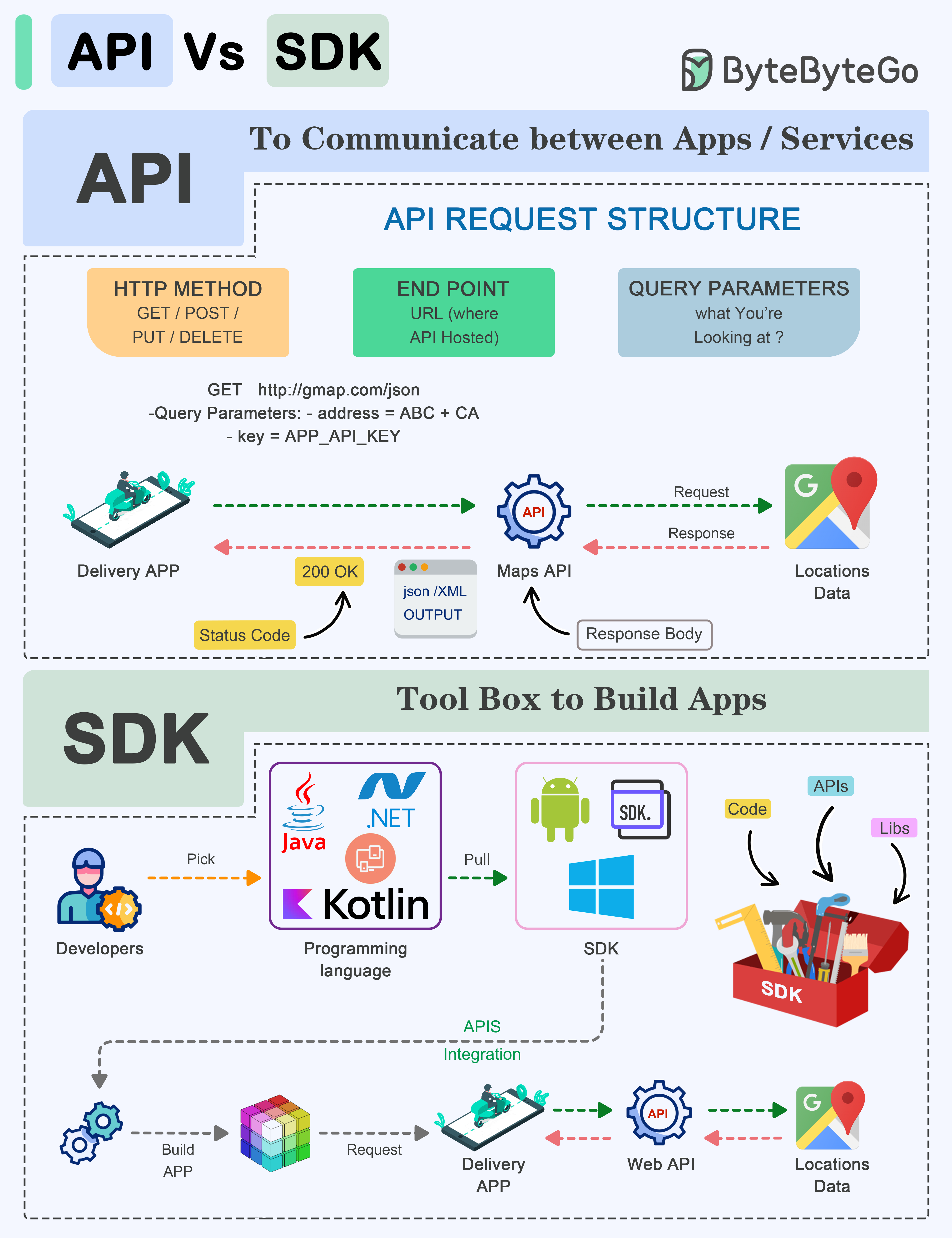
API (Application Programming Interface) and SDK (Software Development Kit) are essential tools in the software development world, but they serve distinct purposes:
API:
An API is a set of rules and protocols that allows different software applications and services to communicate with each other.
- It defines how software components should interact.
- Facilitates data exchange and functionality access between software components.
- Typically consists of endpoints, requests, and responses.
SDK:
An SDK is a comprehensive package of tools, libraries, sample code, and documentation that assists developers in building applications for a particular platform, framework, or hardware.
- Offers higher-level abstractions, simplifying development for a specific platform.
- Tailored to specific platforms or frameworks, ensuring compatibility and optimal performance on that platform.
- Offer access to advanced features and capabilities specific to the platform, which might be otherwise challenging to implement from scratch.
The choice between APIs and SDKs depends on the development goals and requirements of the project.