mirror of
https://github.com/ByteByteGoHq/system-design-101.git
synced 2026-04-01 16:57:23 -04:00
 ee4b7305a2
This PR adds all the guides from [Visual
Guides](https://bytebytego.com/guides/) section on bytebytego to the
repository with proper links.

- [x] Markdown files for guides and categories are placed inside
`data/guides` and `data/categories`
- [x] Guide links in readme are auto-generated using
`scripts/readme.ts`. Everytime you run the script `npm run
update-readme`, it reads the categories and guides from the above
mentioned folders, generate production links for guides and categories
and populate the table of content in the readme. This ensures that any
future guides and categories will automatically get added to the readme.
- [x] Sorting inside the readme matches the actual category and guides
sorting on production
1.3 KiB
1.3 KiB
title, description, image, createdAt, draft, categories, tags
| title | description | image | createdAt | draft | categories | tags | |||
|---|---|---|---|---|---|---|---|---|---|
| API Gateway 101 | Learn the fundamentals of API Gateways: functions, benefits, and more. | https://assets.bytebytego.com/diagrams/0074-api-gateway-101.png | 2024-02-15 | false |
|
|
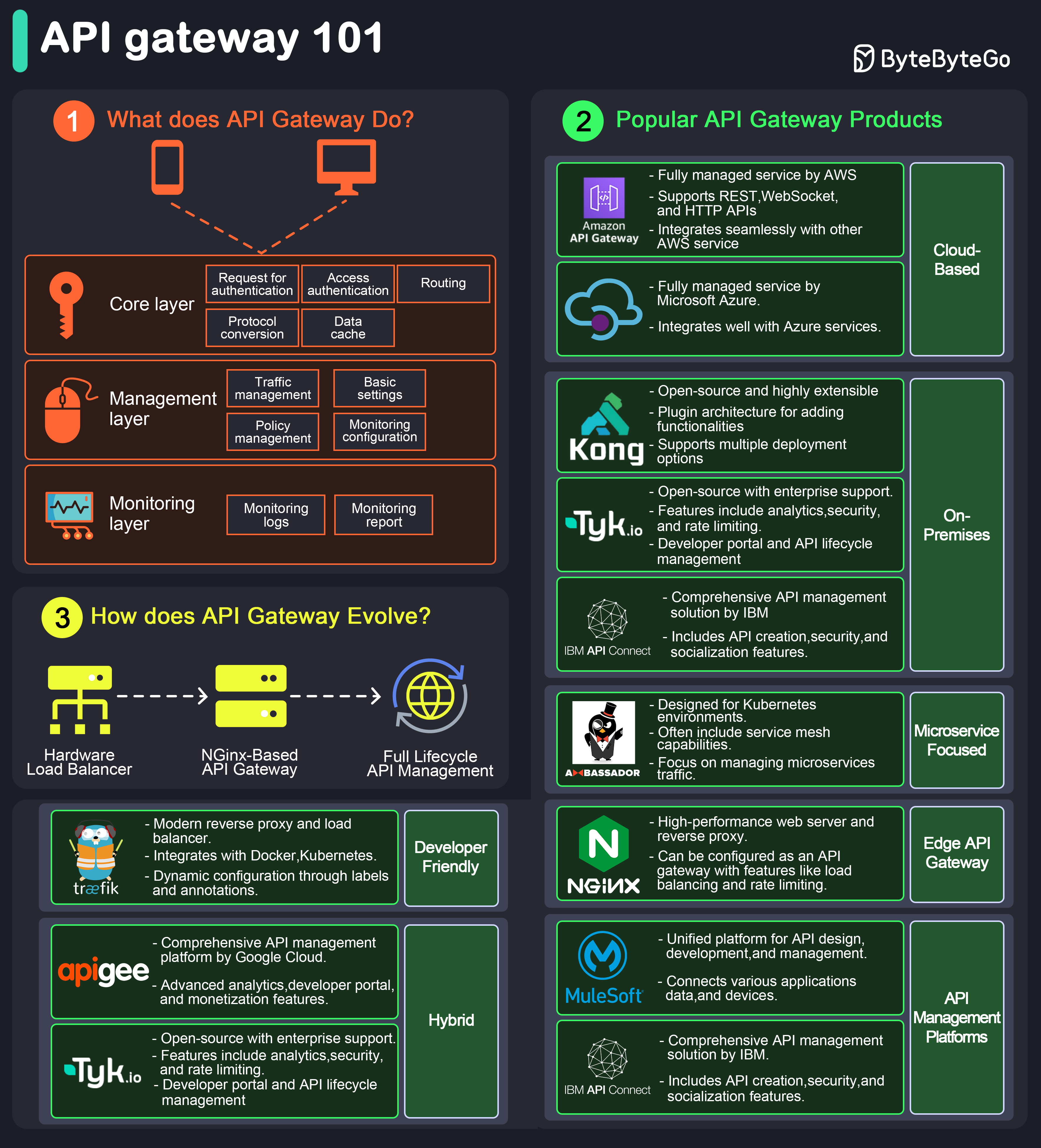
An API gateway is a server that acts as an API front-end, receiving API requests, enforcing throttling and security policies, passing requests to the back-end service, and then returning the appropriate result to the client.
It is essentially a middleman between the client and the server, managing and optimizing API traffic.
Key Functions of an API Gateway
- Request Routing: Directs incoming API requests to the appropriate backend service.
- Load Balancing: Distributes requests across multiple servers to ensure no single server is overwhelmed.
- Security: Implements security measures like authentication, authorization, and data encryption.
- Rate Limiting and Throttling: Controls the number of requests a client can make within a certain period.
- API Composition: Combines multiple backend API requests into a single frontend request to optimize performance.
- Caching: Stores responses temporarily to reduce the need for repeated processing.