 ee4b7305a2
This PR adds all the guides from [Visual
Guides](https://bytebytego.com/guides/) section on bytebytego to the
repository with proper links.

- [x] Markdown files for guides and categories are placed inside
`data/guides` and `data/categories`
- [x] Guide links in readme are auto-generated using
`scripts/readme.ts`. Everytime you run the script `npm run
update-readme`, it reads the categories and guides from the above
mentioned folders, generate production links for guides and categories
and populate the table of content in the readme. This ensures that any
future guides and categories will automatically get added to the readme.
- [x] Sorting inside the readme matches the actual category and guides
sorting on production
1.6 KiB
title, description, image, createdAt, draft, categories, tags
| title | description | image | createdAt | draft | categories | tags | |||
|---|---|---|---|---|---|---|---|---|---|
| A Roadmap for Full-Stack Development | A guide to the technologies and skills needed for full-stack development. | https://assets.bytebytego.com/diagrams/0199-full-stack-developer-roadmap.png | 2024-02-18 | false |
|
|
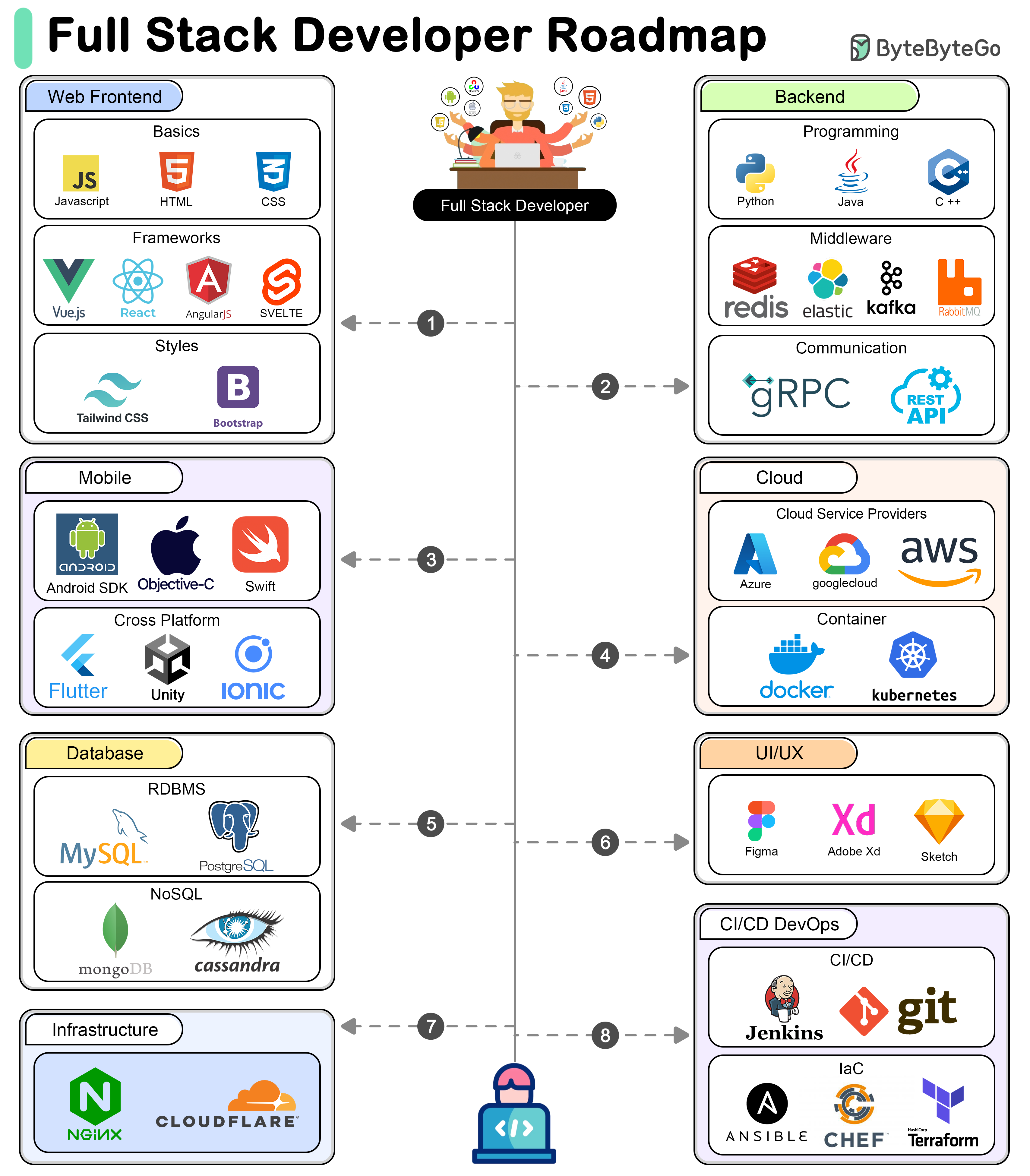
A full-stack developer needs to be proficient in a wide range of technologies and tools across different areas of software development. Here’s a comprehensive look at the technical stacks required for a full-stack developer.
Technical Stacks for Full-Stack Development
-
Frontend Development
Frontend development involves creating the user interface and user experience of a web application.
-
Backend Development
Backend development involves managing the server-side logic, databases, and integration of various services.
-
Database Development
Database development involves managing data storage, retrieval, and manipulation.
-
Mobile Development
Mobile development involves creating applications for mobile devices.
-
Cloud Computing
Cloud computing involves deploying and managing applications on cloud platforms.
-
UI/UX Design
UI/UX design involves designing the user interface and experience of applications.
-
Infrastructure and DevOps
Infrastructure and DevOps involve managing the infrastructure, deployment, and continuous integration/continuous delivery (CI/CD) of applications.