 ee4b7305a2
This PR adds all the guides from [Visual
Guides](https://bytebytego.com/guides/) section on bytebytego to the
repository with proper links.

- [x] Markdown files for guides and categories are placed inside
`data/guides` and `data/categories`
- [x] Guide links in readme are auto-generated using
`scripts/readme.ts`. Everytime you run the script `npm run
update-readme`, it reads the categories and guides from the above
mentioned folders, generate production links for guides and categories
and populate the table of content in the readme. This ensures that any
future guides and categories will automatically get added to the readme.
- [x] Sorting inside the readme matches the actual category and guides
sorting on production
1.5 KiB
title, description, image, createdAt, draft, categories, tags
| title | description | image | createdAt | draft | categories | tags | |||
|---|---|---|---|---|---|---|---|---|---|
| Infrastructure as Code Landscape Cheatsheet | A quick reference guide to the Infrastructure as Code landscape. | https://assets.bytebytego.com/diagrams/0063-a-cheatsheet-on-infrastructure-as-code-landscape.png | 2024-02-18 | false |
|
|
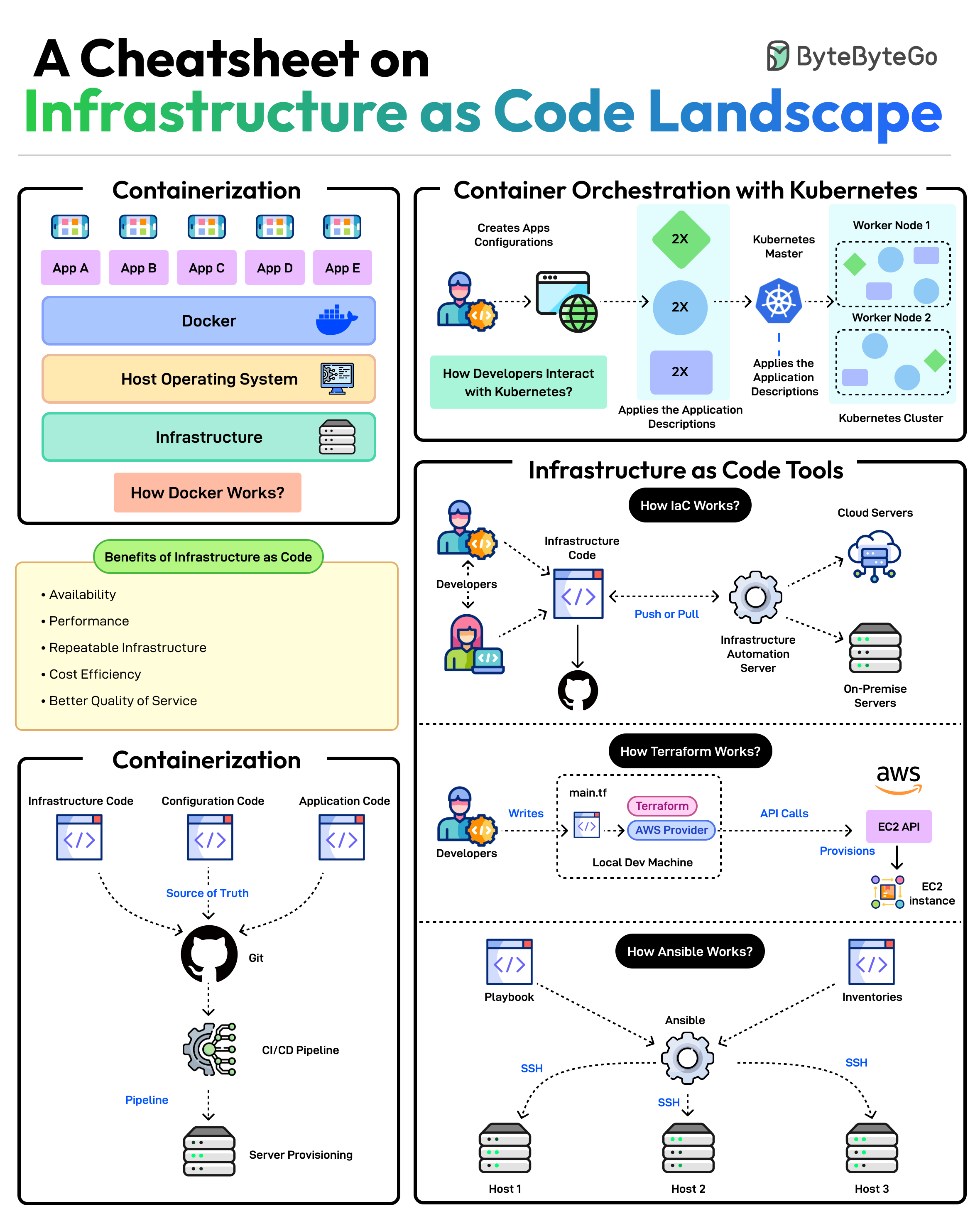
Scalable infrastructure provisioning provides several benefits related to availability, scalability, repeatability, and cost-effectiveness.
But how do you achieve this?
Provisioning infrastructure using code is the key to scalable infra management.
There are multiple strategies that can help:
-
Containerization is one of the first strategies to make application deployments based on code. Docker is one of the most popular ways to containerize the application.
-
Next, container orchestration becomes a necessity when dealing with multiple containers in an application. This is where container orchestration tools like Kubernetes become important.
-
IaC treats infrastructure provisioning and configuration as code, allowing developers to define the application infrastructure in files that can be versioned, tested, and reused. Popular tools such as Terraform, AWS CloudFormation, and Ansible can be used. Ansible is more of a configuration tool.
-
GitOps leverages a Git workflow combined with CI/CD to automate infrastructure and configuration updates.