 ee4b7305a2
This PR adds all the guides from [Visual
Guides](https://bytebytego.com/guides/) section on bytebytego to the
repository with proper links.

- [x] Markdown files for guides and categories are placed inside
`data/guides` and `data/categories`
- [x] Guide links in readme are auto-generated using
`scripts/readme.ts`. Everytime you run the script `npm run
update-readme`, it reads the categories and guides from the above
mentioned folders, generate production links for guides and categories
and populate the table of content in the readme. This ensures that any
future guides and categories will automatically get added to the readme.
- [x] Sorting inside the readme matches the actual category and guides
sorting on production
1.5 KiB
title, description, image, createdAt, draft, categories, tags
| title | description | image | createdAt | draft | categories | tags | |||
|---|---|---|---|---|---|---|---|---|---|
| A Beginner's Guide to CDN | Learn about CDNs: improve performance, reliability, and security. | https://assets.bytebytego.com/diagrams/0025-a-beginner-s-guide-to-cdn.png | 2024-02-18 | false |
|
|
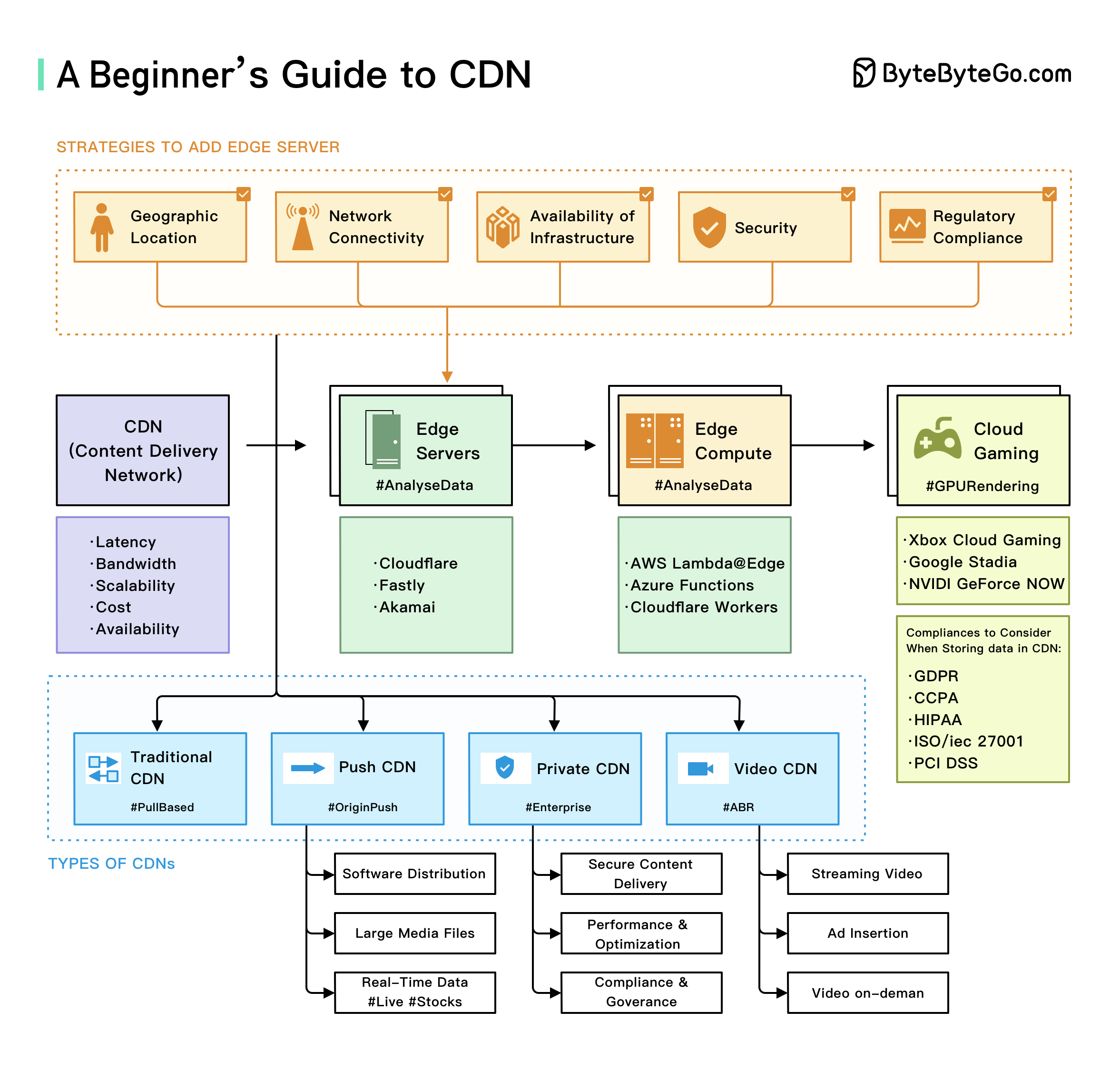
A guest post by Love Sharma. You can read the full article here.
CDNs are distributed server networks that help improve the performance, reliability, and security of content delivery on the internet.
The Overall CDN Diagram explains:
-
Edge servers are located closer to the end user than traditional servers, which helps reduce latency and improve website performance.
-
Edge computing is a type of computing that processes data closer to the end user rather than in a centralized data center. This helps to reduce latency and improve the performance of applications that require real-time processing, such as video streaming or online gaming.
-
Cloud gaming is online gaming that uses cloud computing to provide users with high-quality, low-latency gaming experiences.
Together, these technologies are transforming how we access and consume digital content. By providing faster, more reliable, and more immersive experiences for users, they are helping to drive the growth of the digital economy and create new opportunities for businesses and consumers alike.