mirror of
https://github.com/ByteByteGoHq/system-design-101.git
synced 2026-04-01 16:57:23 -04:00
 ee4b7305a2
This PR adds all the guides from [Visual
Guides](https://bytebytego.com/guides/) section on bytebytego to the
repository with proper links.

- [x] Markdown files for guides and categories are placed inside
`data/guides` and `data/categories`
- [x] Guide links in readme are auto-generated using
`scripts/readme.ts`. Everytime you run the script `npm run
update-readme`, it reads the categories and guides from the above
mentioned folders, generate production links for guides and categories
and populate the table of content in the readme. This ensures that any
future guides and categories will automatically get added to the readme.
- [x] Sorting inside the readme matches the actual category and guides
sorting on production
901 B
901 B
title, description, image, createdAt, draft, categories, tags
| title | description | image | createdAt | draft | categories | tags | |||
|---|---|---|---|---|---|---|---|---|---|
| 9 Best Practices for Developing Microservices | Explore 9 key practices for effective microservices development. | https://assets.bytebytego.com/diagrams/0275-micro-best-practices.png | 2024-02-26 | false |
|
|
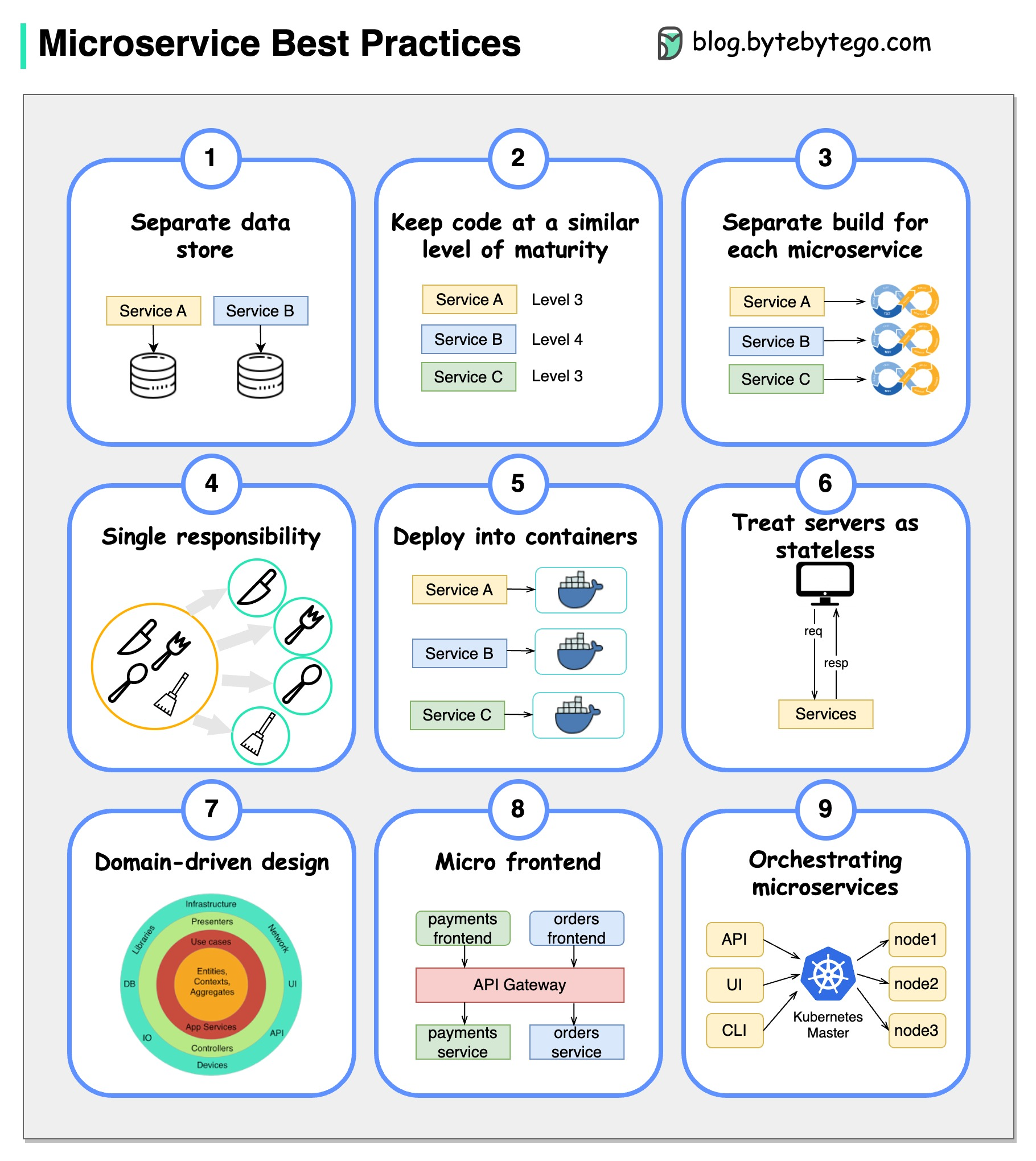
When developing microservices, it's crucial to follow these best practices:
Best Practices
-
Use separate data storage for each microservice
-
Keep code at a similar level of maturity
-
Separate build for each microservice
-
Assign each microservice with a single responsibility
-
Deploy into containers
-
Design stateless services
-
Adopt domain-driven design
-
Design micro frontend
-
Orchestrating microservices