mirror of
https://github.com/ByteByteGoHq/system-design-101.git
synced 2026-04-01 16:57:23 -04:00
 ee4b7305a2
This PR adds all the guides from [Visual
Guides](https://bytebytego.com/guides/) section on bytebytego to the
repository with proper links.

- [x] Markdown files for guides and categories are placed inside
`data/guides` and `data/categories`
- [x] Guide links in readme are auto-generated using
`scripts/readme.ts`. Everytime you run the script `npm run
update-readme`, it reads the categories and guides from the above
mentioned folders, generate production links for guides and categories
and populate the table of content in the readme. This ensures that any
future guides and categories will automatically get added to the readme.
- [x] Sorting inside the readme matches the actual category and guides
sorting on production
1.5 KiB
1.5 KiB
title, description, image, createdAt, draft, categories, tags
| title | description | image | createdAt | draft | categories | tags | |||
|---|---|---|---|---|---|---|---|---|---|
| 8 Tips for Efficient API Design | Improve your API design with these 8 essential tips for efficiency. | https://assets.bytebytego.com/diagrams/0385-top-8-tips-for-restful-api-design.png | 2024-02-08 | false |
|
|
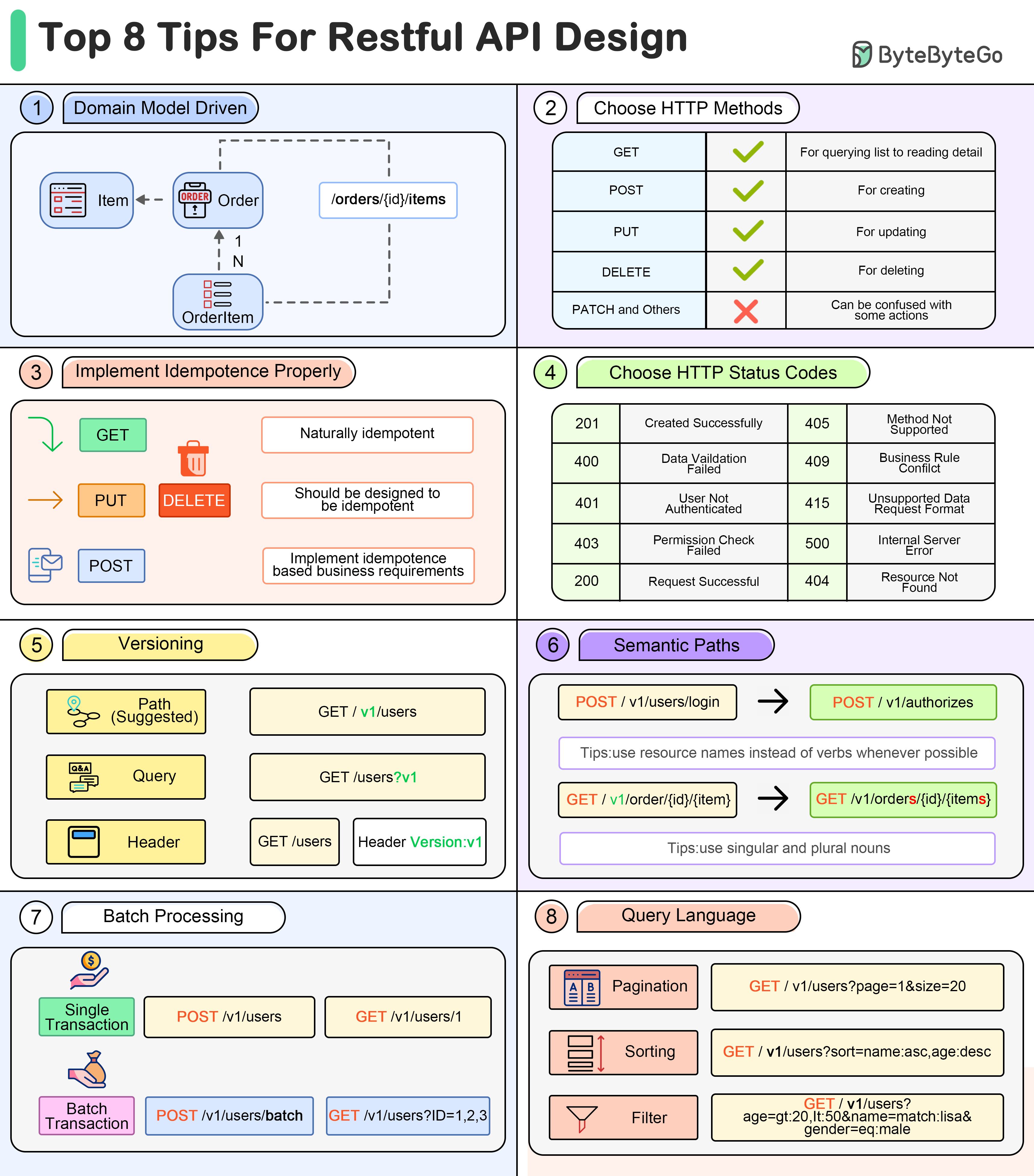
- Domain Model Driven When designing the path structure of a RESTful API, we can refer to the domain model.
- Choose Proper HTTP Methods Defining a few basic HTTP Methods can simplify the API design. For example, PATCH can often be a problem for teams.
- Implement Idempotence Properly Designing for idempotence in advance can improve the robustness of an API. GET method is idempotent, but POST needs to be designed properly to be idempotent.
- Choose Proper HTTP Status Codes Define a limited number of HTTP status codes to use to simplify application development.
- Versioning Designing the version number for the API in advance can simplify upgrade work.
- Semantic Paths Using semantic paths makes APIs easier to understand, so that users can find the correct APIs in the documentation.
- Batch Processing Use batch/bulk as a keyword and place it at the end of the path.
- Query Language Designing a set of query rules makes the API more flexible. For example, pagination, sorting, filtering etc.