 ee4b7305a2
This PR adds all the guides from [Visual
Guides](https://bytebytego.com/guides/) section on bytebytego to the
repository with proper links.

- [x] Markdown files for guides and categories are placed inside
`data/guides` and `data/categories`
- [x] Guide links in readme are auto-generated using
`scripts/readme.ts`. Everytime you run the script `npm run
update-readme`, it reads the categories and guides from the above
mentioned folders, generate production links for guides and categories
and populate the table of content in the readme. This ensures that any
future guides and categories will automatically get added to the readme.
- [x] Sorting inside the readme matches the actual category and guides
sorting on production
1.2 KiB
title, description, image, createdAt, draft, categories, tags
| title | description | image | createdAt | draft | categories | tags | |||
|---|---|---|---|---|---|---|---|---|---|
| 8 Key OOP Concepts Every Developer Should Know | Learn the 8 key OOP concepts every developer should know. | https://assets.bytebytego.com/diagrams/0294-oo-concepts.png | 2024-03-01 | false |
|
|
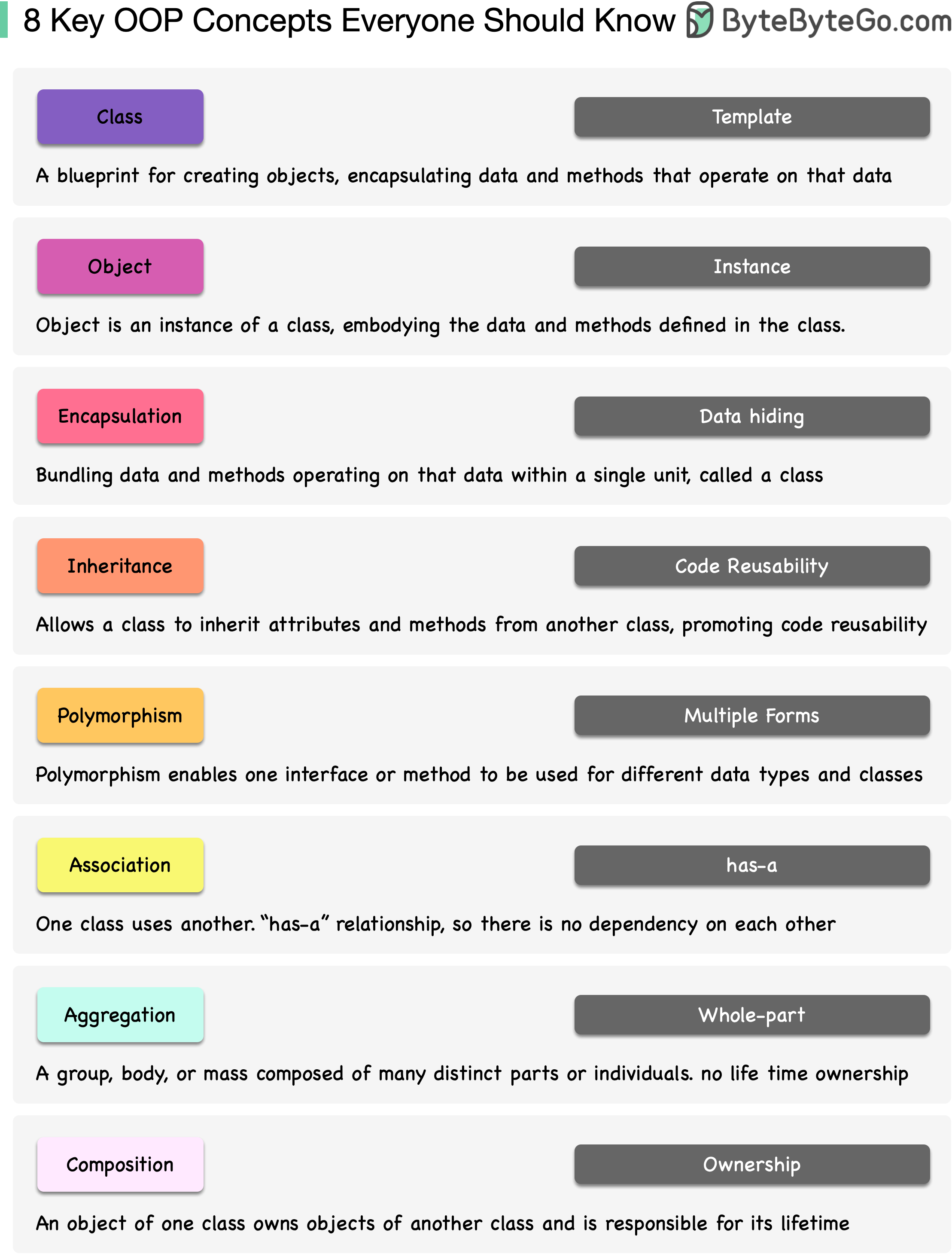
Object-Oriented Programming (OOP) has been around since the 1960s, but it really took off in the 1990s with languages like Java and C++.
Why is OOP Important? OOP allows you to create blueprints (called classes) for digital objects, and these objects know how to communicate with one another to make amazing things happen in your software. Having a well-organized toolbox rather than a jumbled drawer of tools makes your code tidier and easier to change.
In order to get to grips with OOP, think of it as creating digital Lego blocks that can be combined in countless ways. Take a book or watch some tutorials, and then practice writing code - there's no better way to learn than to practice!
Don't be afraid of OOP - it's a powerful tool in your coder's toolbox, and with some practice, you'll be able to develop everything from nifty apps to digital skyscrapers!