 ee4b7305a2
This PR adds all the guides from [Visual
Guides](https://bytebytego.com/guides/) section on bytebytego to the
repository with proper links.

- [x] Markdown files for guides and categories are placed inside
`data/guides` and `data/categories`
- [x] Guide links in readme are auto-generated using
`scripts/readme.ts`. Everytime you run the script `npm run
update-readme`, it reads the categories and guides from the above
mentioned folders, generate production links for guides and categories
and populate the table of content in the readme. This ensures that any
future guides and categories will automatically get added to the readme.
- [x] Sorting inside the readme matches the actual category and guides
sorting on production
1.3 KiB
title, description, image, createdAt, draft, categories, tags
| title | description | image | createdAt | draft | categories | tags | |||
|---|---|---|---|---|---|---|---|---|---|
| 8 Data Structures That Power Your Databases | Explore 8 key data structures that drive database efficiency. | https://assets.bytebytego.com/diagrams/0181-eight-ds-db.jpg | 2024-03-02 | false |
|
|
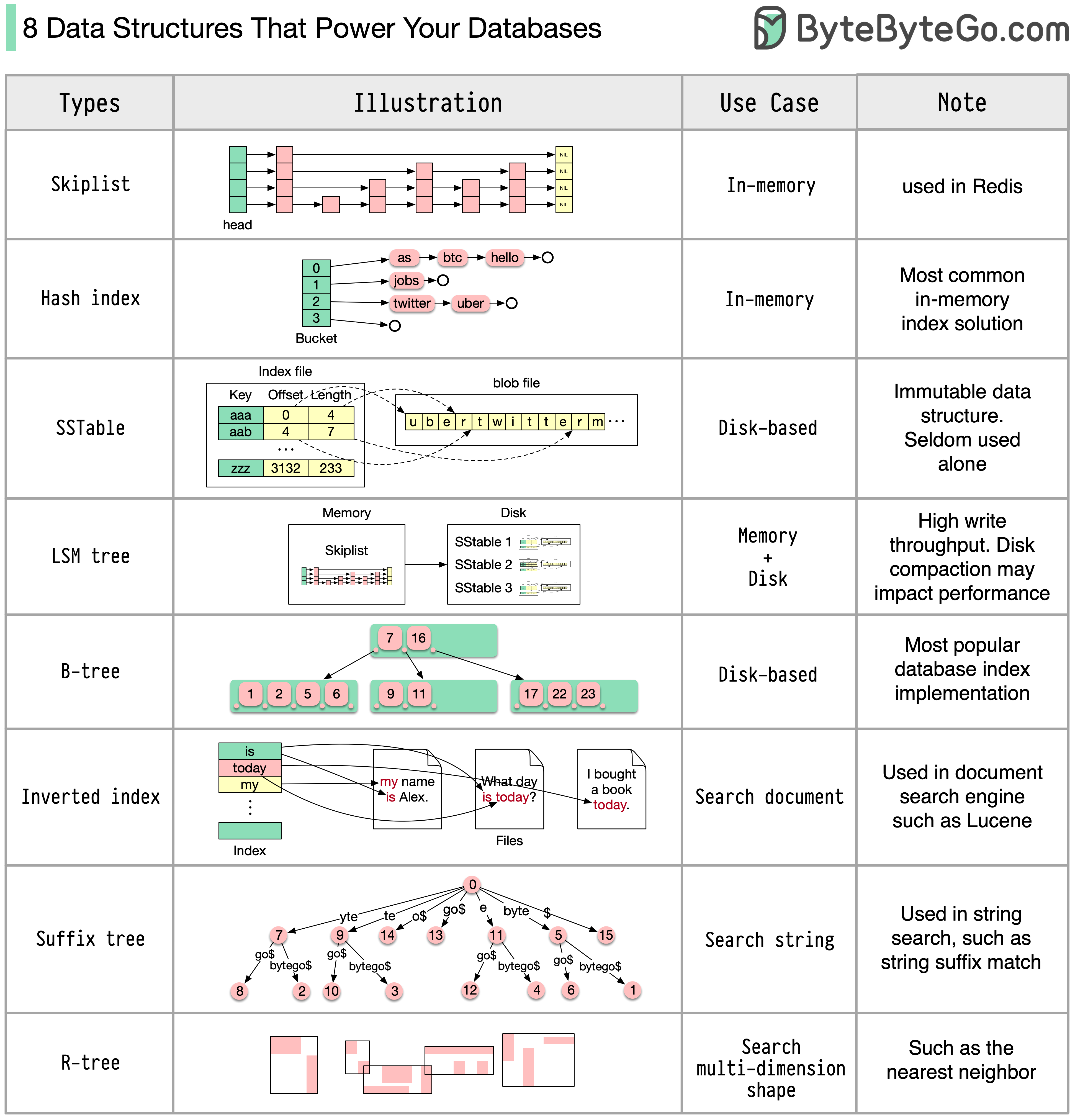
The answer will vary depending on your use case. Data can be indexed in memory or on disk. Similarly, data formats vary, such as numbers, strings, geographic coordinates, etc. The system might be write-heavy or read-heavy. All of these factors affect your choice of database index format.
The following are some of the most popular data structures used for indexing data:
-
Skiplist: a common in-memory index type. Used in Redis
-
Hash index: a very common implementation of the “Map” data structure (or “Collection”)
-
SSTable: immutable on-disk “Map” implementation
-
LSM tree: Skiplist + SSTable. High write throughput
-
B-tree: disk-based solution. Consistent read/write performance
-
Inverted index: used for document indexing. Used in Lucene
-
Suffix tree: for string pattern search
-
R-tree: multi-dimension search, such as finding the nearest neighbor
This is not an exhaustive list of all database index types.