mirror of
https://github.com/ByteByteGoHq/system-design-101.git
synced 2026-04-01 16:57:23 -04:00
 ee4b7305a2
This PR adds all the guides from [Visual
Guides](https://bytebytego.com/guides/) section on bytebytego to the
repository with proper links.

- [x] Markdown files for guides and categories are placed inside
`data/guides` and `data/categories`
- [x] Guide links in readme are auto-generated using
`scripts/readme.ts`. Everytime you run the script `npm run
update-readme`, it reads the categories and guides from the above
mentioned folders, generate production links for guides and categories
and populate the table of content in the readme. This ensures that any
future guides and categories will automatically get added to the readme.
- [x] Sorting inside the readme matches the actual category and guides
sorting on production
1.1 KiB
1.1 KiB
title, description, image, createdAt, draft, categories, tags
| title | description | image | createdAt | draft | categories | tags | |||
|---|---|---|---|---|---|---|---|---|---|
| 7 Must-Know Strategies to Scale Your Database | Explore 7 key strategies to effectively scale your database. | https://assets.bytebytego.com/diagrams/0161-database-scaling-cheatsheet.png | 2024-03-15 | false |
|
|
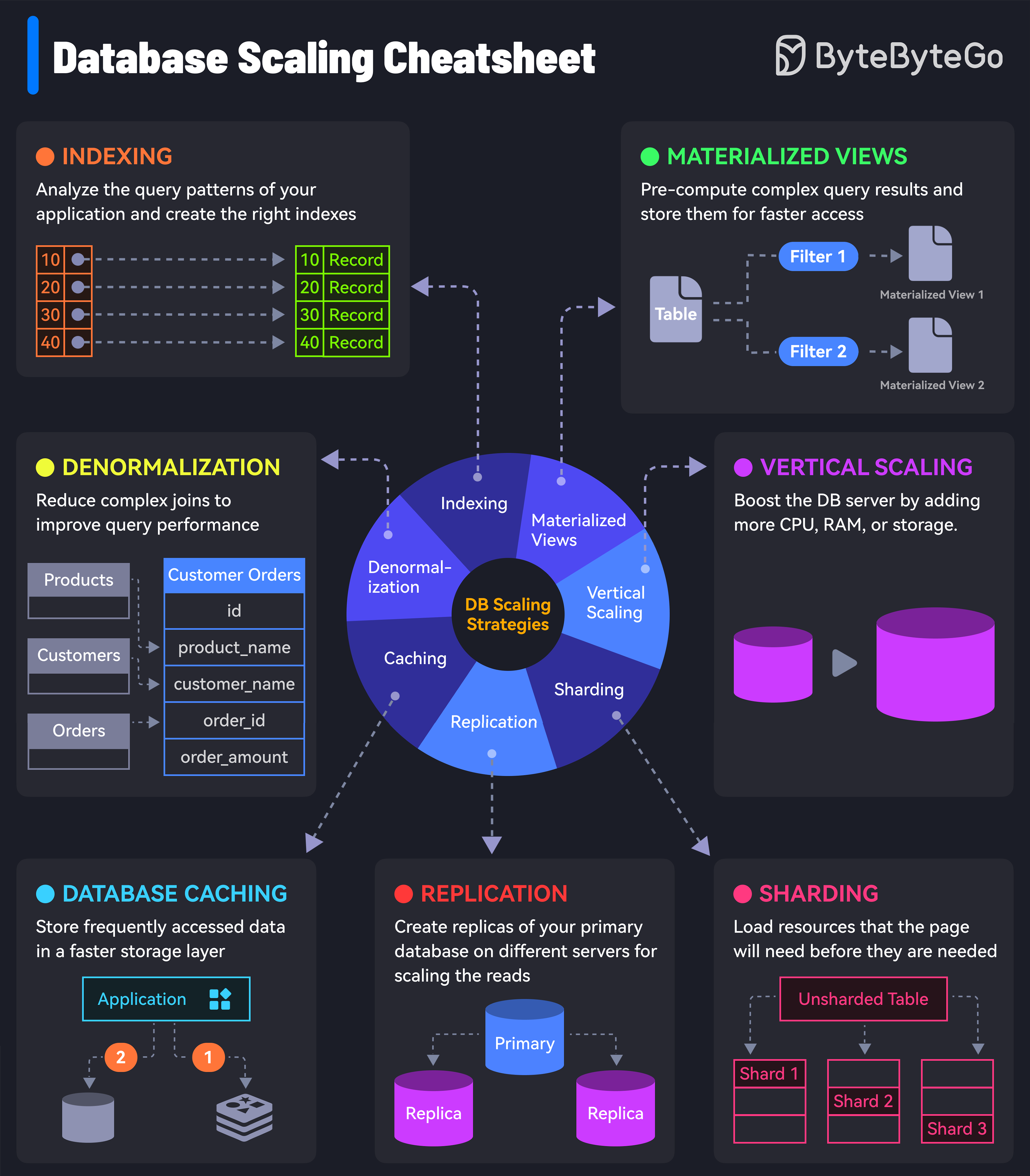
1. Indexing
Check the query patterns of your application and create the right indexes.
2. Materialized Views
Pre-compute complex query results and store them for faster access.
3. Denormalization
Reduce complex joins to improve query performance.
4. Vertical Scaling
Boost your database server by adding more CPU, RAM, or storage.
5. Caching
Store frequently accessed data in a faster storage layer to reduce database load.
6. Replication
Create replicas of your primary database on different servers for scaling the reads.
7. Sharding
Split your database tables into smaller pieces and spread them across servers. Used for scaling the writes as well as the reads.