mirror of
https://github.com/ByteByteGoHq/system-design-101.git
synced 2026-04-01 16:57:23 -04:00
 ee4b7305a2
This PR adds all the guides from [Visual
Guides](https://bytebytego.com/guides/) section on bytebytego to the
repository with proper links.

- [x] Markdown files for guides and categories are placed inside
`data/guides` and `data/categories`
- [x] Guide links in readme are auto-generated using
`scripts/readme.ts`. Everytime you run the script `npm run
update-readme`, it reads the categories and guides from the above
mentioned folders, generate production links for guides and categories
and populate the table of content in the readme. This ensures that any
future guides and categories will automatically get added to the readme.
- [x] Sorting inside the readme matches the actual category and guides
sorting on production
1.1 KiB
1.1 KiB
title, description, image, createdAt, draft, categories, tags
| title | description | image | createdAt | draft | categories | tags | |||
|---|---|---|---|---|---|---|---|---|---|
| 5 Important Components of Linux | Explore the core components of the Linux operating system. | https://assets.bytebytego.com/diagrams/0253-learn-linux.png | 2024-03-09 | false |
|
|
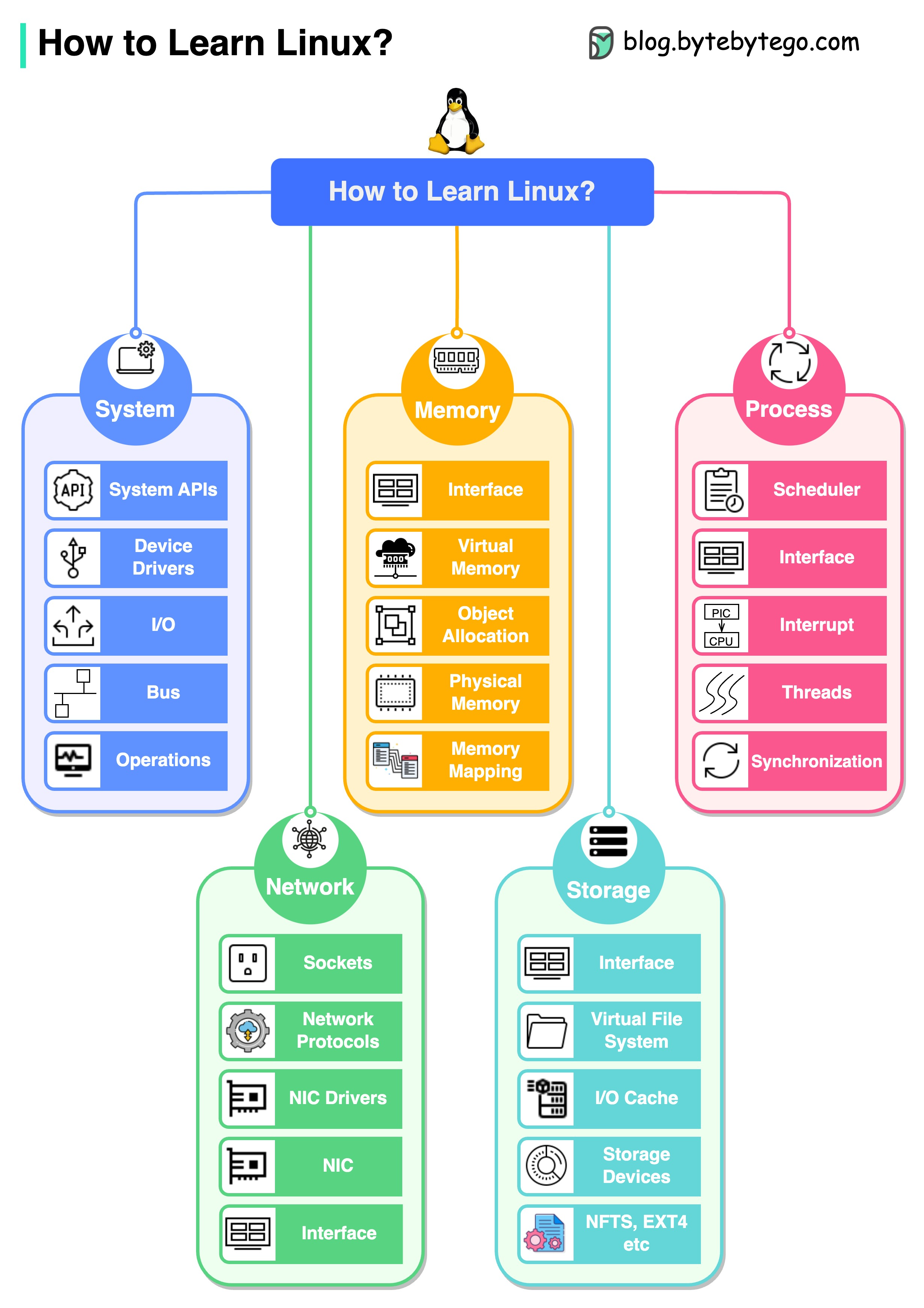
Here are the five important components of Linux:
-
System
In the system component, we need to learn modules like system APIs, device drivers, I/O, buses, etc.
-
Memory
In memory management, we need to learn modules like physical memory, virtual memory, memory mappings, object allocation, etc.
-
Process
In process management, we need to learn modules like process scheduling, interrupts, threads, synchronization, etc.
-
Network
In the network component, we need to learn important modules like network protocols, sockets, NIC drivers, etc.
-
Storage
In system storage management, we need to learn modules like file systems, I/O caches, different storage devices, file system implementations, etc.