 ee4b7305a2
This PR adds all the guides from [Visual
Guides](https://bytebytego.com/guides/) section on bytebytego to the
repository with proper links.

- [x] Markdown files for guides and categories are placed inside
`data/guides` and `data/categories`
- [x] Guide links in readme are auto-generated using
`scripts/readme.ts`. Everytime you run the script `npm run
update-readme`, it reads the categories and guides from the above
mentioned folders, generate production links for guides and categories
and populate the table of content in the readme. This ensures that any
future guides and categories will automatically get added to the readme.
- [x] Sorting inside the readme matches the actual category and guides
sorting on production
1.6 KiB
title, description, image, createdAt, draft, categories, tags
| title | description | image | createdAt | draft | categories | tags | |||
|---|---|---|---|---|---|---|---|---|---|
| 4 Ways of QR Code Payment | Explore the 4 different methods of QR code payments. | https://assets.bytebytego.com/diagrams/0310-qr-code.jpg | 2024-03-01 | false |
|
|
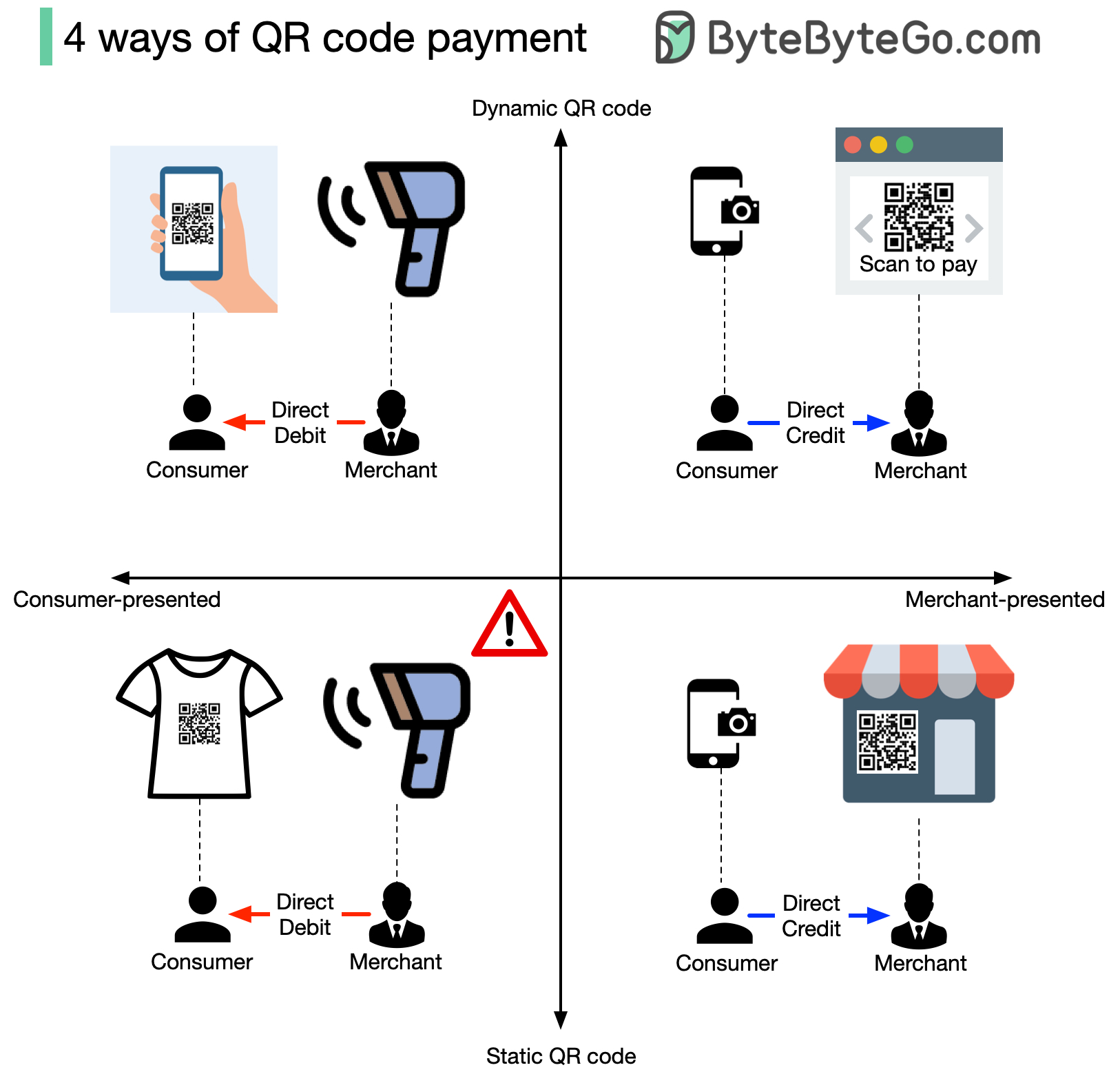
Payment through scanning QR code is very common, but do you know how many ways there are to do it?
There are 4 ways, no matter whether you’re using PayPal, Stripe, Paytm, WeChat, or Alipay. Is this surprising to you? To understand this, we will answer two questions.
Who Presents the QR Code?
-
You can present the QR code, and the merchant scans the code for payment. This is called ‘consumer-presented mode,’ and what the merchant does is direct debit your account.
-
Obviously, the other way is that the merchant presents the QR code for you to scan to pay the due amount. This is called ‘merchant-presented mode,’ and you grant the direct credit from your account.
Is the QR Code Dynamic or Static?
-
A dynamic QR code means the QR code will be generated when you present it, or it will automatically regenerate every few seconds. Because it is dynamically generated, it may contain rich information, such as the amount due, transaction type, etc.
-
A static QR code is generated once and used everywhere. Usually, it only contains the account information.
So there are 2*2=4 ways to scan a QR code, which are:
- Consumer-presented mode + static QR code
- Consumer-presented mode + dynamic QR code
- Merchant-presented mode + static QR code
- Merchant-presented mode + dynamic QR code