 ee4b7305a2
This PR adds all the guides from [Visual
Guides](https://bytebytego.com/guides/) section on bytebytego to the
repository with proper links.

- [x] Markdown files for guides and categories are placed inside
`data/guides` and `data/categories`
- [x] Guide links in readme are auto-generated using
`scripts/readme.ts`. Everytime you run the script `npm run
update-readme`, it reads the categories and guides from the above
mentioned folders, generate production links for guides and categories
and populate the table of content in the readme. This ensures that any
future guides and categories will automatically get added to the readme.
- [x] Sorting inside the readme matches the actual category and guides
sorting on production
1.5 KiB
title, description, image, createdAt, draft, categories, tags
| title | description | image | createdAt | draft | categories | tags | |||
|---|---|---|---|---|---|---|---|---|---|
| Top 9 HTTP Request Methods | Explore the top 9 HTTP request methods with clear explanations. | https://assets.bytebytego.com/diagrams/0371-top-9-http-request-methods.png | 2024-02-27 | false |
|
|
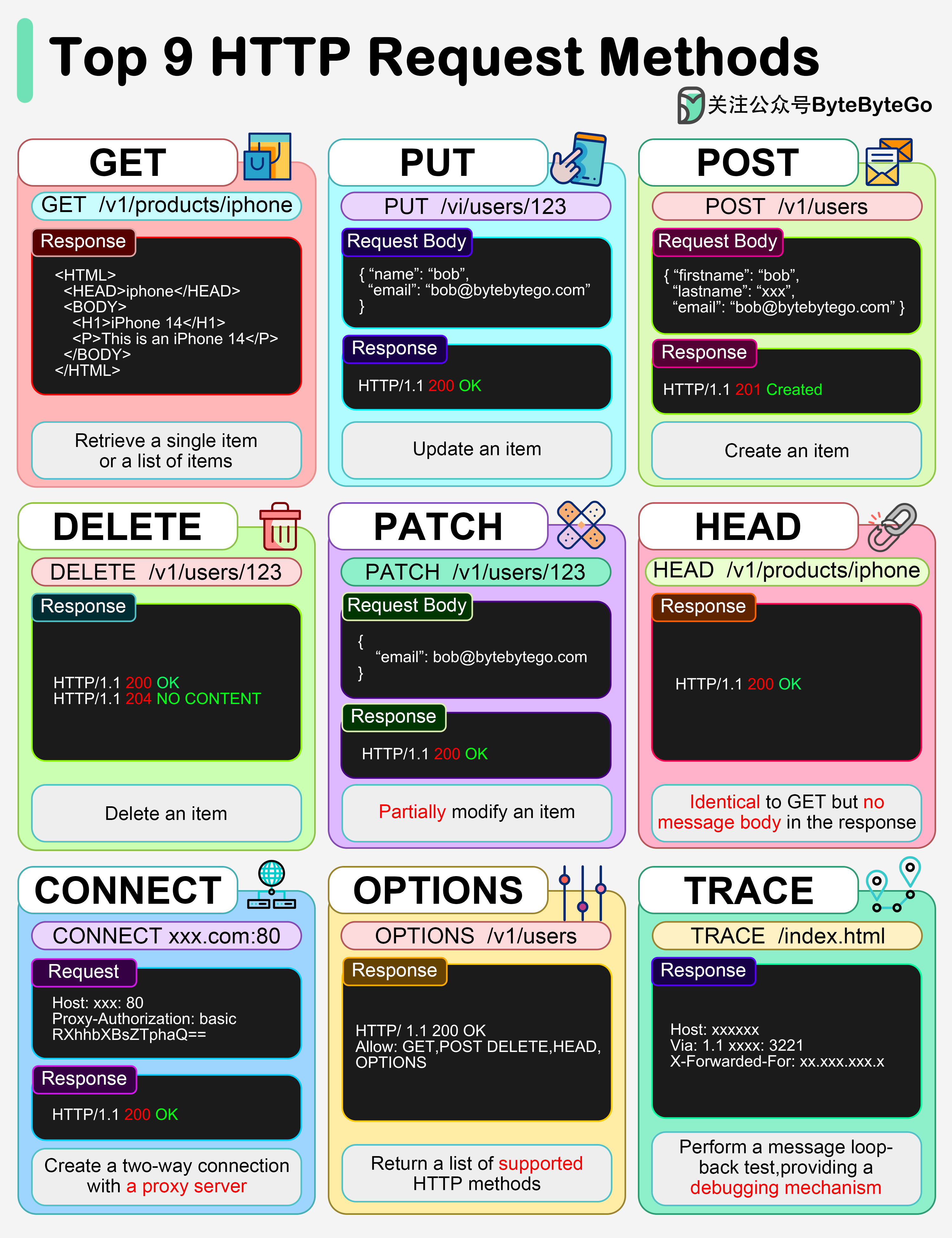
GET, POST, PUT... Common HTTP “verbs” in one figure.
-
HTTP GET
This retrieves a resource from the server. It is idempotent. Multiple identical requests return the same result.
-
HTTP PUT
This updates or Creates a resource. It is idempotent. Multiple identical requests will update the same resource.
-
HTTP POST
This is used to create new resources. It is not idempotent, making two identical POST will duplicate the resource creation.
-
HTTP DELETE
This is used to delete a resource. It is idempotent. Multiple identical requests will delete the same resource.
-
HTTP PATCH
The PATCH method applies partial modifications to a resource.
-
HTTP HEAD
The HEAD method asks for a response identical to a GET request but without the response body.
-
HTTP CONNECT
The CONNECT method establishes a tunnel to the server identified by the target resource.
-
HTTP OPTIONS
This describes the communication options for the target resource.
-
HTTP TRACE
This performs a message loop-back test along the path to the target resource.