 ee4b7305a2
This PR adds all the guides from [Visual
Guides](https://bytebytego.com/guides/) section on bytebytego to the
repository with proper links.

- [x] Markdown files for guides and categories are placed inside
`data/guides` and `data/categories`
- [x] Guide links in readme are auto-generated using
`scripts/readme.ts`. Everytime you run the script `npm run
update-readme`, it reads the categories and guides from the above
mentioned folders, generate production links for guides and categories
and populate the table of content in the readme. This ensures that any
future guides and categories will automatically get added to the readme.
- [x] Sorting inside the readme matches the actual category and guides
sorting on production
1.5 KiB
title, description, image, createdAt, draft, categories, tags
| title | description | image | createdAt | draft | categories | tags | |||
|---|---|---|---|---|---|---|---|---|---|
| Top 4 Kubernetes Service Types | Explore the top 4 Kubernetes service types with a helpful diagram. | https://assets.bytebytego.com/diagrams/0005-4-k8s-service-types.png | 2024-02-24 | false |
|
|
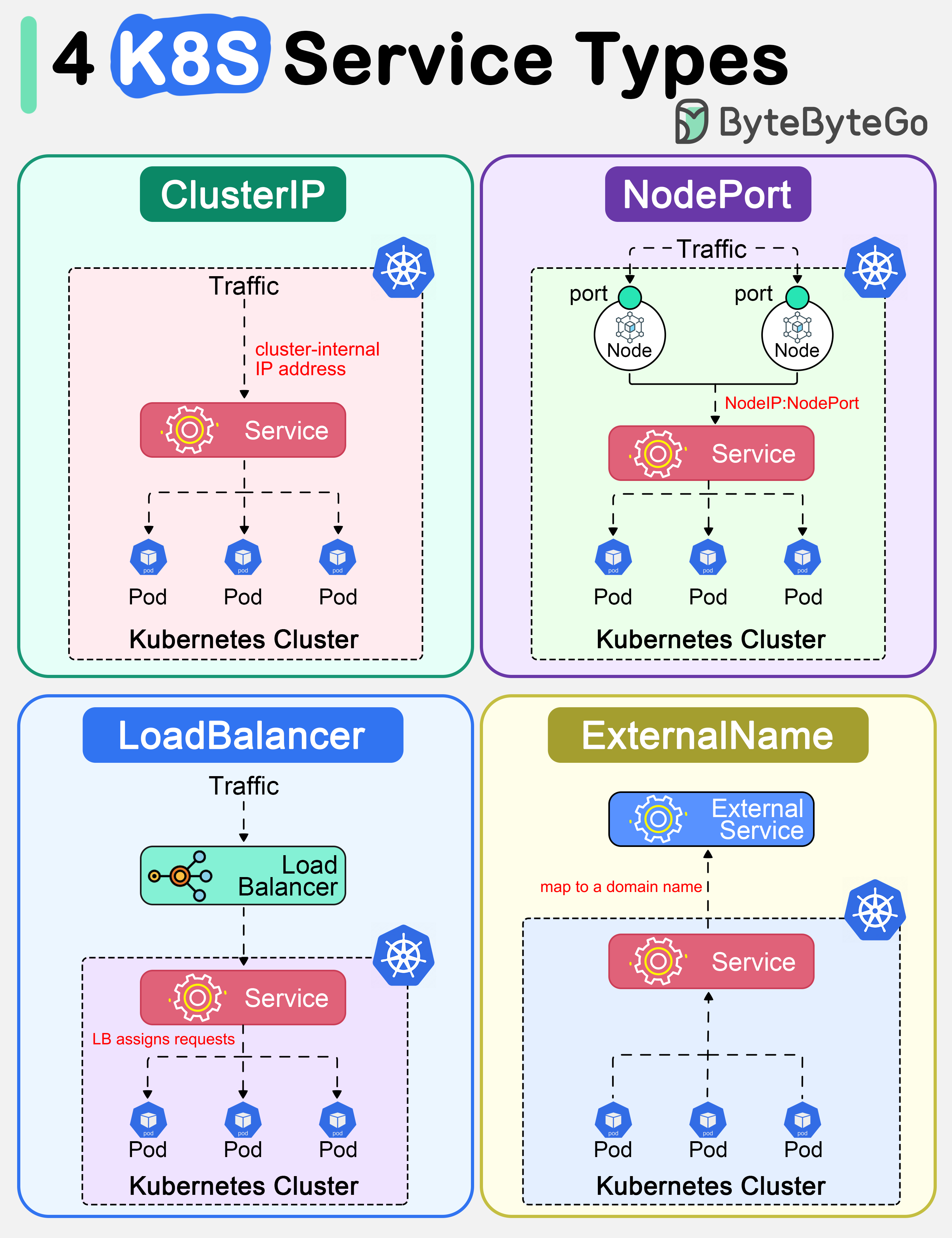
The diagram below shows 4 ways to expose a Service.
In Kubernetes, a Service is a method for exposing a network application in the cluster. We use a Service to make that set of Pods available on the network so that users can interact with it.
There are 4 types of Kubernetes services: ClusterIP, NodePort, LoadBalancer and ExternalName. The “type” property in the Service's specification determines how the service is exposed to the network.
Kubernetes Service Types
-
ClusterIP
ClusterIP is the default and most common service type. Kubernetes will assign a cluster-internal IP address to ClusterIP service. This makes the service only reachable within the cluster.
-
NodePort
This exposes the service outside of the cluster by adding a cluster-wide port on top of ClusterIP. We can request the service by NodeIP:NodePort.
-
LoadBalancer
This exposes the Service externally using a cloud provider’s load balancer.
-
ExternalName
This maps a Service to a domain name. This is commonly used to create a service within Kubernetes to represent an external database.