mirror of
https://github.com/ByteByteGoHq/system-design-101.git
synced 2026-04-01 16:57:23 -04:00
 ee4b7305a2
This PR adds all the guides from [Visual
Guides](https://bytebytego.com/guides/) section on bytebytego to the
repository with proper links.

- [x] Markdown files for guides and categories are placed inside
`data/guides` and `data/categories`
- [x] Guide links in readme are auto-generated using
`scripts/readme.ts`. Everytime you run the script `npm run
update-readme`, it reads the categories and guides from the above
mentioned folders, generate production links for guides and categories
and populate the table of content in the readme. This ensures that any
future guides and categories will automatically get added to the readme.
- [x] Sorting inside the readme matches the actual category and guides
sorting on production
1.0 KiB
1.0 KiB
title, description, image, createdAt, draft, categories, tags
| title | description | image | createdAt | draft | categories | tags | |||
|---|---|---|---|---|---|---|---|---|---|
| How Do C++, Java, Python Work? | Understanding the inner workings of C++, Java, and Python. | https://assets.bytebytego.com/diagrams/0003-how-python-works.png | 2024-03-02 | false |
|
|
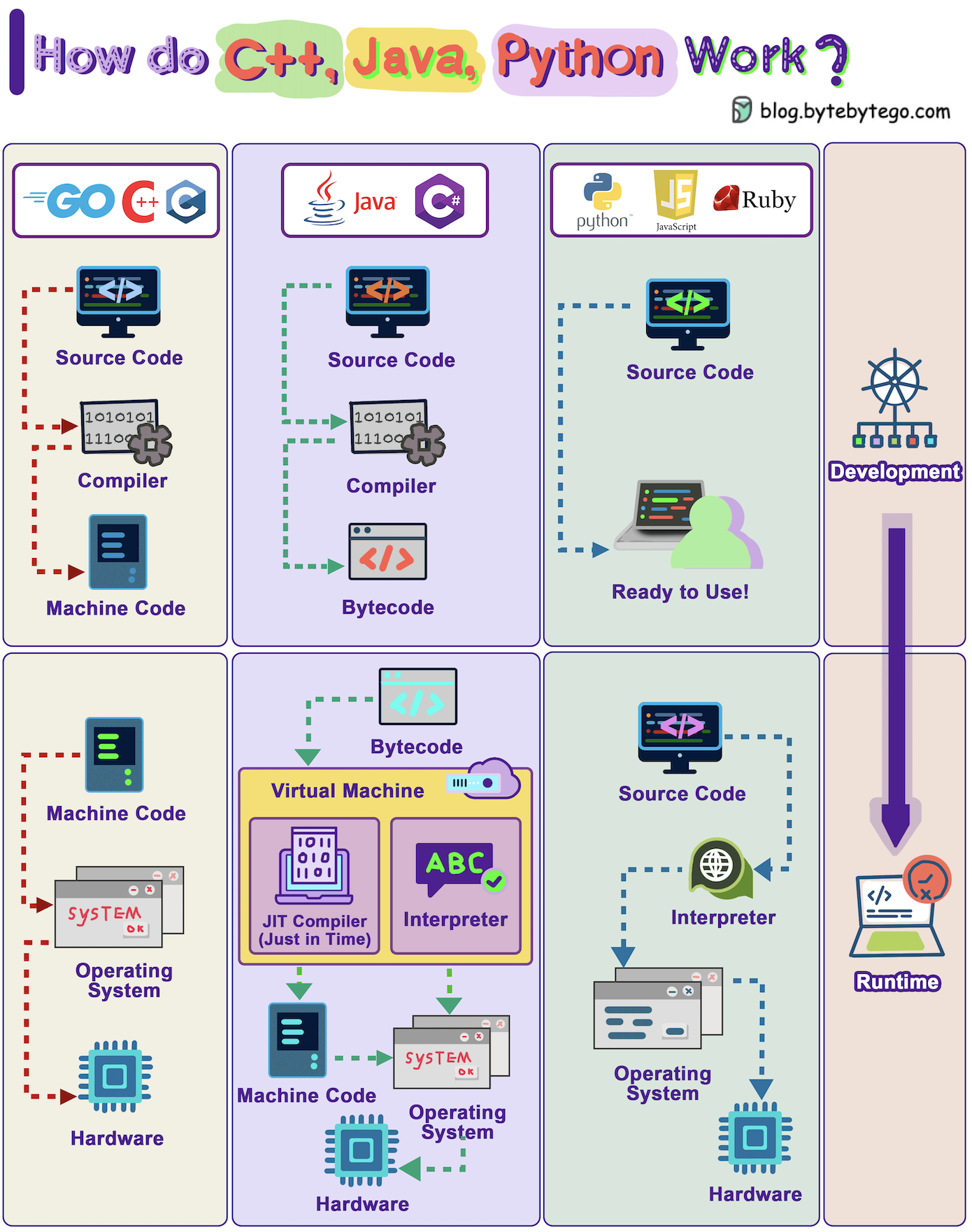
The diagram shows how the compilation and execution work.
Compiled languages are compiled into machine code by the compiler. The machine code can later be executed directly by the CPU. Examples: C, C++, Go.
A bytecode language like Java, compiles the source code into bytecode first, then the JVM executes the program. Sometimes JIT (Just-In-Time) compiler compiles the source code into machine code to speed up the execution. Examples: Java, C#
Interpreted languages are not compiled. They are interpreted by the interpreter during runtime. Examples: Python, Javascript, Ruby
Compiled languages in general run faster than interpreted languages.