 ee4b7305a2
This PR adds all the guides from [Visual
Guides](https://bytebytego.com/guides/) section on bytebytego to the
repository with proper links.

- [x] Markdown files for guides and categories are placed inside
`data/guides` and `data/categories`
- [x] Guide links in readme are auto-generated using
`scripts/readme.ts`. Everytime you run the script `npm run
update-readme`, it reads the categories and guides from the above
mentioned folders, generate production links for guides and categories
and populate the table of content in the readme. This ensures that any
future guides and categories will automatically get added to the readme.
- [x] Sorting inside the readme matches the actual category and guides
sorting on production
1.8 KiB
title, description, image, createdAt, draft, categories, tags
| title | description | image | createdAt | draft | categories | tags | |||
|---|---|---|---|---|---|---|---|---|---|
| Tools for Shipping Code to Production | Explore tools for shipping code to production and ensuring code quality. | https://assets.bytebytego.com/diagrams/0335-ship-to-prod-tools.png | 2024-03-05 | false |
|
|
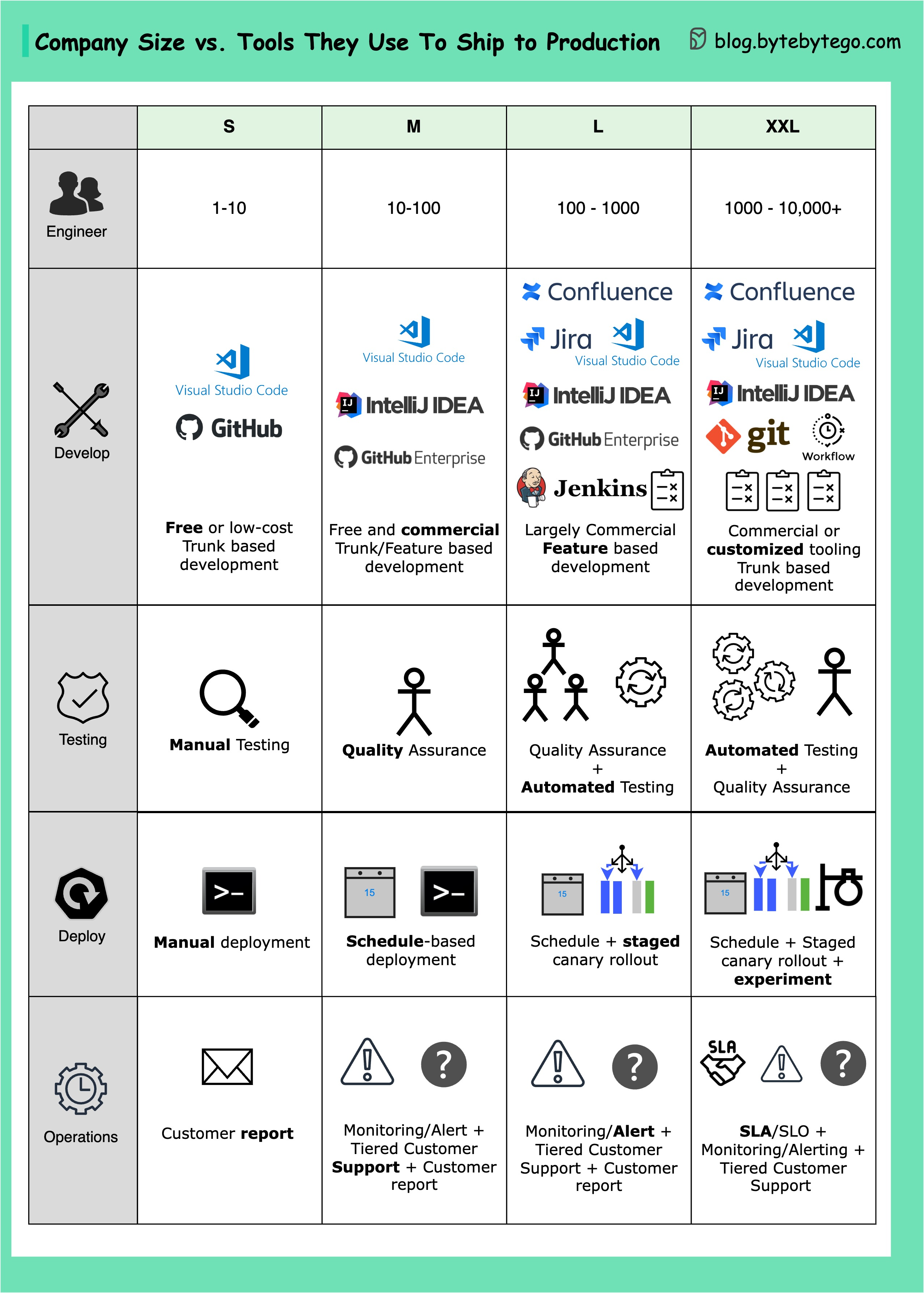
The approach generally depends on the size of the company. There is no one-size-fits-all solution, but we try to provide a general overview.
1-10 employees
In the early stages of a company, the focus is on finding a product-market fit. The emphasis is primarily on delivery and experimentation. Utilizing existing free or low-cost tools, developers handle testing and deployment. They also pay close attention to customer feedback and reports.
10-100 employees
Once the product-market fit is found, companies strive to scale. They are able to invest more in quality for critical functionalities and can create rapid evolution processes, such as scheduled deployments and testing procedures. Companies also proactively establish customer support processes to handle customer issues and provide proactive alerts.
100-1,000 employees
When a company's go-to-market strategy proves successful, and the product scales and grows rapidly, it starts to optimize its engineering efficiency. More commercial tools can be purchased, such as Atlassian products. A certain level of standardization across tools is introduced, and automation comes into play.
1,000-10,000+ employees
Large tech companies build experimental tooling and automation to ensure quality and gather customer feedback at scale. Netflix, for example, is well known for its "Test in Production" strategy, which conducts everything through experiments.