 ee4b7305a2
This PR adds all the guides from [Visual
Guides](https://bytebytego.com/guides/) section on bytebytego to the
repository with proper links.

- [x] Markdown files for guides and categories are placed inside
`data/guides` and `data/categories`
- [x] Guide links in readme are auto-generated using
`scripts/readme.ts`. Everytime you run the script `npm run
update-readme`, it reads the categories and guides from the above
mentioned folders, generate production links for guides and categories
and populate the table of content in the readme. This ensures that any
future guides and categories will automatically get added to the readme.
- [x] Sorting inside the readme matches the actual category and guides
sorting on production
1.4 KiB
title, description, image, createdAt, draft, categories, tags
| title | description | image | createdAt | draft | categories | tags | |||
|---|---|---|---|---|---|---|---|---|---|
| What is the Journey of a Slack Message? | Explore the journey of a Slack message from sender to receiver. | https://assets.bytebytego.com/diagrams/0338-slack-message-journey.jpg | 2024-03-08 | false |
|
|
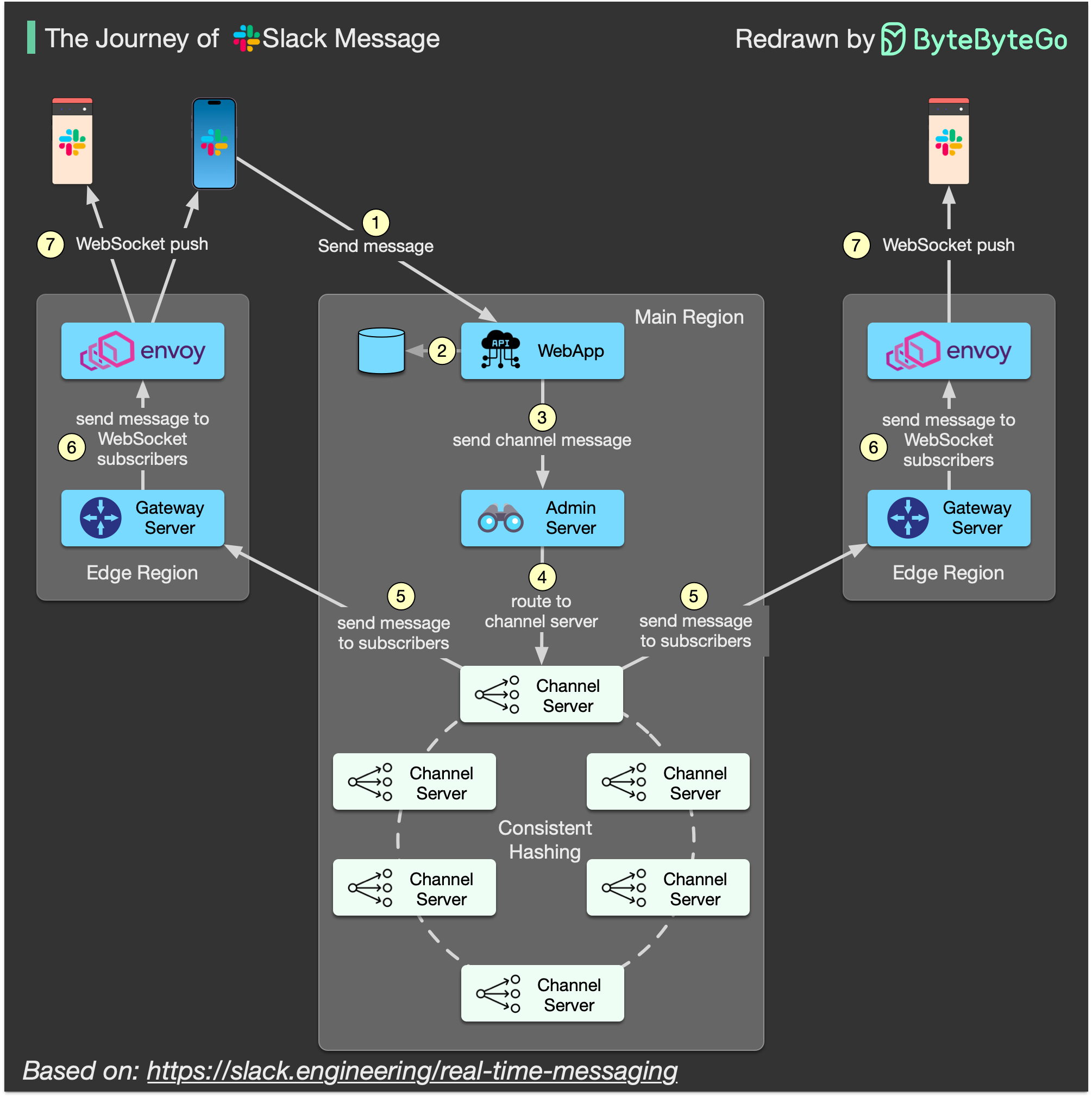
In a recent technical article, Slack explains how its real-time messaging framework works. Here is my short summary:
A Slack message travels through five important servers:
-
WebApp: defines the API that a Slack client could use
-
Admin Server (AS): finds the correct Channel Server using channel ID
-
Channel Server (CS): maintains the history of message channel
-
Gateway Server (GS): deployed in each geographic region. Maintain WebSocket channel subscription
-
Envoy: service proxy for cloud-native applications
-
Because there are too many channels, the Channel Server (CS) uses consistent hashing to allocate millions of channels to many channel servers.
-
Slack messages are delivered through WebApp and Admin Server to the correct Channel Server.
-
Through Gate Server and Envoy (a proxy), the Channel Server will push messages to message receivers.
-
Message receivers use WebSocket, which is a bi-directional messaging mechanism, so they are able to receive updates in real-time.