 ee4b7305a2
This PR adds all the guides from [Visual
Guides](https://bytebytego.com/guides/) section on bytebytego to the
repository with proper links.

- [x] Markdown files for guides and categories are placed inside
`data/guides` and `data/categories`
- [x] Guide links in readme are auto-generated using
`scripts/readme.ts`. Everytime you run the script `npm run
update-readme`, it reads the categories and guides from the above
mentioned folders, generate production links for guides and categories
and populate the table of content in the readme. This ensures that any
future guides and categories will automatically get added to the readme.
- [x] Sorting inside the readme matches the actual category and guides
sorting on production
1.4 KiB
title, description, image, createdAt, draft, categories, tags
| title | description | image | createdAt | draft | categories | tags | |||
|---|---|---|---|---|---|---|---|---|---|
| What is Serverless DB? | Explore serverless databases, their benefits, and how they differ. | https://assets.bytebytego.com/diagrams/0329-serverlessdb.jpeg | 2024-02-24 | false |
|
|
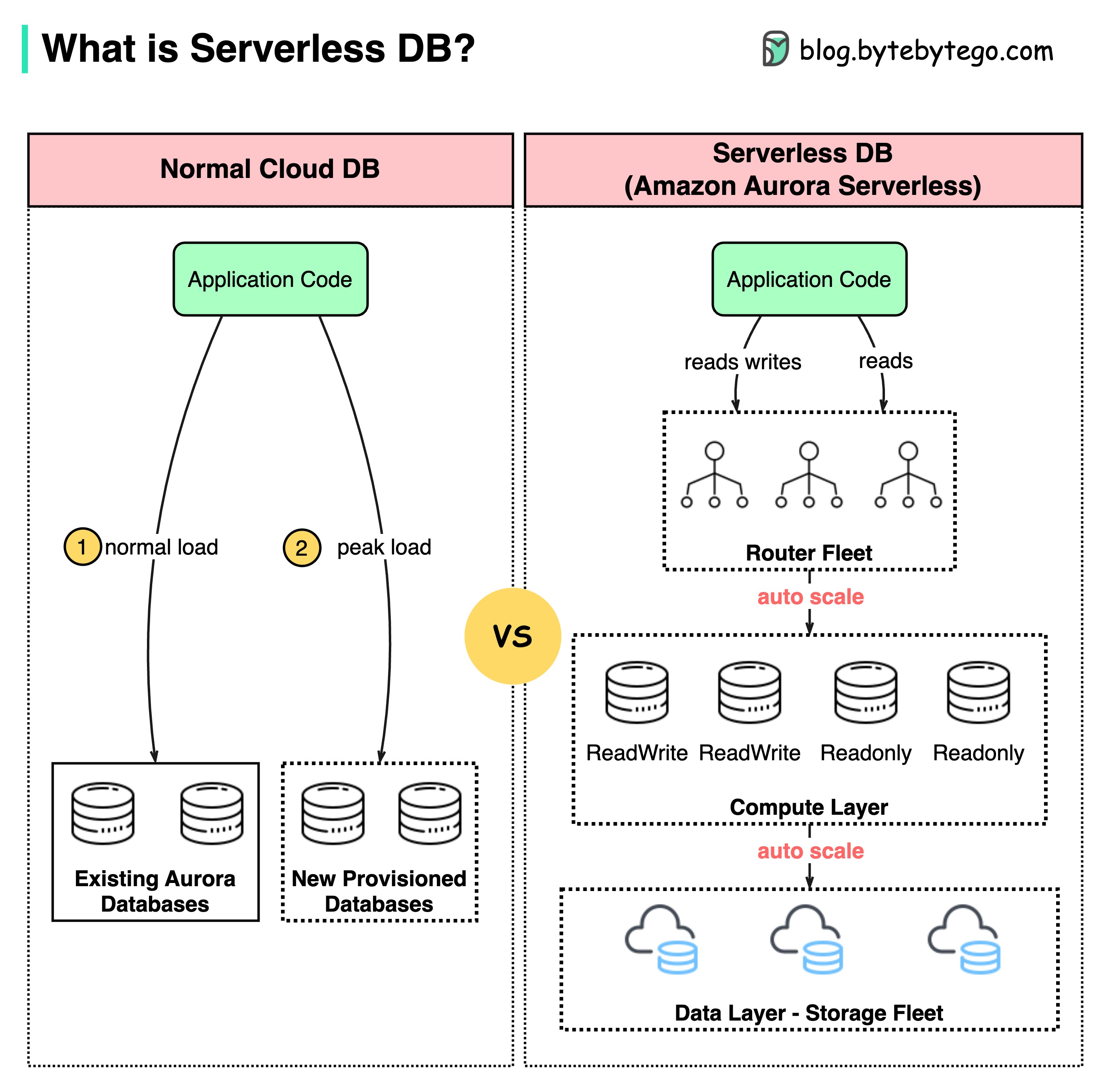
Are serverless databases the future? How do serverless databases differ from traditional cloud databases?
Amazon Aurora Serverless, depicted in the diagram above, is a configuration that is auto-scaling and available on-demand for Amazon Aurora.
Key Features of Aurora Serverless
-
Aurora Serverless has the ability to scale capacity automatically up or down as per business requirements. For example, an eCommerce website preparing for a major promotion can scale the load to multiple databases within a few milliseconds. In comparison to regular cloud databases, which necessitate the provision and administration of database instances, Aurora Serverless can automatically start up and shut down.
-
By decoupling the compute layer from the data storage layer, Aurora Serverless is able to charge fees in a more precise manner. Additionally, Aurora Serverless can be a combination of provisioned and serverless instances, enabling existing provisioned databases to become a part of the serverless pool.