mirror of
https://github.com/ByteByteGoHq/system-design-101.git
synced 2026-04-09 19:47:24 -04:00
 ee4b7305a2
This PR adds all the guides from [Visual
Guides](https://bytebytego.com/guides/) section on bytebytego to the
repository with proper links.

- [x] Markdown files for guides and categories are placed inside
`data/guides` and `data/categories`
- [x] Guide links in readme are auto-generated using
`scripts/readme.ts`. Everytime you run the script `npm run
update-readme`, it reads the categories and guides from the above
mentioned folders, generate production links for guides and categories
and populate the table of content in the readme. This ensures that any
future guides and categories will automatically get added to the readme.
- [x] Sorting inside the readme matches the actual category and guides
sorting on production
1.0 KiB
1.0 KiB
title, description, image, createdAt, draft, categories, tags
| title | description | image | createdAt | draft | categories | tags | |||
|---|---|---|---|---|---|---|---|---|---|
| What is CDN (Content Delivery Network)? | Learn how CDNs accelerate content delivery and improve website security. | https://assets.bytebytego.com/diagrams/0132-cdn.png | 2024-03-09 | false |
|
|
How does CDN make content delivery faster? The diagram above shows why.
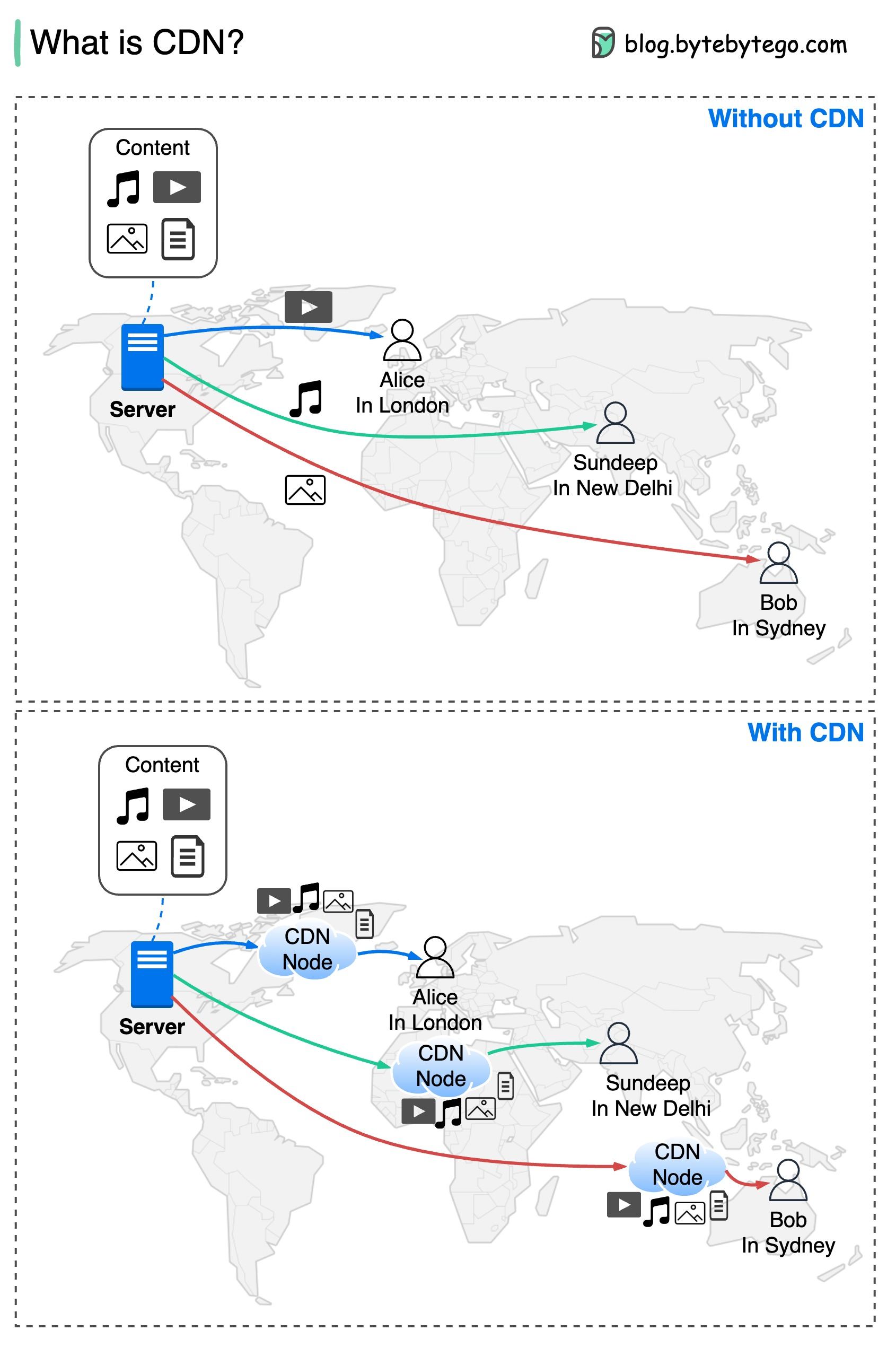
A CDN refers to geographically distributed servers (also called edge servers) that provide fast delivery of static and dynamic content.
With CDN, users don’t need to retrieve content (music, video, files, pictures, etc.) from the origin server. Instead, the content is cached at CDN nodes around the globe, and users can retrieve the content from nearby CDN nodes.
The benefits of CDN are:
-
Reducing latency
-
Reducing bandwidth
-
Improving website security, especially protecting against DDoS (Distributed Denial-of-Service) attack
-
Increasing content availability