mirror of
https://github.com/ByteByteGoHq/system-design-101.git
synced 2026-04-06 02:07:25 -04:00
 ee4b7305a2
This PR adds all the guides from [Visual
Guides](https://bytebytego.com/guides/) section on bytebytego to the
repository with proper links.

- [x] Markdown files for guides and categories are placed inside
`data/guides` and `data/categories`
- [x] Guide links in readme are auto-generated using
`scripts/readme.ts`. Everytime you run the script `npm run
update-readme`, it reads the categories and guides from the above
mentioned folders, generate production links for guides and categories
and populate the table of content in the readme. This ensures that any
future guides and categories will automatically get added to the readme.
- [x] Sorting inside the readme matches the actual category and guides
sorting on production
1.6 KiB
1.6 KiB
title, description, image, createdAt, draft, categories, tags
| title | description | image | createdAt | draft | categories | tags | |||
|---|---|---|---|---|---|---|---|---|---|
| What is a Load Balancer? | Distributes network traffic across multiple servers to optimize resources. | https://assets.bytebytego.com/diagrams/0261-what-is-a-load-balancer.png | 2024-02-28 | false |
|
|
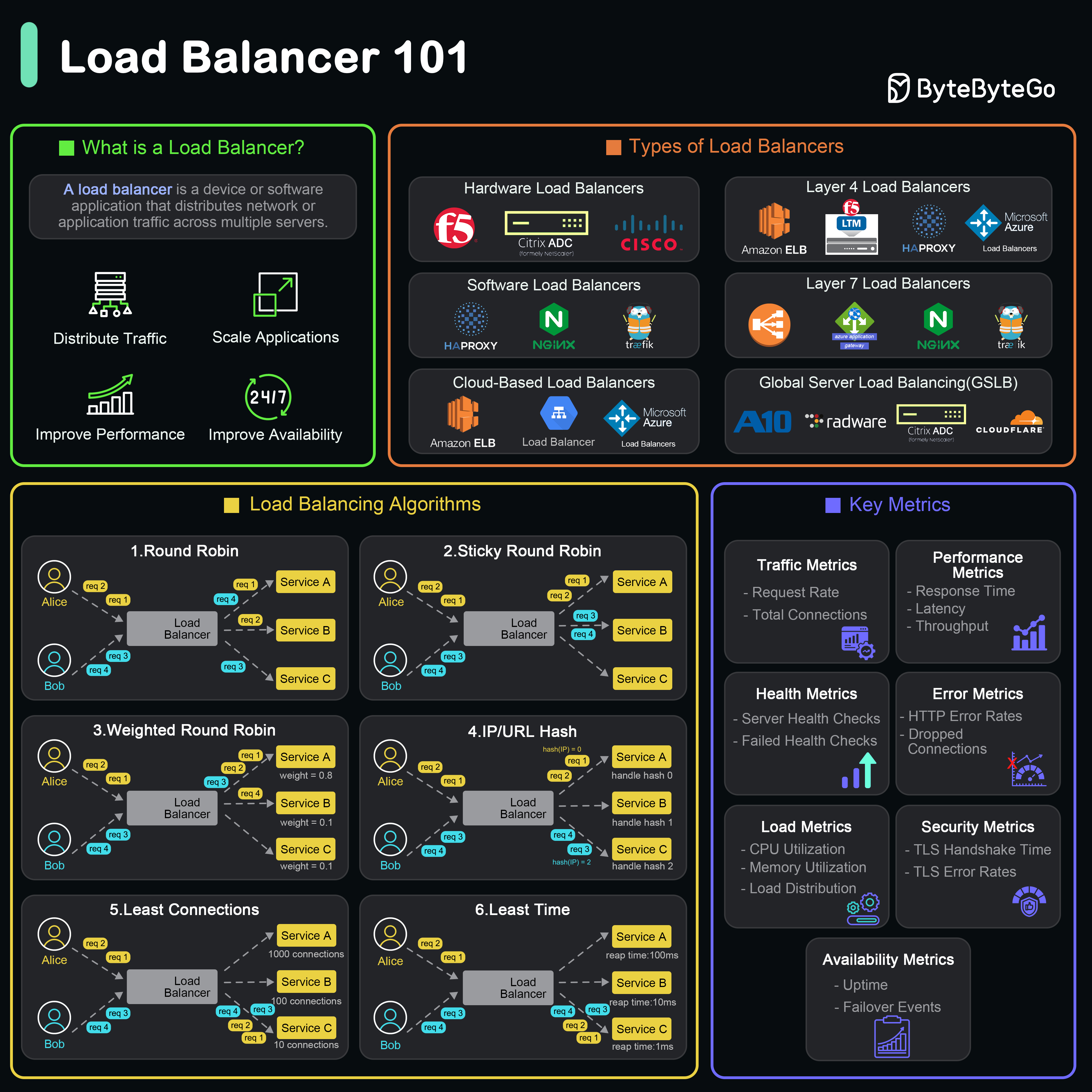
A load balancer is a device or software application that distributes network or application traffic across multiple servers.
-
What Does a Load Balancer Do?
- Distributes Traffic
- Ensures Availability and Reliability
- Improves Performance
- Scales Applications
-
Types of Load Balancers
- Hardware Load Balancers: These are physical devices designed to distribute traffic across servers.
- Software Load Balancers: These are applications that can be installed on standard hardware or virtual machines.
- Cloud-based Load Balancers: Provided by cloud service providers, these load balancers are integrated into the cloud infrastructure. Examples include AWS Elastic Load Balancer, Google Cloud Load Balancing, and Azure Load Balancer.
- Layer 4 Load Balancers (Transport Layer): Operate at the transport layer (OSI Layer 4) and make forwarding decisions based on IP address and TCP/UDP ports.
- Layer 7 Load Balancers (Application Layer): Operate at the application layer (OSI Layer 7).
- Global Server Load Balancing (GSLB): Distributes traffic across multiple geographical locations to improve redundancy and performance on a global scale.