 ee4b7305a2
This PR adds all the guides from [Visual
Guides](https://bytebytego.com/guides/) section on bytebytego to the
repository with proper links.

- [x] Markdown files for guides and categories are placed inside
`data/guides` and `data/categories`
- [x] Guide links in readme are auto-generated using
`scripts/readme.ts`. Everytime you run the script `npm run
update-readme`, it reads the categories and guides from the above
mentioned folders, generate production links for guides and categories
and populate the table of content in the readme. This ensures that any
future guides and categories will automatically get added to the readme.
- [x] Sorting inside the readme matches the actual category and guides
sorting on production
1.5 KiB
title, description, image, createdAt, draft, categories, tags
| title | description | image | createdAt | draft | categories | tags | |||
|---|---|---|---|---|---|---|---|---|---|
| What does ACID mean? | Understand the ACID properties of database transactions. | https://assets.bytebytego.com/diagrams/0407-what-does-acid-mean.png | 2024-03-12 | false |
|
|
The diagram above explains what ACID means in the context of a database transaction.
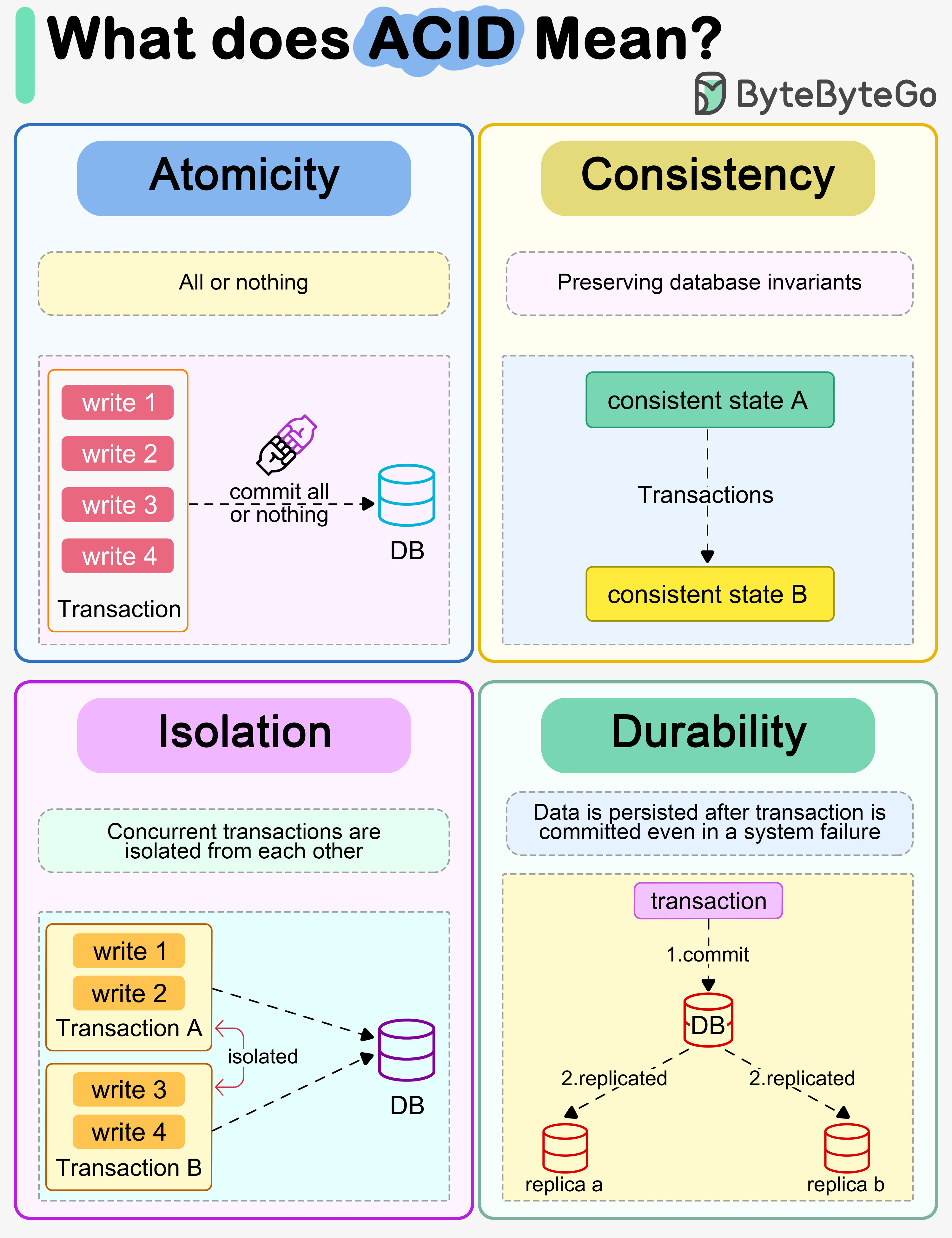
Atomicity
The writes in a transaction are executed all at once and cannot be broken into smaller parts. If there are faults when executing the transaction, the writes in the transaction are rolled back.
So atomicity means “all or nothing”.
Consistency
Unlike “consistency” in CAP theorem, which means every read receives the most recent write or an error, here consistency means preserving database invariants. Any data written by a transaction must be valid according to all defined rules and maintain the database in a good state.
Isolation
When there are concurrent writes from two different transactions, the two transactions are isolated from each other. The most strict isolation is “serializability”, where each transaction acts like it is the only transaction running in the database. However, this is hard to implement in reality, so we often adopt loser isolation level.
Durability
Data is persisted after a transaction is committed even in a system failure. In a distributed system, this means the data is replicated to some other nodes.