mirror of
https://github.com/ByteByteGoHq/system-design-101.git
synced 2026-04-06 18:27:25 -04:00
 ee4b7305a2
This PR adds all the guides from [Visual
Guides](https://bytebytego.com/guides/) section on bytebytego to the
repository with proper links.

- [x] Markdown files for guides and categories are placed inside
`data/guides` and `data/categories`
- [x] Guide links in readme are auto-generated using
`scripts/readme.ts`. Everytime you run the script `npm run
update-readme`, it reads the categories and guides from the above
mentioned folders, generate production links for guides and categories
and populate the table of content in the readme. This ensures that any
future guides and categories will automatically get added to the readme.
- [x] Sorting inside the readme matches the actual category and guides
sorting on production
1.2 KiB
1.2 KiB
title, description, image, createdAt, draft, categories, tags
| title | description | image | createdAt | draft | categories | tags | |||
|---|---|---|---|---|---|---|---|---|---|
| What Are the Greenest Programming Languages? | Explore energy efficiency in programming languages and their impact. | https://assets.bytebytego.com/diagrams/0186-energy-efficient-language.jpg | 2024-02-19 | false |
|
|
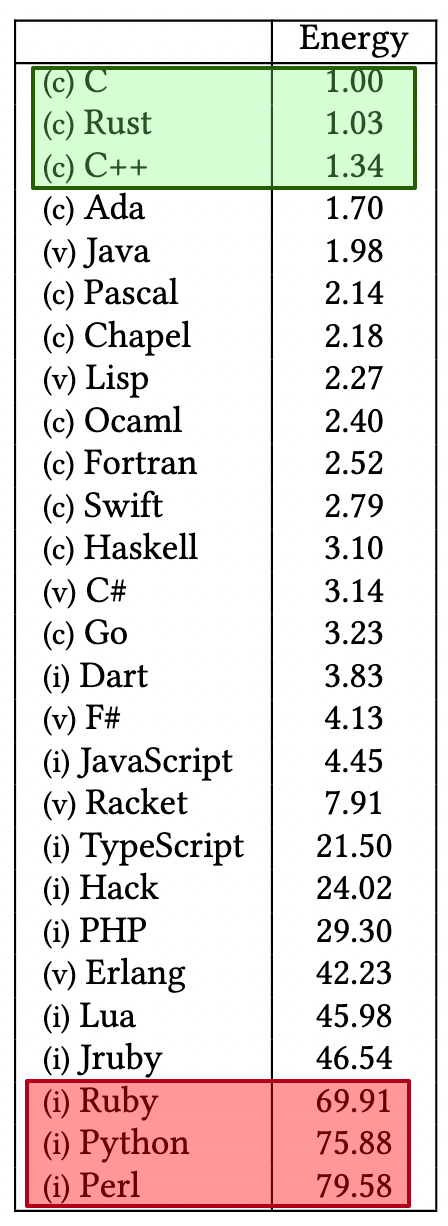
The study below runs 10 benchmark problems in 28 languages. It measures the runtime, memory usage, and energy consumption of each language. This take might be controversial.
“This paper presents a study of the runtime, memory usage, and energy consumption of twenty-seven well-known software languages. We monitor the performance of such languages using ten different programming problems, expressed in each of the languages. Our results show interesting findings, such as slower/faster languages consuming less/more energy, and how memory usage influences energy consumption. We show how to use our results to provide software engineers support to decide which language to use when energy efficiency is a concern”.