 ee4b7305a2
This PR adds all the guides from [Visual
Guides](https://bytebytego.com/guides/) section on bytebytego to the
repository with proper links.

- [x] Markdown files for guides and categories are placed inside
`data/guides` and `data/categories`
- [x] Guide links in readme are auto-generated using
`scripts/readme.ts`. Everytime you run the script `npm run
update-readme`, it reads the categories and guides from the above
mentioned folders, generate production links for guides and categories
and populate the table of content in the readme. This ensures that any
future guides and categories will automatically get added to the readme.
- [x] Sorting inside the readme matches the actual category and guides
sorting on production
2.1 KiB
title, description, image, createdAt, draft, categories, tags
| title | description | image | createdAt | draft | categories | tags | |||
|---|---|---|---|---|---|---|---|---|---|
| What are the differences between WAN, LAN, PAN and MAN? | Explore the key differences between WAN, LAN, PAN, and MAN networks. | https://assets.bytebytego.com/diagrams/0405-wan-lan-pan-man-explained.png | 2024-02-06 | false |
|
|
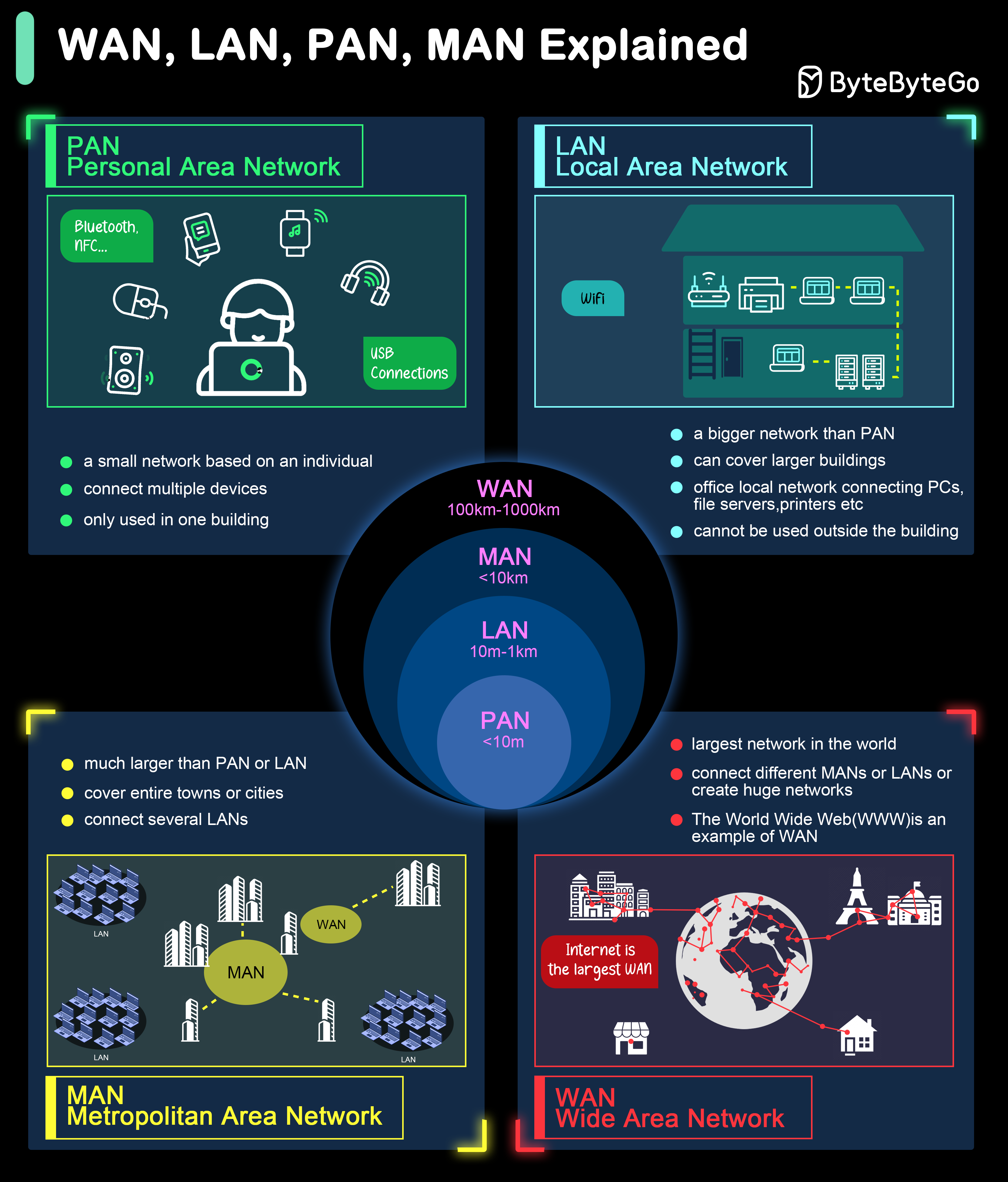
In the world of networking, different types of networks are defined based on their size, range, and purpose. The most common types of networks are WAN (Wide Area Network), MAN (Metropolitan Area Network), LAN (Local Area Network), and PAN (Personal Area Network).
-
Personal Area Network (PAN)
A PAN is a network used for communication among devices close to one person, typically within a range of a few meters.
Use Cases:
- Connecting personal devices like smartphones, tablets, and wearables.
- Enabling hands-free communication through Bluetooth headsets.
- Synchronizing data between a computer and a smartphone.
-
Local Area Network (LAN)
A LAN is a network that connects computers and devices within a limited area such as a home, office, or building.
Use Cases:
- Sharing resources like printers and file servers within an office.
- Facilitating communication and collaboration among employees.
- Providing internet access within a home or small business.
-
Metropolitan Area Network (MAN)
A MAN covers a larger geographic area than a LAN but smaller than a WAN, typically spanning a city or a large campus.
Use Cases:
- Connecting multiple campuses of a university.
- Providing high-speed internet access across a city.
- Linking local government offices within a metropolitan area.
-
Wide Area Network (WAN)
A WAN spans a large geographic area, often a country or continent. The most prominent example of a WAN is the Internet.
Use Cases:
- Connecting branch offices of multinational companies.
- Facilitating global communication and data exchange.
- Enabling remote access to central resources.