mirror of
https://github.com/ByteByteGoHq/system-design-101.git
synced 2026-04-11 12:27:24 -04:00
 ee4b7305a2
This PR adds all the guides from [Visual
Guides](https://bytebytego.com/guides/) section on bytebytego to the
repository with proper links.

- [x] Markdown files for guides and categories are placed inside
`data/guides` and `data/categories`
- [x] Guide links in readme are auto-generated using
`scripts/readme.ts`. Everytime you run the script `npm run
update-readme`, it reads the categories and guides from the above
mentioned folders, generate production links for guides and categories
and populate the table of content in the readme. This ensures that any
future guides and categories will automatically get added to the readme.
- [x] Sorting inside the readme matches the actual category and guides
sorting on production
1.5 KiB
1.5 KiB
title, description, image, createdAt, draft, categories, tags
| title | description | image | createdAt | draft | categories | tags | |||
|---|---|---|---|---|---|---|---|---|---|
| Load Balancer vs. API Gateway | Explore the key differences between load balancers and API gateways. | https://assets.bytebytego.com/diagrams/0252-lb-api-gateway.png | 2024-02-11 | false |
|
|
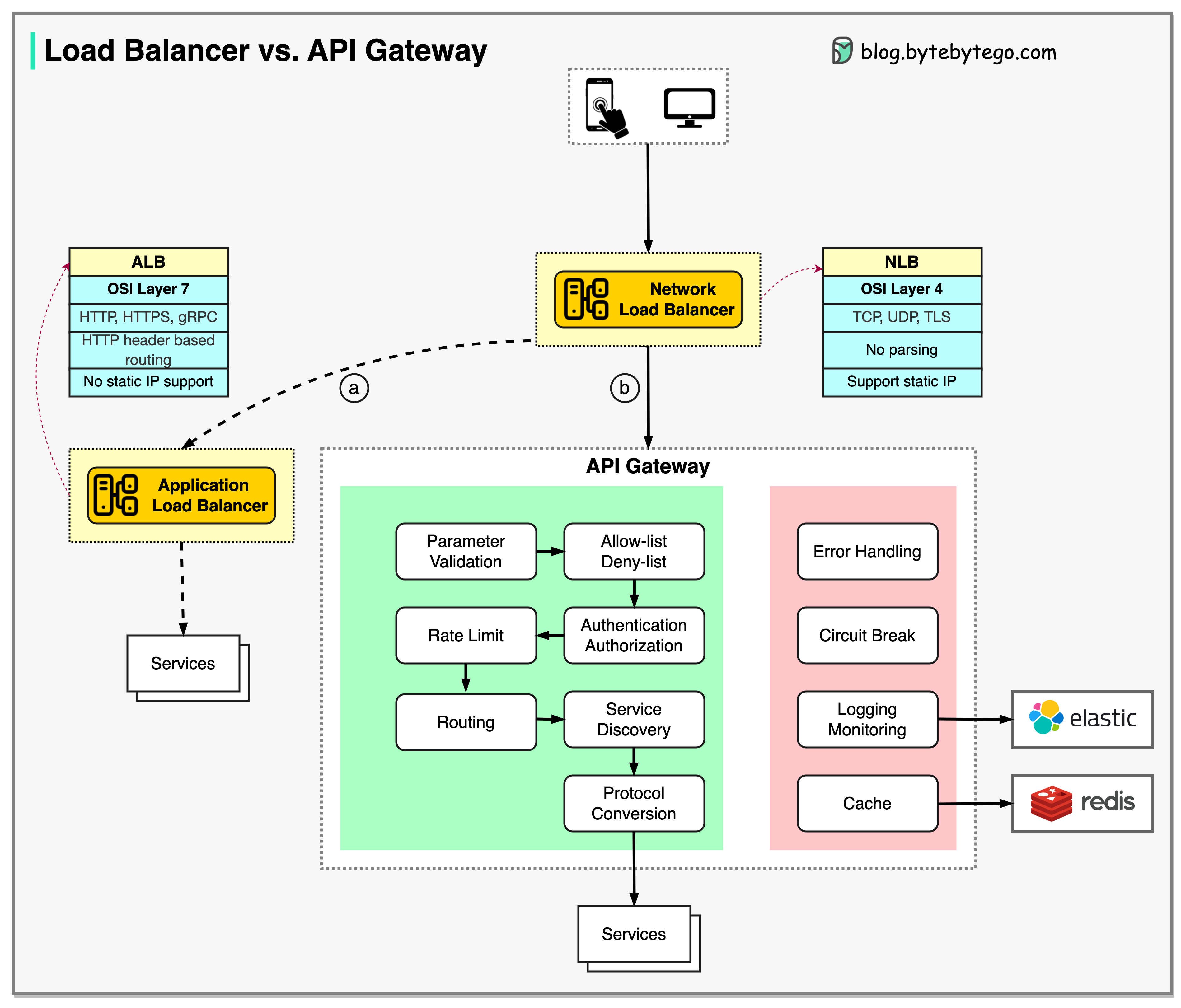
First, let's clarify some concepts before discussing the differences.
- NLB (Network Load Balancer) is usually deployed before the API gateway, handling traffic routing based on IP. It does not parse the HTTP requests.
- ALB (Application Load Balancer) routes requests based on HTTP header or URL and thus can provide richer routing rules. We can choose the load balancer based on routing requirements. For simple services with a smaller scale, one load balancer is enough.
- The API gateway performs tasks more on the application level. So it has different responsibilities from the load balancer.
The diagram above shows the detail. Often, they are used in combination to provide a scalable and secure architecture for modern web apps.
Option a: ALB is used to distribute requests among different services. Due to the fact that the services implement their own rating limitation, authentication, etc., this approach is more flexible but requires more work at the service level.
Option b: An API gateway takes care of authentication, rate limiting, caching, etc., so there is less work at the service level. However, this option is less flexible compared with the ALB approach.