 ee4b7305a2
This PR adds all the guides from [Visual
Guides](https://bytebytego.com/guides/) section on bytebytego to the
repository with proper links.

- [x] Markdown files for guides and categories are placed inside
`data/guides` and `data/categories`
- [x] Guide links in readme are auto-generated using
`scripts/readme.ts`. Everytime you run the script `npm run
update-readme`, it reads the categories and guides from the above
mentioned folders, generate production links for guides and categories
and populate the table of content in the readme. This ensures that any
future guides and categories will automatically get added to the readme.
- [x] Sorting inside the readme matches the actual category and guides
sorting on production
1.5 KiB
title, description, image, createdAt, draft, categories, tags
| title | description | image | createdAt | draft | categories | tags | |||
|---|---|---|---|---|---|---|---|---|---|
| Unicast vs Broadcast vs Multicast vs Anycast | Understand the differences between unicast, broadcast, multicast, and anycast. | https://assets.bytebytego.com/diagrams/0125-unicast-vs-broadcast-vs-multicast-vs-anycast.png | 2024-02-19 | false |
|
|
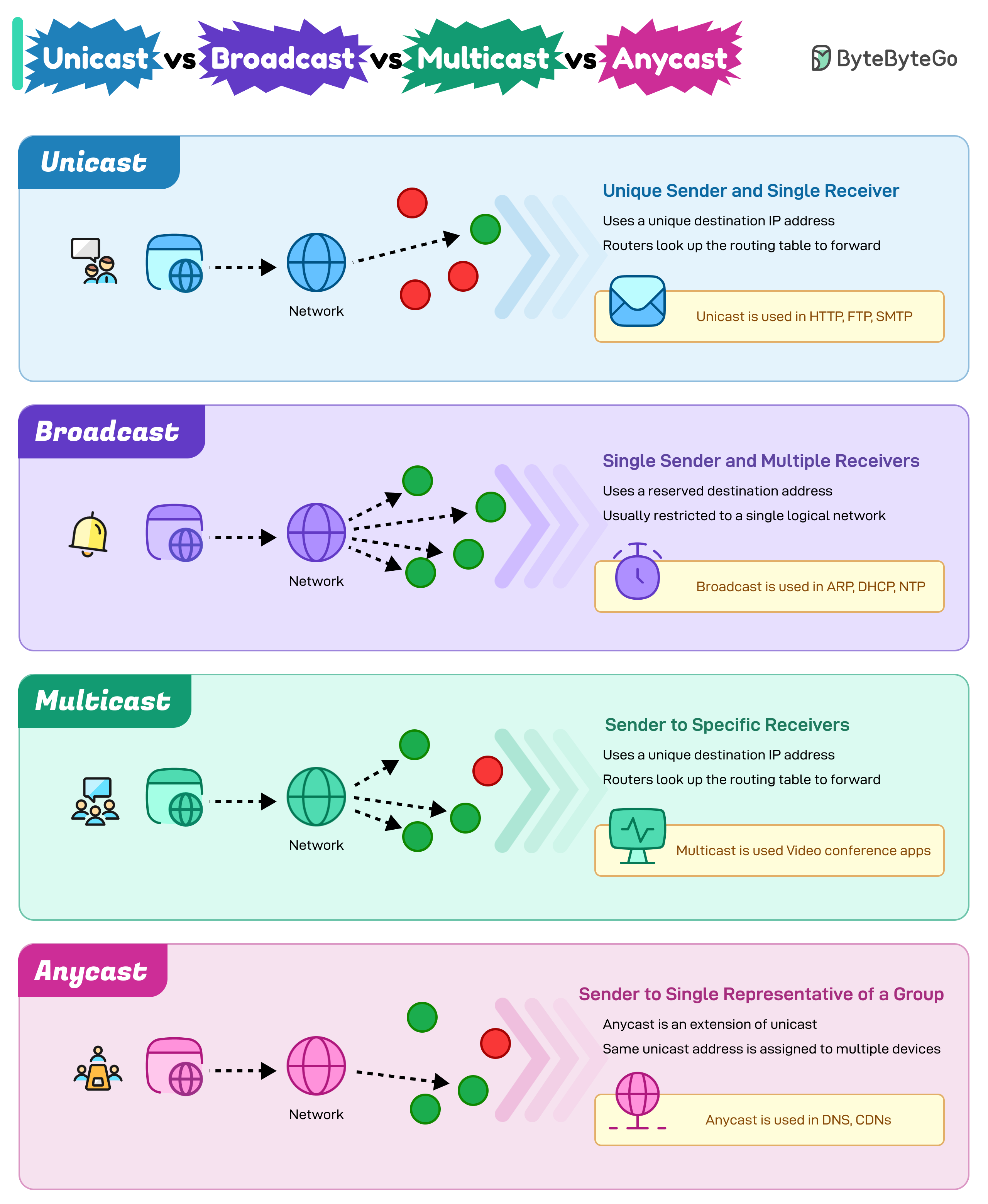
These are 4 network communication methods you must know.
-
Unicast
Unique sender and a single receiver.
For example, communication between two people in a party.
Used in protocols such as HTTP, FTP, and SMTP.
-
Broadcast
Single sender and multiple receivers.
For example, a person at a party stands up on a podium and shouts a message to everyone. However, it doesn’t mean that every receiver gets the message.
Used in Address Resolution Protocol, DHCP, and NTP
-
Multicast
Sender to a specific group of devices in a network. This is a specialized case of broadcast routing.
For example, a member of the group talks and listens to other members of the group within a party.
Used in IPTV and video conference applications.
-
Anycast
Sender to a single device or a specific group of devices.
For example, saying thank you to one host out of a group of hosts organizing a party. All other hosts also expected to receive the thank you note.
Used in DNS querying and CDNs.