 ee4b7305a2
This PR adds all the guides from [Visual
Guides](https://bytebytego.com/guides/) section on bytebytego to the
repository with proper links.

- [x] Markdown files for guides and categories are placed inside
`data/guides` and `data/categories`
- [x] Guide links in readme are auto-generated using
`scripts/readme.ts`. Everytime you run the script `npm run
update-readme`, it reads the categories and guides from the above
mentioned folders, generate production links for guides and categories
and populate the table of content in the readme. This ensures that any
future guides and categories will automatically get added to the readme.
- [x] Sorting inside the readme matches the actual category and guides
sorting on production
1.6 KiB
title, description, image, createdAt, draft, categories, tags
| title | description | image | createdAt | draft | categories | tags | |||
|---|---|---|---|---|---|---|---|---|---|
| Types of Databases | Explore common database types: relational, OLAP, NoSQL, and more. | https://assets.bytebytego.com/diagrams/0097-dbtypes.png | 2024-03-08 | false |
|
|
What is a database? What are some common types of databases?
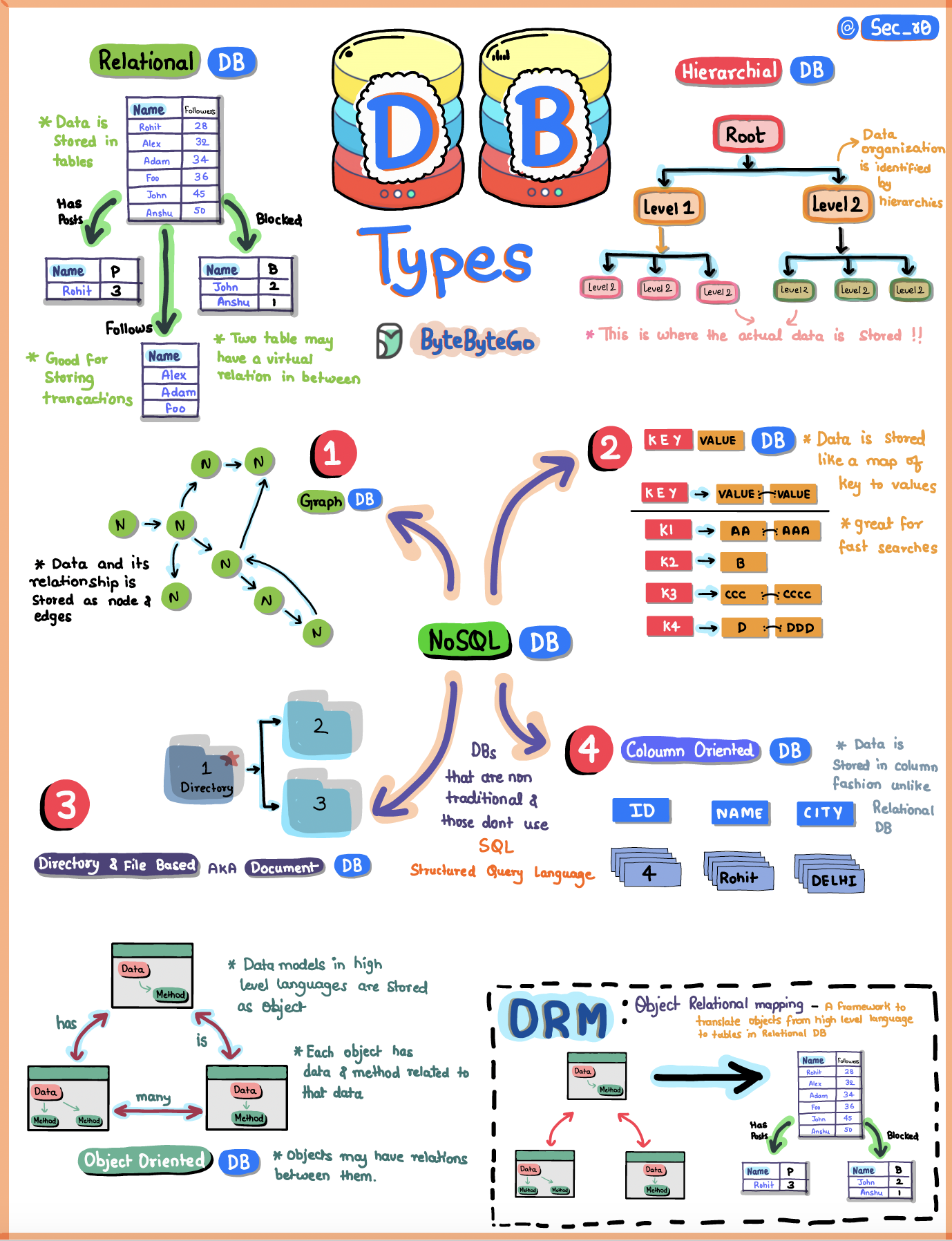
First off, what's a database? Think of it as a digital playground where we organize and store loads of information in a structured manner. Now, let's shake things up and look at the main types of databases.
Relational DB
Imagine it's like organizing data in neat tables. Think of it as the well-behaved sibling, keeping everything in order.
OLAP DB
Online Analytical Processing (OLAP) is a technology optimized for reporting and analysis purposes.
NoSQL DBs
These rebels have their own cool club, saying "No" to traditional SQL ways. NoSQL databases come in four exciting flavors:
-
Graph DB: Think of social networks, where relationships between people matter most. It's like mapping who's friends with whom.
-
Key-value Store DB: It's like a treasure chest, with each item having its unique key. Finding what you need is a piece of cake.
-
Document DB: A document database is a kind of database that stores information in a format similar to JSON. It's different from traditional databases and is made for working with documents instead of tables.
-
Column DB: Imagine slicing and dicing your data like a chef prepping ingredients. It's efficient and speedy.