 ee4b7305a2
This PR adds all the guides from [Visual
Guides](https://bytebytego.com/guides/) section on bytebytego to the
repository with proper links.

- [x] Markdown files for guides and categories are placed inside
`data/guides` and `data/categories`
- [x] Guide links in readme are auto-generated using
`scripts/readme.ts`. Everytime you run the script `npm run
update-readme`, it reads the categories and guides from the above
mentioned folders, generate production links for guides and categories
and populate the table of content in the readme. This ensures that any
future guides and categories will automatically get added to the readme.
- [x] Sorting inside the readme matches the actual category and guides
sorting on production
2.3 KiB
title, description, image, createdAt, draft, categories, tags
| title | description | image | createdAt | draft | categories | tags | |||
|---|---|---|---|---|---|---|---|---|---|
| Top 6 Multithreading Design Patterns You Must Know | Explore essential multithreading design patterns for concurrent programming. | https://assets.bytebytego.com/diagrams/0381-top-6-multithreading-design-patterns-you-must-know.png | 2024-02-23 | false |
|
|
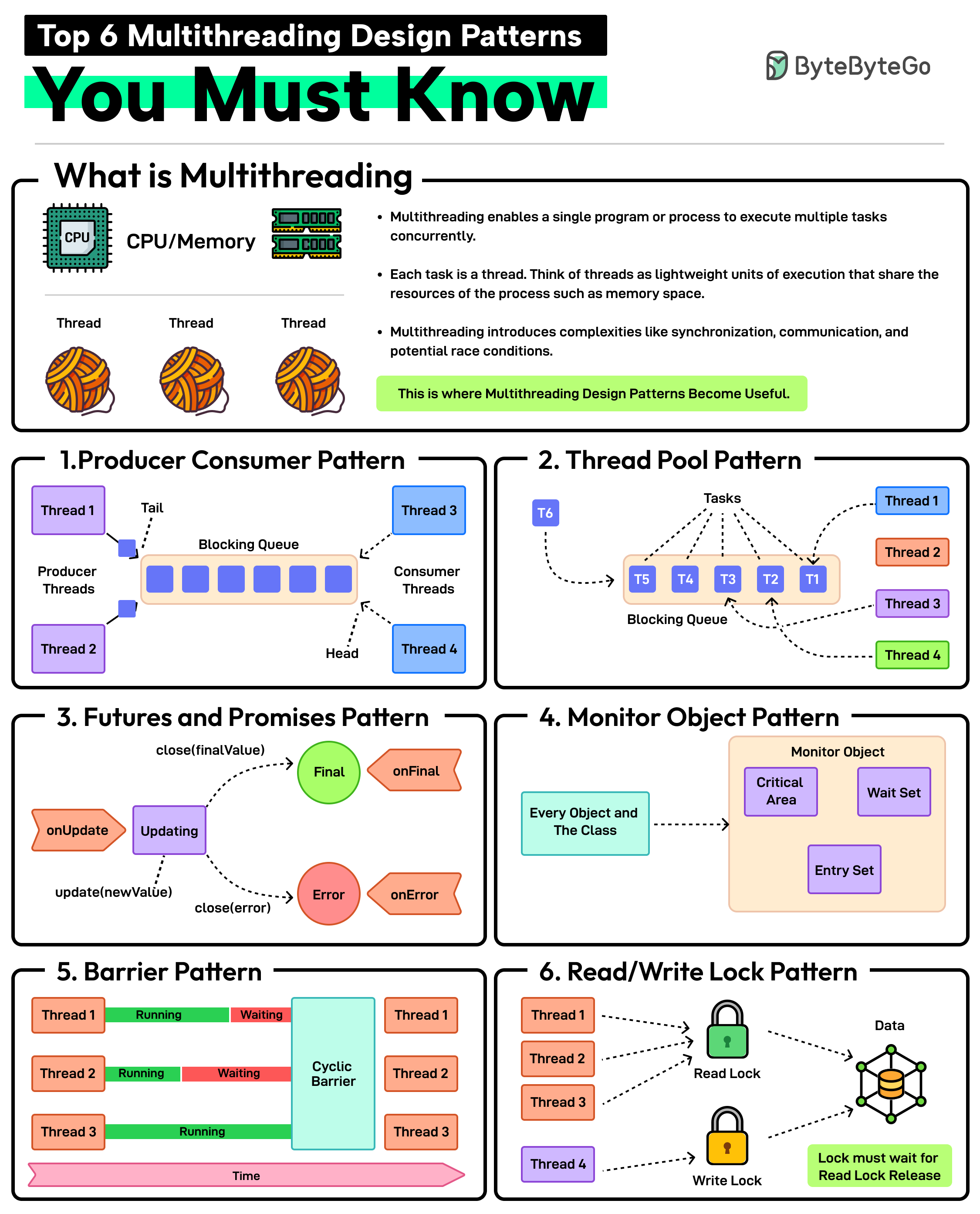
Multithreading enables a single program or process to execute multiple tasks concurrently. Each task is a thread. Think of threads as lightweight units of execution that share the resources of the process such as memory space.
However, multithreading also introduces complexities like synchronization, communication, and potential race conditions. This is where patterns help.
Producer-Consumer Pattern
This pattern involves two types of threads: producers generating data and consumers processing that data. A blocking queue acts as a buffer between the two.
Thread Pool Pattern
In this pattern, there is a pool of worker threads that can be reused for executing tasks. Using a pool removes the overhead of creating and destroying threads. Great for executing a large number of short-lived tasks.
Futures and Promises Pattern
In this pattern, the promise is an object that holds the eventual results and the future provides a way to access the result. This is great for executing long-running operations concurrently without blocking the main thread.
Monitor Object Pattern
Ensures that only one thread can access or modify a shared resource within an object at a time. This helps prevent race conditions. The pattern is required when you need to protect shared data or resources from concurrent access.
Barrier Pattern
Synchronizes a group of threads. Each thread executes until it reaches a barrier point in the code and blocks until all threads have reached the same barrier. Ideal for parallel tasks that need to reach a specific stage before starting the next stage.
Read-Write Lock Pattern
It allows multiple threads to read from a shared resource but only allows one thread to write to it at a time. Ideal for managing shared resources where reads are more frequent than writes.