 ee4b7305a2
This PR adds all the guides from [Visual
Guides](https://bytebytego.com/guides/) section on bytebytego to the
repository with proper links.

- [x] Markdown files for guides and categories are placed inside
`data/guides` and `data/categories`
- [x] Guide links in readme are auto-generated using
`scripts/readme.ts`. Everytime you run the script `npm run
update-readme`, it reads the categories and guides from the above
mentioned folders, generate production links for guides and categories
and populate the table of content in the readme. This ensures that any
future guides and categories will automatically get added to the readme.
- [x] Sorting inside the readme matches the actual category and guides
sorting on production
1.8 KiB
title, description, image, createdAt, draft, categories, tags
| title | description | image | createdAt | draft | categories | tags | |||
|---|---|---|---|---|---|---|---|---|---|
| Top 6 Elasticsearch Use Cases | Explore the top 6 use cases of Elasticsearch in various applications. | https://assets.bytebytego.com/diagrams/0380-top-6-elasticsearch-use-cases.png | 2024-03-02 | false |
|
|
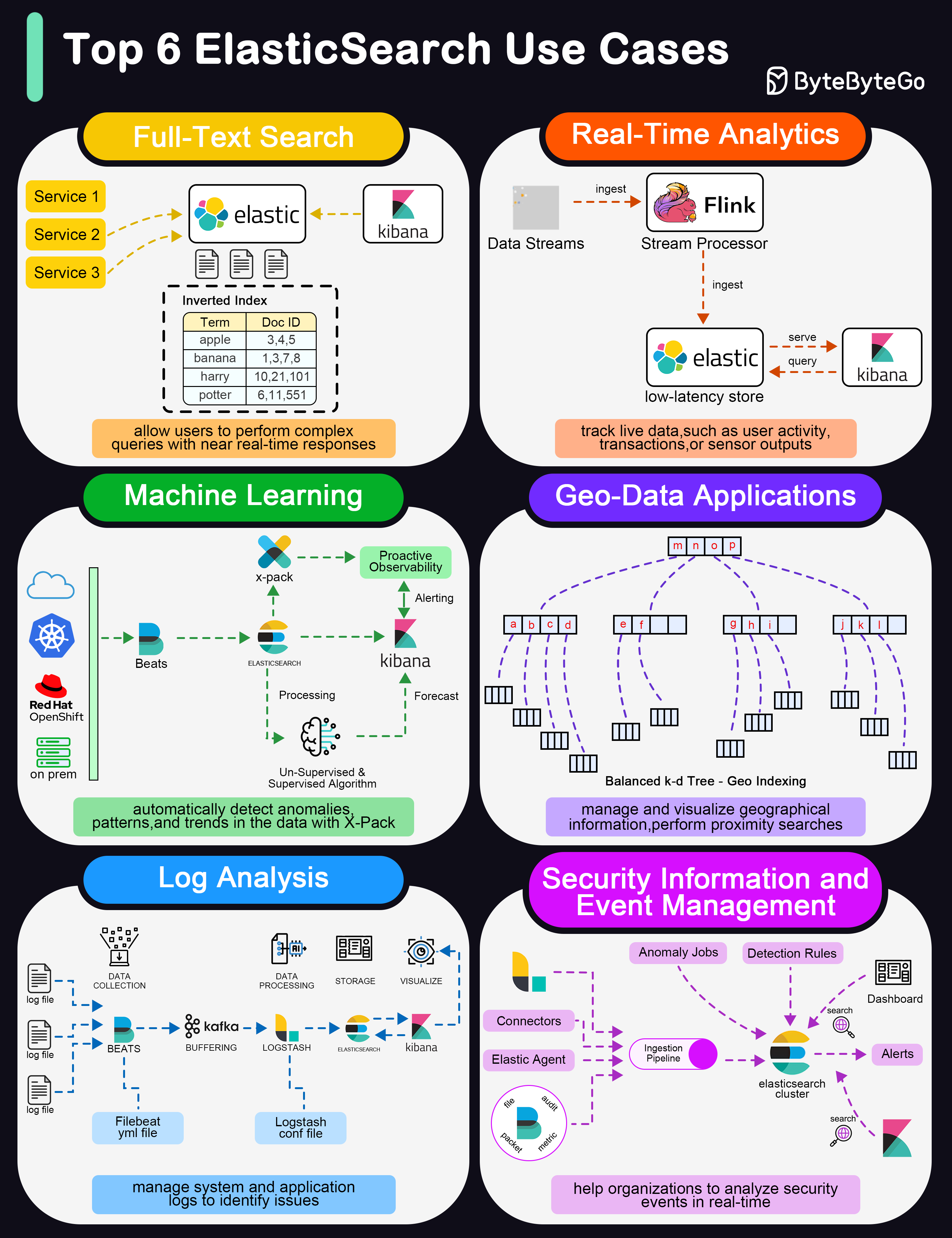
Elasticsearch is widely used for its powerful and versatile search capabilities. The diagram above shows the top 6 use cases:
Full-Text Search
Elasticsearch excels in full-text search scenarios due to its robust, scalable, and fast search capabilities. It allows users to perform complex queries with near real-time responses.
Real-Time Analytics
Elasticsearch's ability to perform analytics in real-time makes it suitable for dashboards that track live data, such as user activity, transactions, or sensor outputs.
Machine Learning
With the addition of the machine learning feature in X-Pack, Elasticsearch can automatically detect anomalies, patterns, and trends in the data.
Geo-Data Applications
Elasticsearch supports geo-data through geospatial indexing and searching capabilities. This is useful for applications that need to manage and visualize geographical information, such as mapping and location-based services.
Log and Event Data Analysis
Organizations use Elasticsearch to aggregate, monitor, and analyze logs and event data from various sources. It's a key component of the ELK stack (Elasticsearch, Logstash, Kibana), which is popular for managing system and application logs to identify issues and monitor system health.
Security Information and Event Management (SIEM)
Elasticsearch can be used as a tool for SIEM, helping organizations to analyze security events in real time.