 ee4b7305a2
This PR adds all the guides from [Visual
Guides](https://bytebytego.com/guides/) section on bytebytego to the
repository with proper links.

- [x] Markdown files for guides and categories are placed inside
`data/guides` and `data/categories`
- [x] Guide links in readme are auto-generated using
`scripts/readme.ts`. Everytime you run the script `npm run
update-readme`, it reads the categories and guides from the above
mentioned folders, generate production links for guides and categories
and populate the table of content in the readme. This ensures that any
future guides and categories will automatically get added to the readme.
- [x] Sorting inside the readme matches the actual category and guides
sorting on production
1.9 KiB
title, description, image, createdAt, draft, categories, tags
| title | description | image | createdAt | draft | categories | tags | |||
|---|---|---|---|---|---|---|---|---|---|
| Top 6 Cases to Apply Idempotency | Explore 6 key use cases where idempotency is crucial for reliable systems. | https://assets.bytebytego.com/diagrams/0377-top-6-cases-of-leveraging-idempotency.png | 2024-02-01 | false |
|
|
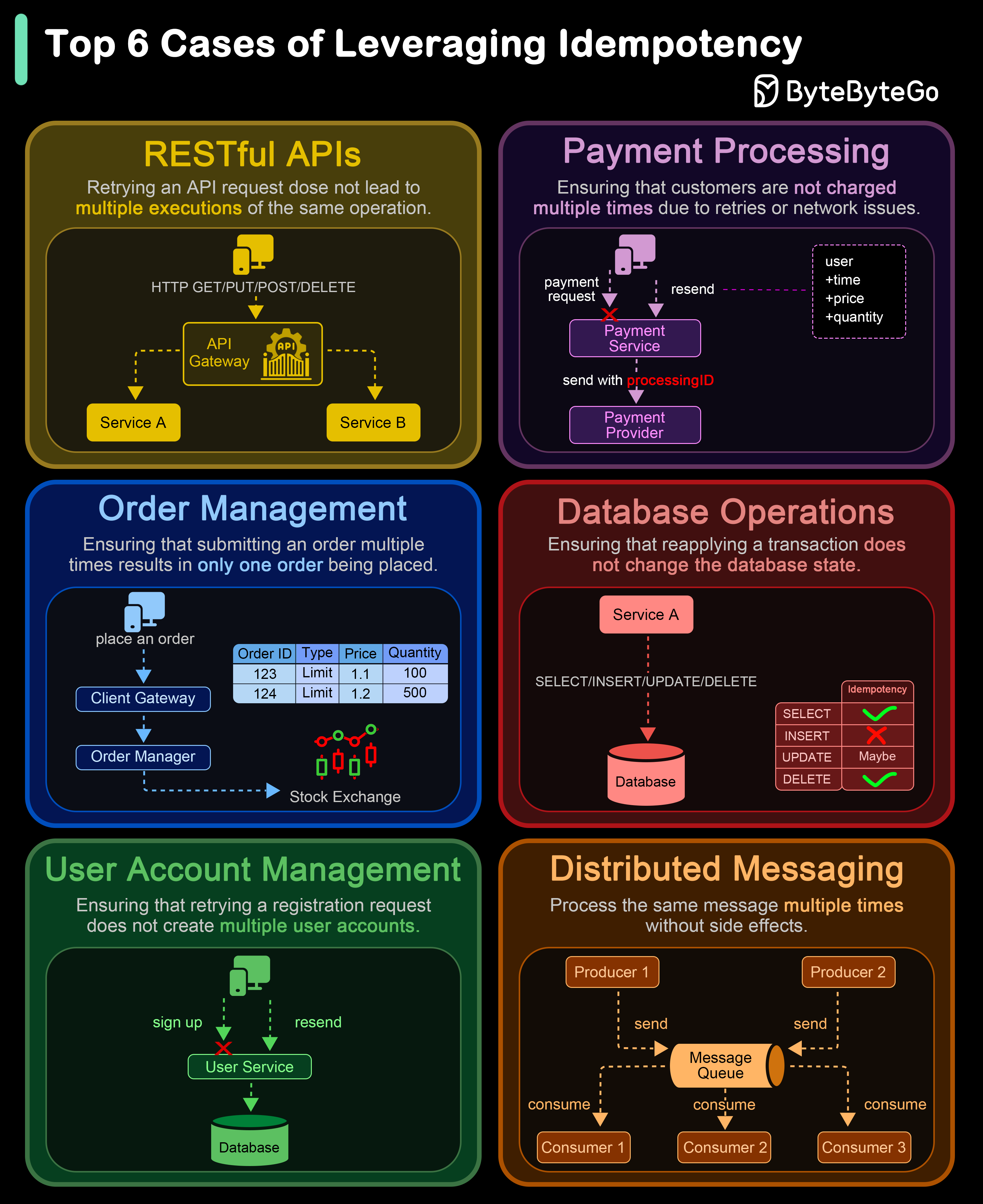
Idempotency is essential in various scenarios, particularly where operations might be retried or executed multiple times. Here are the top 6 use cases where idempotency is crucial:
1. RESTful API Requests
We need to ensure that retrying an API request does not lead to multiple executions of the same operation. Implement idempotent methods (like PUT and DELETE) to maintain consistent resource states.
2. Payment Processing
We need to ensure that customers are not charged multiple times due to retries or network issues. Payment gateways often need to retry transactions; idempotency ensures only one charge is made.
3. Order Management Systems
We need to ensure that submitting an order multiple times results in only one order being placed. We design a safe mechanism to prevent duplicate inventory deductions or updates.
4. Database Operations
We need to ensure that reapplying a transaction does not change the database state beyond the initial application.
5. User Account Management
We need to ensure that retrying a registration request does not create multiple user accounts. Also, we need to ensure that multiple password reset requests result in a single reset action.
6. Distributed Systems and Messaging
We need to ensure that reprocessing messages from a queue does not result in duplicate processing. We Implement handlers that can process the same message multiple times without side effects.