mirror of
https://github.com/ByteByteGoHq/system-design-101.git
synced 2026-04-01 16:57:23 -04:00
 ee4b7305a2
This PR adds all the guides from [Visual
Guides](https://bytebytego.com/guides/) section on bytebytego to the
repository with proper links.

- [x] Markdown files for guides and categories are placed inside
`data/guides` and `data/categories`
- [x] Guide links in readme are auto-generated using
`scripts/readme.ts`. Everytime you run the script `npm run
update-readme`, it reads the categories and guides from the above
mentioned folders, generate production links for guides and categories
and populate the table of content in the readme. This ensures that any
future guides and categories will automatically get added to the readme.
- [x] Sorting inside the readme matches the actual category and guides
sorting on production
1.2 KiB
1.2 KiB
title, description, image, createdAt, draft, categories, tags
| title | description | image | createdAt | draft | categories | tags | |||
|---|---|---|---|---|---|---|---|---|---|
| Top 4 Most Popular Use Cases for UDP | Explore the top 4 use cases for UDP: streaming, DNS, multicast, and IoT. | https://assets.bytebytego.com/diagrams/0044-top-4-udp-use-cases.png | 2024-03-07 | false |
|
|
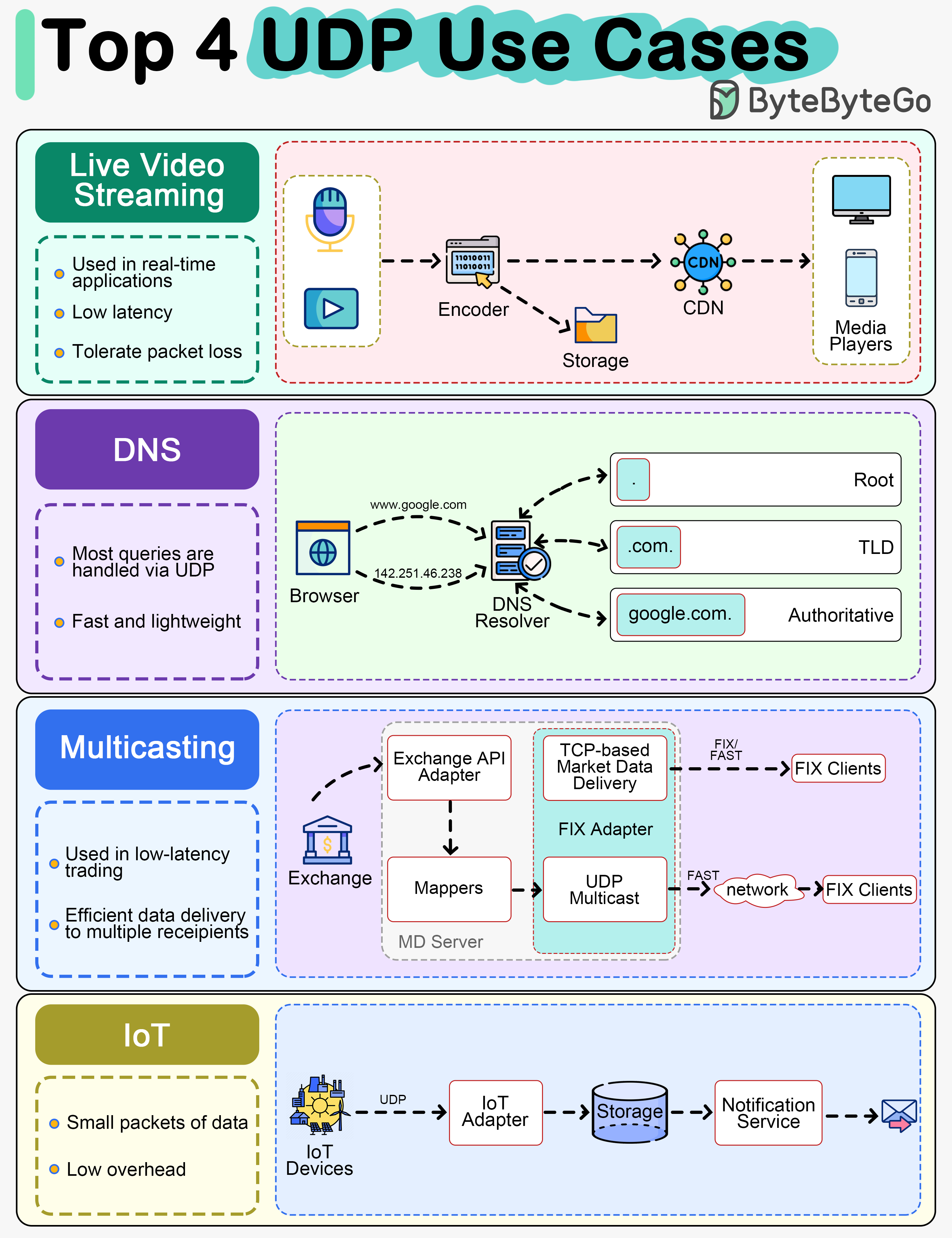
UDP (User Datagram Protocol) is used in various software architectures for its simplicity, speed, and low overhead compared to other protocols like TCP.
Live Video Streaming
Many VoIP and video conferencing applications leverage UDP due to its lower overhead and ability to tolerate packet loss. Real-time communication benefits from UDP's reduced latency compared to TCP.
DNS
DNS (Domain Name Service) queries typically use UDP for their fast and lightweight nature. Although DNS can also use TCP for large responses or zone transfers, most queries are handled via UDP.
Market Data Multicast
In low-latency trading, UDP is utilized for efficient market data delivery to multiple recipients simultaneously.
IoT
UDP is often used in IoT devices for communications, sending small packets of data between devices.