 ee4b7305a2
This PR adds all the guides from [Visual
Guides](https://bytebytego.com/guides/) section on bytebytego to the
repository with proper links.

- [x] Markdown files for guides and categories are placed inside
`data/guides` and `data/categories`
- [x] Guide links in readme are auto-generated using
`scripts/readme.ts`. Everytime you run the script `npm run
update-readme`, it reads the categories and guides from the above
mentioned folders, generate production links for guides and categories
and populate the table of content in the readme. This ensures that any
future guides and categories will automatically get added to the readme.
- [x] Sorting inside the readme matches the actual category and guides
sorting on production
1.4 KiB
title, description, image, createdAt, draft, categories, tags
| title | description | image | createdAt | draft | categories | tags | |||
|---|---|---|---|---|---|---|---|---|---|
| The Fundamental Pillars of Object-Oriented Programming | Explore the core principles of object-oriented programming (OOP). | https://assets.bytebytego.com/diagrams/0197-4-fundamental-pillars-of-object-oriented-programming.png | 2024-03-06 | false |
|
|
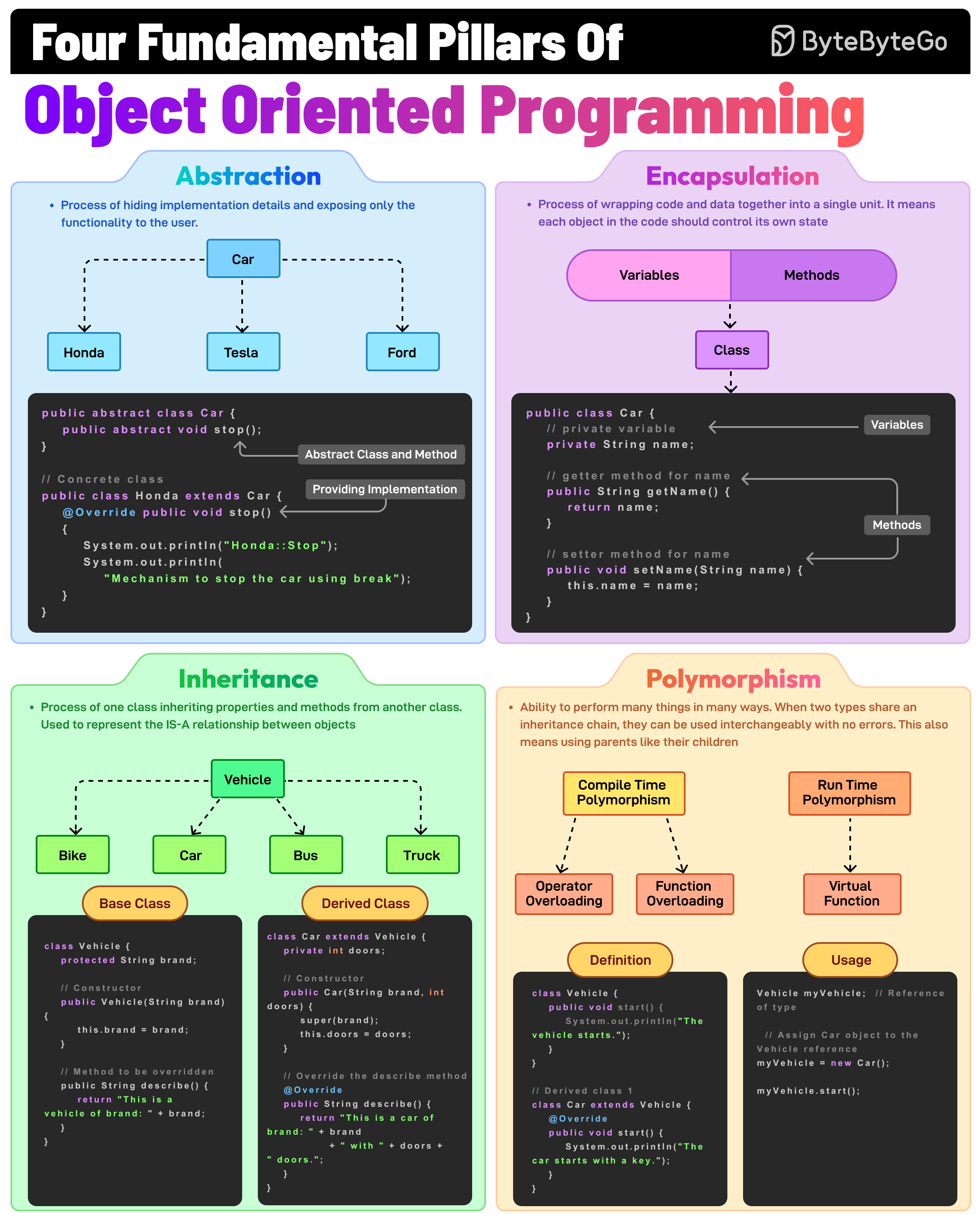
Abstraction, Encapsulation, Inheritance, and Polymorphism are the four pillars of object-oriented programming. What do they mean?
Abstraction
This is the process of hiding implementation details and showing only the essential features of an object. For example, a Vehicle class with an abstract stop method.
Encapsulation
It involves wrapping data (fields) and methods in a single unit (class) and restricting direct access using access modifiers. For example, private fields with public getters and setters.
Inheritance
The process of creating a new class (child) that inherits attributes and methods from an existing class (parent), thereby promoting code reuse. For example, a Car class inherits from a Vehicle class.
Polymorphism
It allows methods to perform differently based on the object they are invoked on. When two types share an inheritance chain, they can be used interchangeably with no errors.