 ee4b7305a2
This PR adds all the guides from [Visual
Guides](https://bytebytego.com/guides/) section on bytebytego to the
repository with proper links.

- [x] Markdown files for guides and categories are placed inside
`data/guides` and `data/categories`
- [x] Guide links in readme are auto-generated using
`scripts/readme.ts`. Everytime you run the script `npm run
update-readme`, it reads the categories and guides from the above
mentioned folders, generate production links for guides and categories
and populate the table of content in the readme. This ensures that any
future guides and categories will automatically get added to the readme.
- [x] Sorting inside the readme matches the actual category and guides
sorting on production
1.5 KiB
title, description, image, createdAt, draft, categories, tags
| title | description | image | createdAt | draft | categories | tags | |||
|---|---|---|---|---|---|---|---|---|---|
| Symmetric vs Asymmetric Encryption | Explore symmetric vs asymmetric encryption: methods, security, and use cases. | https://assets.bytebytego.com/diagrams/0349-symmetric-encryption-vs-asymmetric-encryption.png | 2024-02-27 | false |
|
|
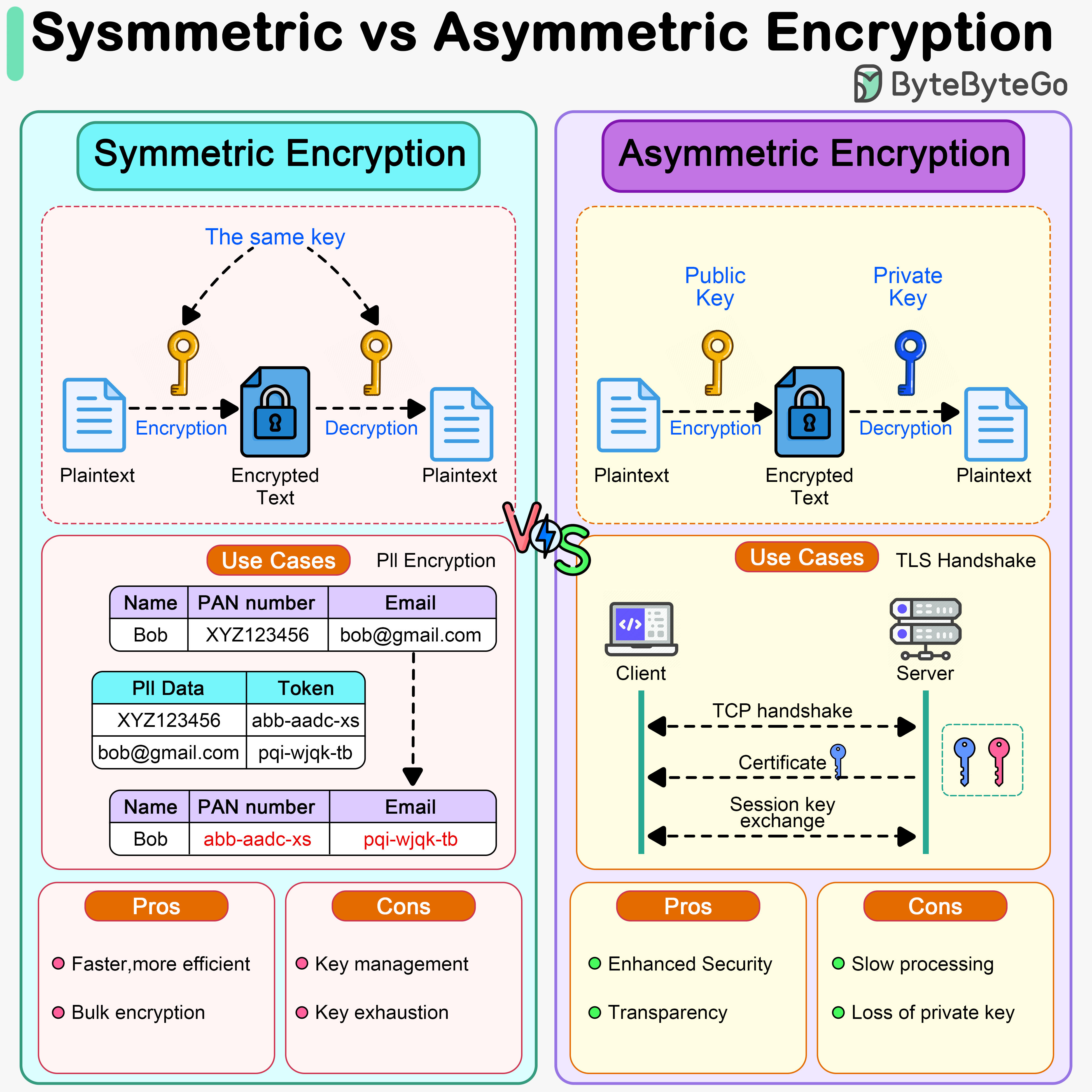
Symmetric encryption and asymmetric encryption are two types of cryptographic techniques used to secure data and communications, but they differ in their methods of encryption and decryption.
-
In symmetric encryption, a single key is used for both encryption and decryption of data. It is faster and can be applied to bulk data encryption/decryption. For example, we can use it to encrypt massive amounts of PII (Personally Identifiable Information) data. It poses challenges in key management because the sender and receiver share the same key.
-
Asymmetric encryption uses a pair of keys: a public key and a private key. The public key is freely distributed and used to encrypt data, while the private key is kept secret and used to decrypt the data. It is more secure than symmetric encryption because the private key is never shared. However, asymmetric encryption is slower because of the complexity of key generation and maths computations. For example, HTTPS uses asymmetric encryption to exchange session keys during TLS handshake, and after that, HTTPS uses symmetric encryption for subsequent communications.