mirror of
https://github.com/ByteByteGoHq/system-design-101.git
synced 2026-04-06 02:07:25 -04:00
 ee4b7305a2
This PR adds all the guides from [Visual
Guides](https://bytebytego.com/guides/) section on bytebytego to the
repository with proper links.

- [x] Markdown files for guides and categories are placed inside
`data/guides` and `data/categories`
- [x] Guide links in readme are auto-generated using
`scripts/readme.ts`. Everytime you run the script `npm run
update-readme`, it reads the categories and guides from the above
mentioned folders, generate production links for guides and categories
and populate the table of content in the readme. This ensures that any
future guides and categories will automatically get added to the readme.
- [x] Sorting inside the readme matches the actual category and guides
sorting on production
1.3 KiB
1.3 KiB
title, description, image, createdAt, draft, categories, tags
| title | description | image | createdAt | draft | categories | tags | |||
|---|---|---|---|---|---|---|---|---|---|
| Short/long polling, SSE, WebSocket | Explore real-time web updates: polling, SSE, and WebSockets. | https://assets.bytebytego.com/diagrams/0337-short-long-polling-sse-websocket.jpeg | 2024-01-25 | false |
|
|
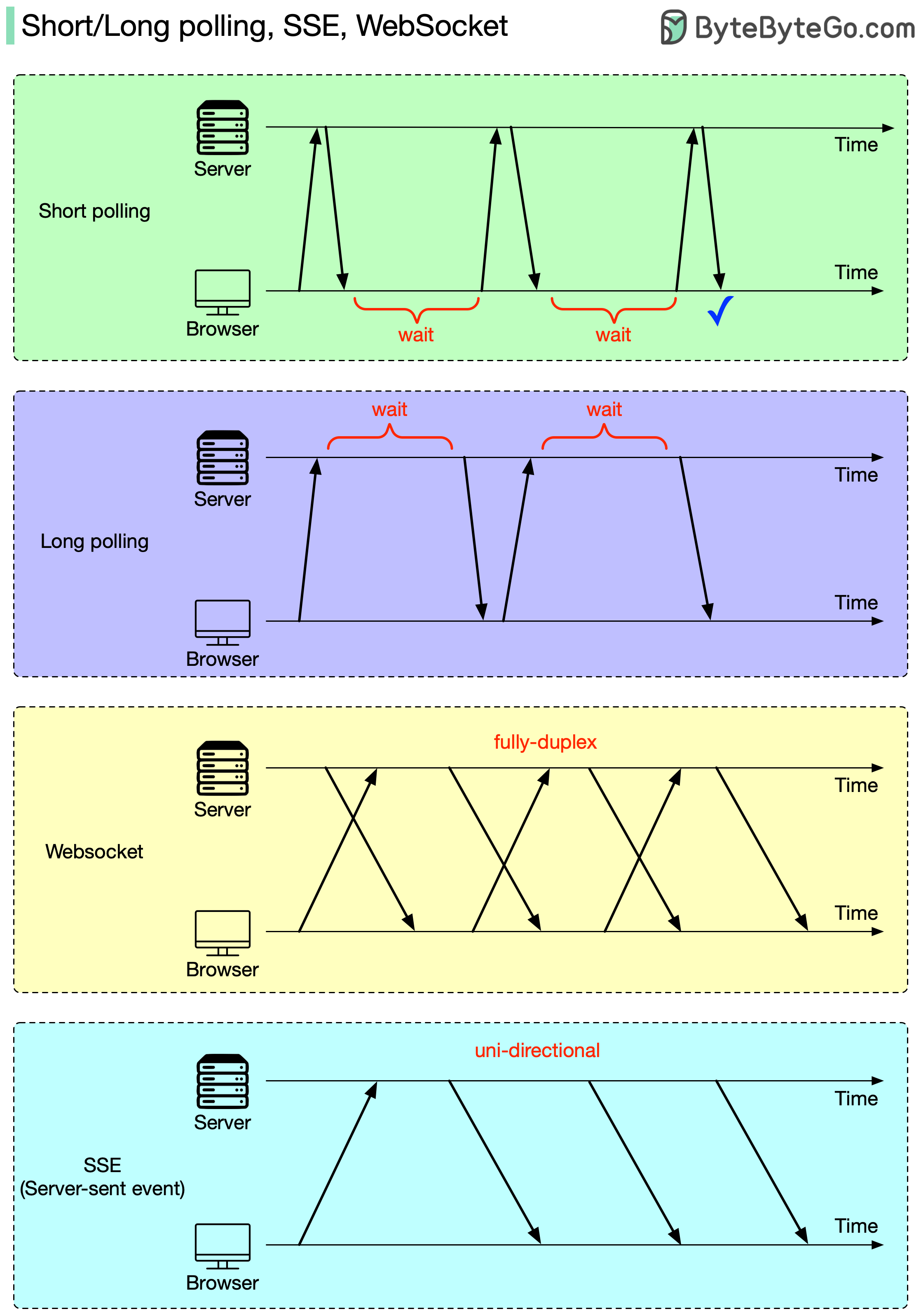
An HTTP server cannot automatically initiate a connection to a browser. As a result, the web browser is the initiator. What should we do next to get real-time updates from the HTTP server?
Both the web browser and the HTTP server could be responsible for this task.
- Web browsers do the heavy lifting: short polling or long polling. With short polling, the browser will retry until it gets the latest data. With long polling, the HTTP server doesn’t return results until new data has arrived.
- HTTP server and web browser cooperate: WebSocket or SSE (server-sent event). In both cases, the HTTP server could directly send the latest data to the browser after the connection is established. The difference is that SSE is uni-directional, so the browser cannot send a new request to the server, while WebSocket is fully-duplex, so the browser can keep sending new requests.