mirror of
https://github.com/ByteByteGoHq/system-design-101.git
synced 2026-04-01 16:57:23 -04:00
 ee4b7305a2
This PR adds all the guides from [Visual
Guides](https://bytebytego.com/guides/) section on bytebytego to the
repository with proper links.

- [x] Markdown files for guides and categories are placed inside
`data/guides` and `data/categories`
- [x] Guide links in readme are auto-generated using
`scripts/readme.ts`. Everytime you run the script `npm run
update-readme`, it reads the categories and guides from the above
mentioned folders, generate production links for guides and categories
and populate the table of content in the readme. This ensures that any
future guides and categories will automatically get added to the readme.
- [x] Sorting inside the readme matches the actual category and guides
sorting on production
1.4 KiB
1.4 KiB
title, description, image, createdAt, draft, categories, tags
| title | description | image | createdAt | draft | categories | tags | |||
|---|---|---|---|---|---|---|---|---|---|
| Reverse Proxy vs. API Gateway vs. Load Balancer | Understand the differences between reverse proxy, API gateway, and load balancer. | https://assets.bytebytego.com/diagrams/0320-reverse-gateway-lb.png | 2024-02-09 | false |
|
|
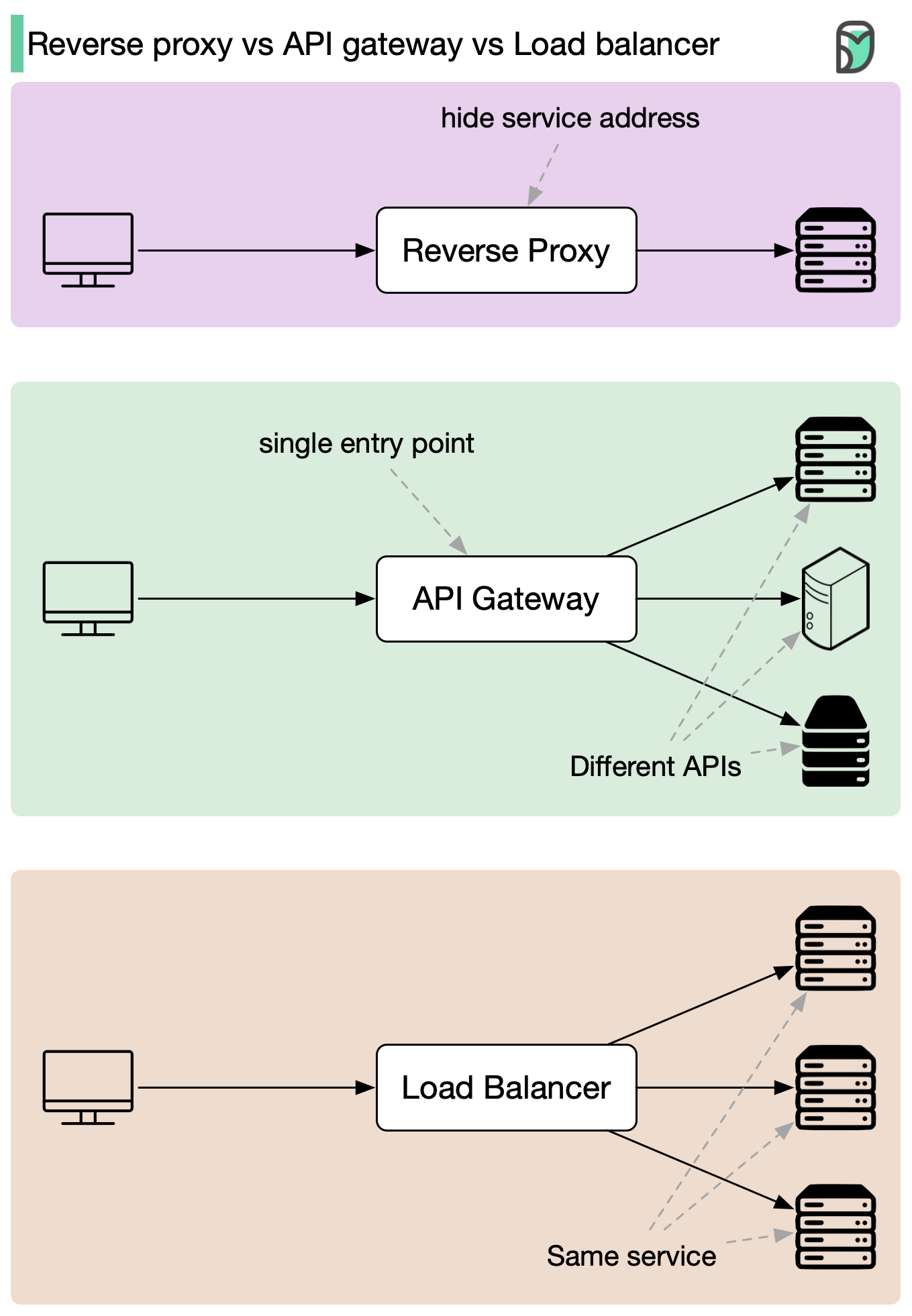
As modern websites and applications are like busy beehives, we use a variety of tools to manage the buzz. Here we'll explore three superheroes: Reverse Proxy, API Gateway, and Load Balancer.
- Reverse Proxy: change identity
- Fetching data secretly, keeping servers hidden.
- Perfect for shielding sensitive websites from cyber-attacks and prying eyes.
- API Gateway: postman
- Delivers requests to the right services.
- Ideal for bustling applications with numerous intercommunicating services.
- Load Balancer: traffic cop
- Directs traffic evenly across servers, preventing bottlenecks
- Essential for popular websites with heavy traffic and high demand.
In a nutshell, choose a Reverse Proxy for stealth, an API Gateway for organized communications, and a Load Balancer for traffic control. Sometimes, it's wise to have all three - they make a super team that keeps your digital kingdom safe and efficient.