mirror of
https://github.com/ByteByteGoHq/system-design-101.git
synced 2026-04-01 16:57:23 -04:00
 ee4b7305a2
This PR adds all the guides from [Visual
Guides](https://bytebytego.com/guides/) section on bytebytego to the
repository with proper links.

- [x] Markdown files for guides and categories are placed inside
`data/guides` and `data/categories`
- [x] Guide links in readme are auto-generated using
`scripts/readme.ts`. Everytime you run the script `npm run
update-readme`, it reads the categories and guides from the above
mentioned folders, generate production links for guides and categories
and populate the table of content in the readme. This ensures that any
future guides and categories will automatically get added to the readme.
- [x] Sorting inside the readme matches the actual category and guides
sorting on production
1.4 KiB
1.4 KiB
title, description, image, createdAt, draft, categories, tags
| title | description | image | createdAt | draft | categories | tags | |||
|---|---|---|---|---|---|---|---|---|---|
| Pessimistic vs Optimistic Locking | Explore pessimistic and optimistic locking strategies for data consistency. | https://assets.bytebytego.com/diagrams/0301-pessimistic-vs-optimistic-locking.png | 2024-01-29 | false |
|
|
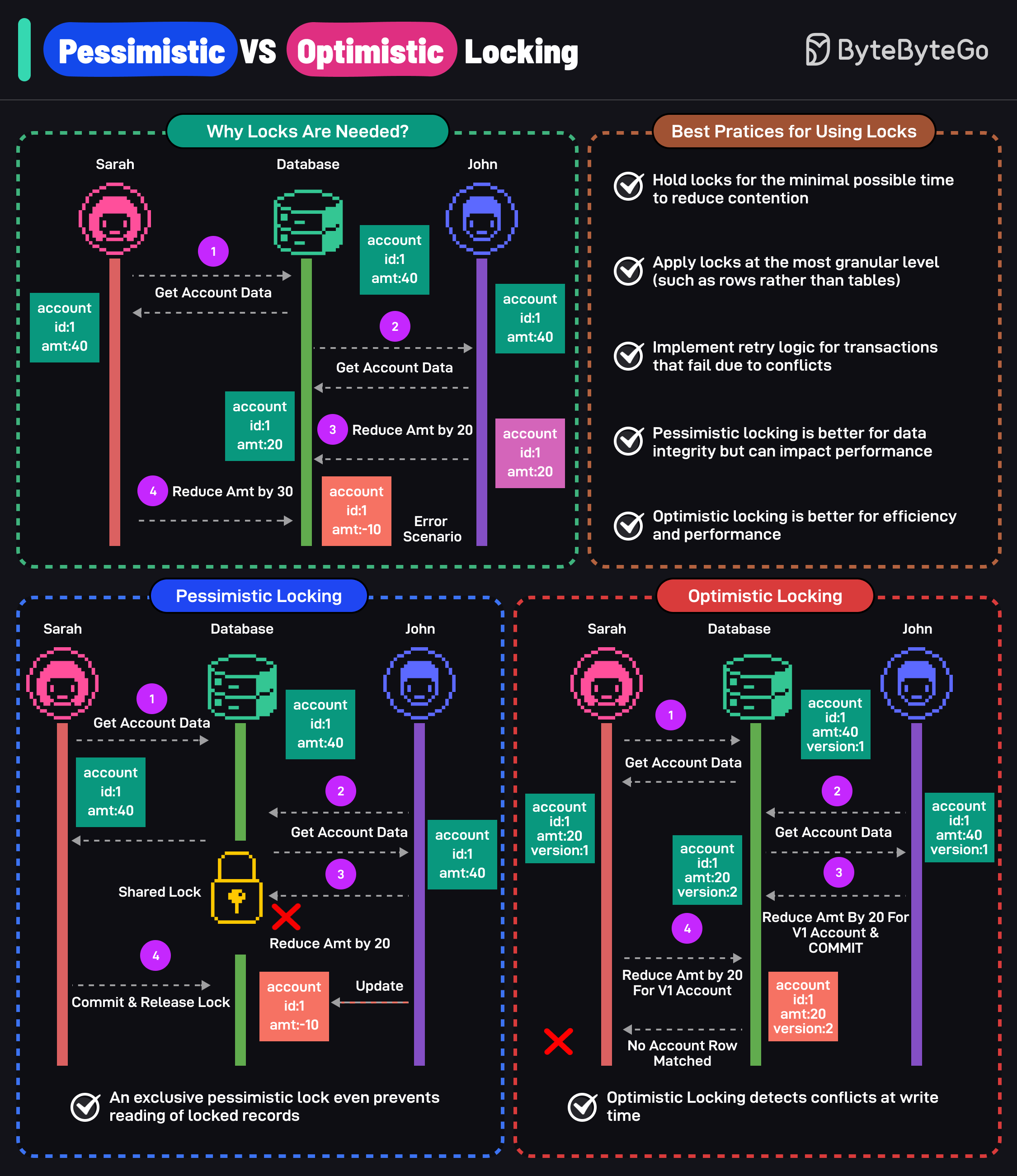
Locks are essential to maintain data consistency and integrity in multi-user environments. They prevent simultaneous modifications that can lead to data inconsistencies.
Pessimistic locking assumes conflicts will occur and locks the data before any changes are made. It prevents other users from accessing and updating the data until the lock is released.
Optimistic locking assumes conflicts are rare. It allows multiple users to access data simultaneously and checks for conflicts when changes are committed. If a conflict is detected, the operation is rolled back.
Best Practices
Here are some best practices to consider:
- Hold locks for the minimum possible time to reduce contention.
- Apply locks at the most granular level such as rows rather than tables.
- Implement retry logic for transactions that fail due to conflicts.
- Pessimistic locking is better for data integrity but can impact performance.
- Optimistic locking is better for efficiency and performance.